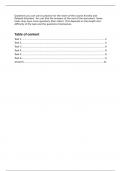
Questions you can use to practice for the exam of the course Anxiety and
Related disorders. You can find the answers at the end of the document. Some
tasks may have more questions than others. This depends on the length and
difficulty of the task and the questions themselves.
Table of content
Task 1..................................................................................................................... 2
Task 2..................................................................................................................... 4
Task 3..................................................................................................................... 6
Task 4..................................................................................................................... 8
Task 5..................................................................................................................... 8
Task 6..................................................................................................................... 9
Answers................................................................................................................ 11
, 2
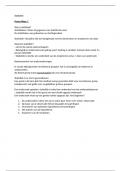
Task 1
1. Which of the following thoughts is not an example of a type 1 worry?
a. I worry that my partner will end up in an accident
b. I fear that i am not good enough at my job
c. If I will not stop ruminating, I will get depressed
d. I am afraid that I have a severe disease
2. Which stage of the General Adaptation Syndrome (GAS) involves the
body's prolonged effort to resist stressors, gradually using up its
adaptive energy?
a. Alarm response
b. Resistance phase
c. Exhaustion stage
d. Adaptation cycle
3. Which of the following best describes the physiological consequences
of hyperventilation?
a. Decreased oxygen levels in the blood due to reduced hemoglobin production
b. Increased carbon dioxide levels in the blood leading to acidosis
c. Widening of blood vessels in the brain to compensate for reduced blood flow
d. Reduced CO2 levels leading to respiratory alkalosis and potential symptoms
like dizziness and blurred vision
4. There are 3 types of panic attacks. What type is required to diagnose
a panic disorder?
a. Unexpected panic attacks
b. Situationally bound panic attacks
c. Situationally predisposed panic attacks
5. Which of the following symptoms are typical for a Panic Disorder?
a. Continuous avoidance of specific social situations
b. Irritability and restlessness
c. Unexplained physical symptoms such as palpitations and trembling
d. Excessive use of alcohol or drugs to reduce anxiety
6. What do hyperventilation provocation studies suggest about the
relationship between hyperventilation and panic disorder?
a. Hyperventilation always leads to panic attacks in individuals with panic
disorder.
b. Individuals with panic disorder typically have higher resting pCO2 levels.
c. Hyperventilation is the direct cause of panic attacks in individuals with panic
disorder.
d. Hyperventilation itself does not cause panic attacks, but hyperventilation
symptoms may trigger them due to high anxiety levels and distorted
perceptions of bodily sensations.
Related disorders. You can find the answers at the end of the document. Some
tasks may have more questions than others. This depends on the length and
difficulty of the task and the questions themselves.
Table of content
Task 1..................................................................................................................... 2
Task 2..................................................................................................................... 4
Task 3..................................................................................................................... 6
Task 4..................................................................................................................... 8
Task 5..................................................................................................................... 8
Task 6..................................................................................................................... 9
Answers................................................................................................................ 11
, 2
Task 1
1. Which of the following thoughts is not an example of a type 1 worry?
a. I worry that my partner will end up in an accident
b. I fear that i am not good enough at my job
c. If I will not stop ruminating, I will get depressed
d. I am afraid that I have a severe disease
2. Which stage of the General Adaptation Syndrome (GAS) involves the
body's prolonged effort to resist stressors, gradually using up its
adaptive energy?
a. Alarm response
b. Resistance phase
c. Exhaustion stage
d. Adaptation cycle
3. Which of the following best describes the physiological consequences
of hyperventilation?
a. Decreased oxygen levels in the blood due to reduced hemoglobin production
b. Increased carbon dioxide levels in the blood leading to acidosis
c. Widening of blood vessels in the brain to compensate for reduced blood flow
d. Reduced CO2 levels leading to respiratory alkalosis and potential symptoms
like dizziness and blurred vision
4. There are 3 types of panic attacks. What type is required to diagnose
a panic disorder?
a. Unexpected panic attacks
b. Situationally bound panic attacks
c. Situationally predisposed panic attacks
5. Which of the following symptoms are typical for a Panic Disorder?
a. Continuous avoidance of specific social situations
b. Irritability and restlessness
c. Unexplained physical symptoms such as palpitations and trembling
d. Excessive use of alcohol or drugs to reduce anxiety
6. What do hyperventilation provocation studies suggest about the
relationship between hyperventilation and panic disorder?
a. Hyperventilation always leads to panic attacks in individuals with panic
disorder.
b. Individuals with panic disorder typically have higher resting pCO2 levels.
c. Hyperventilation is the direct cause of panic attacks in individuals with panic
disorder.
d. Hyperventilation itself does not cause panic attacks, but hyperventilation
symptoms may trigger them due to high anxiety levels and distorted
perceptions of bodily sensations.