Equity and Trusts Revision
Introduction: Meaning and Nature of Trusts
- Trust= ‘imposition of an equitable obligation on a person who is the legal owner of property (a
trustee) which requires that person to act in good conscience…’ The trust ‘is equitable, …provides
the beneficiary with rights in property, …imposes obligations on the trustee, …those obligations are
fiduciary in nature.’ Thomas and Hudson, The Law of Trusts
- Benefits:
o Device by which ownership of land can be shared
o Minors can benefit
o Persons in succession can benefit
o Holder of wealth can retain control after death
o Secret trusts
o Protective trust allows trustee to not fall into trustee’s hands if bankrupt
o Discretionary trust – S, in effect, retains control
o Preferential rights in insolvency – priority for Bs
o Pension funds
o Tax and estate planning
- Saunders v Vautier
o Where B absolutely entitled to capital of trust fund = can require trustee to transfer title to
the property to B = trust ends. B must be of full age and full mental capacity
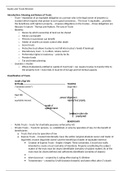
Classification of Trusts
transfer of legal title
SETTLOR TRUSTEE
(“absolute owner”) (legal title)
legal title
+ personal obligationsin
equitable interest respect of trust property
transfer of
equitableinterest
beneficiary’s rightsinthe
propertyitself
BENEFICIARY
- Public Trusts – trusts for charitable purposes enforced by AG
- Private Trusts – Trusts for persons, i.e. established, or arise by operation of law, for the benefit of
beneficiaries
o Trusts that arise by operation of law
o Express Trusts – Created intentionally; have the settlor (original absolute owner and trader of
legal title), trustee (legal title owner) and the beneficiary (holder of equitable interest)
Creation of Express Trusts - Knight v Knight: Three certainties; S must have really
intended to create a trust (certainty of intention), Property constituting the subject
matter of the trust must be clearly identifiable (certainty of subject matter), Bs of the
trust must be clearly defined and sufficiently identifiable (certainty of objects)
-
Intervivos trust – created by S, taking effect during S’s lifetime
Testamentary – created by S/will (testator/testatrix) and takes effect after S’s death
Introduction: Meaning and Nature of Trusts
- Trust= ‘imposition of an equitable obligation on a person who is the legal owner of property (a
trustee) which requires that person to act in good conscience…’ The trust ‘is equitable, …provides
the beneficiary with rights in property, …imposes obligations on the trustee, …those obligations are
fiduciary in nature.’ Thomas and Hudson, The Law of Trusts
- Benefits:
o Device by which ownership of land can be shared
o Minors can benefit
o Persons in succession can benefit
o Holder of wealth can retain control after death
o Secret trusts
o Protective trust allows trustee to not fall into trustee’s hands if bankrupt
o Discretionary trust – S, in effect, retains control
o Preferential rights in insolvency – priority for Bs
o Pension funds
o Tax and estate planning
- Saunders v Vautier
o Where B absolutely entitled to capital of trust fund = can require trustee to transfer title to
the property to B = trust ends. B must be of full age and full mental capacity
Classification of Trusts
transfer of legal title
SETTLOR TRUSTEE
(“absolute owner”) (legal title)
legal title
+ personal obligationsin
equitable interest respect of trust property
transfer of
equitableinterest
beneficiary’s rightsinthe
propertyitself
BENEFICIARY
- Public Trusts – trusts for charitable purposes enforced by AG
- Private Trusts – Trusts for persons, i.e. established, or arise by operation of law, for the benefit of
beneficiaries
o Trusts that arise by operation of law
o Express Trusts – Created intentionally; have the settlor (original absolute owner and trader of
legal title), trustee (legal title owner) and the beneficiary (holder of equitable interest)
Creation of Express Trusts - Knight v Knight: Three certainties; S must have really
intended to create a trust (certainty of intention), Property constituting the subject
matter of the trust must be clearly identifiable (certainty of subject matter), Bs of the
trust must be clearly defined and sufficiently identifiable (certainty of objects)
-
Intervivos trust – created by S, taking effect during S’s lifetime
Testamentary – created by S/will (testator/testatrix) and takes effect after S’s death