International relations.
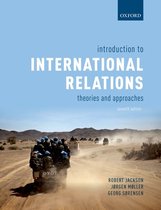
Introduction to International Relations. By, Jackson, Sørensen and Møller.
Read the key points at the end of each chapter.
Chapter 5. International Society.
The International Society tradition of IR (sometimes called the English School) is an approach
to world politics that focuses on international history, ideas, structures, institutions, and values.
The basic assumptions and claims are:
1. At the heart of the subject are people and basic values such as; independence, security, order,
and justice.
2. IR scholars are called upon to interpret the thoughts and actions of the people involved with
international relations.
3. International anarchy is an important concept, but not an exclusive premise.
4. States are not autonomous entities in themselves, instead they are human organizations.
5. International Society incorporates notions of both a pluralist society of multiple sovereign
states, and a solidarist world society of the human population on the planet.
To this approach, international politics is ‘a realm of human experience’. It derives from
philosophy, history and law.
The traditional International Society approach seeks to avoid the stark choice between:
1. State egoism and conflict.
2. Human goodwill and cooperation presented by the debate between realism and liberalism.
Believe in raison de système, the belief that it pays to make the system work. International Society
is a middle way in classical IR scholarship; it occupies a position between classical realism and
classical liberalism. It regards international relations as a society of states in which the principal
actors are states people.
Classical International Society approach is:
• Human-focused
• Interpretive
• Normative
• Historical-concrete
International Society theorists consider sovereign states to be the foundation of world politics.
Important distinction between an international system an an international society:
- International societies have existed in several historical state systems. A certain degree of
cultural unity among states.
There are three different ways of looking at the relations of states:
1. Realism.
Views states as power agencies that pursue their own interests. It thus conceives international
relations as solely instrumental relations devoid of morality or law. Realists are those who
emphasize and concentrate on the aspect of ‘international anarchy’. Realism is the doctrine
that rivalry and conflict between states are ‘inherent’ in their relations.
2. Rationalism.
Views states as legal organizations that operate in accordance with international law and
diplomatic practice. It thus conceives of international relations as rule-governed activities
based on the mutually recognized authority of sovereign states. Rationalists are those who
emphasize and concentrate on the aspect of ‘internal dialogue and intercourse’.
3. Revolutionism.
Downplays the importance of states and places the emphasis on human beings. Humans are
seen as more fundamental than the society of states. Revolutionists are those who emphasize
, and concentrate on the aspect of ‘moral unity’. Rationalists believe that humans are
reasonable and capable of doing the right thing.
All of these three ways conceive international relations as basically human activities concerned
with fundamental values. Two of the most important fundamental values are:
1. International order: a pattern or disposition of international activity that sustains the basic
goals of the society of states.
2. International justice: the moral rules which confer rights and duties upon states and nations.
International Society approach has two ways of answering:
1. Pluralist: stressing the importance of state sovereignty. The principles of respect for
sovereignty and non-intervention always comes first.
2. Solidarist: stressing the importance of individuals as the ultimate members of society.
In conclusion, the International Society views world politics as a human world. Basic values are
order and justice. Important concepts are: human beings, solidarism, state sovereignty, pluralism,
international structure, system of states and society of states.
To Bull, the main point of the anarchical society was order. He presented four goals:
1. Preservation of international society.
2. Upholding the independence of member states, maintaining peace, and helping to secure the
normative foundations of all social life.
3. The keeping of promises.
4. The stability of possession (expressed in the principle of mutual recognition and state society).
International Society has a lot to do with responsibility. There are three main forms of
responsibility:
• National responsibility.
According to this conception, states people are responsible for the well-being of their citizens.
• International responsibility.
According to this conception, states people have foreign obligations deriving from their state’s
membership of international society, which involves rights and duties as defined by international
law.
• Humanitarian responsibility.
According to this conception, states people are first and foremost human beings and as such
they have a fundamental obligation to respect human rights not only in their own country but
also in all countries around the world.
The Responsibility to Protect (R2P or RtoP) is a global political commitment which was
endorsed by all member states of the United Nations at the 2005 World Summit in order to
address its four key concerns to prevent genocide, war crimes, ethnic cleansing and crimes
against humanity.
The International Society approach emphasizes the importance of history to international
relations. Two historical projects have dominated:
• The expansion story: Understanding how the present international society came into being via
an expansion of the European system.
• The evolution story: Understanding similarities and differences between historical state systems
and international societies.
Several critiques can be made against the International Society approach to IR:
• The realist critique that the evidence of international norms as determinants of state policy is
weak or non-existent.
• There is the liberal critique that the International Society downplays domestic politics -e.g.
democracy- and cannot account for progressive change in international politics.
• The IPE critique that it fails to give an account of international economic relationships.
• Several solidarist critiques that emerge from within the International Society tradition itself that
focus on its limitations.
, Three traditional critiques of International Society.
Realism Liberalism IPE
Weak evidence of norms Ignores domestic society Ignores economics
Interests dominate Ignores democracy Ignores developing world
Ignores progress
Three solidarist critiques of International Society.
Transnational society Global society Global injustice
State and non-state Anti-statist Anti-statist
Transnational activities Complex global relations Global protection racket
International civil society World society Human wrongs
Public-private coexistence World injustice
Chapter 6. International Political Economy: Classical Theories.
International Political Economy (IPE) is about wealth, poverty, and power, about who gets what
in the international economic and political system.
A modern market is based on political rules. IPE shifts our attention to issues about wealth and
poverty, and who gets what in the international system.
IPE has three important classical theories:
1. Mercantilism.
2. Economic liberalism.
3. Neo-Marxism.
The rise (since the 1970s) of IPE had to do with a shift from war to peace and the economic
development in the modern world.
The system, that politicians had set up to foster economic growth and international exchange
after WWII - the so-called Bretton Woods system - showed signs of crisis.
Mercantilism.
Mercantilism was the world view of political elites that were at the forefront of building the modern
state. They took the approach that economic activity is and should be subordinated to the
primary goal of building a strong state. In other words, economics is a tool of politics, a basis for
political power. Mercantilists see international economy as an arena of conflict between opposing
national interests.
Economic competition between states is a zero-sum game where one state’s gain is another
state’s loss. The opposite is positive-sum game.
Economic rivalry between states can take two forms:
• Benign mercantilism: states look after their national economic interest because that is an
important ingredient of their national security; such policies need not have overly negative
effects on other states.
• Malevolent mercantilism: states attempt to exploit the international economy through
expansionary policies.
Mercantilists maintain that the economy should be subordinate to the primary goal of increasing
state power: politics must have primacy over economics. Wealth and power are complementary,
not compelling goals. Economic dependence on other states should be avoided as far as
possible. When economic and security interests clash, security interests have priority.
Introduction to International Relations. By, Jackson, Sørensen and Møller.
Read the key points at the end of each chapter.
Chapter 5. International Society.
The International Society tradition of IR (sometimes called the English School) is an approach
to world politics that focuses on international history, ideas, structures, institutions, and values.
The basic assumptions and claims are:
1. At the heart of the subject are people and basic values such as; independence, security, order,
and justice.
2. IR scholars are called upon to interpret the thoughts and actions of the people involved with
international relations.
3. International anarchy is an important concept, but not an exclusive premise.
4. States are not autonomous entities in themselves, instead they are human organizations.
5. International Society incorporates notions of both a pluralist society of multiple sovereign
states, and a solidarist world society of the human population on the planet.
To this approach, international politics is ‘a realm of human experience’. It derives from
philosophy, history and law.
The traditional International Society approach seeks to avoid the stark choice between:
1. State egoism and conflict.
2. Human goodwill and cooperation presented by the debate between realism and liberalism.
Believe in raison de système, the belief that it pays to make the system work. International Society
is a middle way in classical IR scholarship; it occupies a position between classical realism and
classical liberalism. It regards international relations as a society of states in which the principal
actors are states people.
Classical International Society approach is:
• Human-focused
• Interpretive
• Normative
• Historical-concrete
International Society theorists consider sovereign states to be the foundation of world politics.
Important distinction between an international system an an international society:
- International societies have existed in several historical state systems. A certain degree of
cultural unity among states.
There are three different ways of looking at the relations of states:
1. Realism.
Views states as power agencies that pursue their own interests. It thus conceives international
relations as solely instrumental relations devoid of morality or law. Realists are those who
emphasize and concentrate on the aspect of ‘international anarchy’. Realism is the doctrine
that rivalry and conflict between states are ‘inherent’ in their relations.
2. Rationalism.
Views states as legal organizations that operate in accordance with international law and
diplomatic practice. It thus conceives of international relations as rule-governed activities
based on the mutually recognized authority of sovereign states. Rationalists are those who
emphasize and concentrate on the aspect of ‘internal dialogue and intercourse’.
3. Revolutionism.
Downplays the importance of states and places the emphasis on human beings. Humans are
seen as more fundamental than the society of states. Revolutionists are those who emphasize
, and concentrate on the aspect of ‘moral unity’. Rationalists believe that humans are
reasonable and capable of doing the right thing.
All of these three ways conceive international relations as basically human activities concerned
with fundamental values. Two of the most important fundamental values are:
1. International order: a pattern or disposition of international activity that sustains the basic
goals of the society of states.
2. International justice: the moral rules which confer rights and duties upon states and nations.
International Society approach has two ways of answering:
1. Pluralist: stressing the importance of state sovereignty. The principles of respect for
sovereignty and non-intervention always comes first.
2. Solidarist: stressing the importance of individuals as the ultimate members of society.
In conclusion, the International Society views world politics as a human world. Basic values are
order and justice. Important concepts are: human beings, solidarism, state sovereignty, pluralism,
international structure, system of states and society of states.
To Bull, the main point of the anarchical society was order. He presented four goals:
1. Preservation of international society.
2. Upholding the independence of member states, maintaining peace, and helping to secure the
normative foundations of all social life.
3. The keeping of promises.
4. The stability of possession (expressed in the principle of mutual recognition and state society).
International Society has a lot to do with responsibility. There are three main forms of
responsibility:
• National responsibility.
According to this conception, states people are responsible for the well-being of their citizens.
• International responsibility.
According to this conception, states people have foreign obligations deriving from their state’s
membership of international society, which involves rights and duties as defined by international
law.
• Humanitarian responsibility.
According to this conception, states people are first and foremost human beings and as such
they have a fundamental obligation to respect human rights not only in their own country but
also in all countries around the world.
The Responsibility to Protect (R2P or RtoP) is a global political commitment which was
endorsed by all member states of the United Nations at the 2005 World Summit in order to
address its four key concerns to prevent genocide, war crimes, ethnic cleansing and crimes
against humanity.
The International Society approach emphasizes the importance of history to international
relations. Two historical projects have dominated:
• The expansion story: Understanding how the present international society came into being via
an expansion of the European system.
• The evolution story: Understanding similarities and differences between historical state systems
and international societies.
Several critiques can be made against the International Society approach to IR:
• The realist critique that the evidence of international norms as determinants of state policy is
weak or non-existent.
• There is the liberal critique that the International Society downplays domestic politics -e.g.
democracy- and cannot account for progressive change in international politics.
• The IPE critique that it fails to give an account of international economic relationships.
• Several solidarist critiques that emerge from within the International Society tradition itself that
focus on its limitations.
, Three traditional critiques of International Society.
Realism Liberalism IPE
Weak evidence of norms Ignores domestic society Ignores economics
Interests dominate Ignores democracy Ignores developing world
Ignores progress
Three solidarist critiques of International Society.
Transnational society Global society Global injustice
State and non-state Anti-statist Anti-statist
Transnational activities Complex global relations Global protection racket
International civil society World society Human wrongs
Public-private coexistence World injustice
Chapter 6. International Political Economy: Classical Theories.
International Political Economy (IPE) is about wealth, poverty, and power, about who gets what
in the international economic and political system.
A modern market is based on political rules. IPE shifts our attention to issues about wealth and
poverty, and who gets what in the international system.
IPE has three important classical theories:
1. Mercantilism.
2. Economic liberalism.
3. Neo-Marxism.
The rise (since the 1970s) of IPE had to do with a shift from war to peace and the economic
development in the modern world.
The system, that politicians had set up to foster economic growth and international exchange
after WWII - the so-called Bretton Woods system - showed signs of crisis.
Mercantilism.
Mercantilism was the world view of political elites that were at the forefront of building the modern
state. They took the approach that economic activity is and should be subordinated to the
primary goal of building a strong state. In other words, economics is a tool of politics, a basis for
political power. Mercantilists see international economy as an arena of conflict between opposing
national interests.
Economic competition between states is a zero-sum game where one state’s gain is another
state’s loss. The opposite is positive-sum game.
Economic rivalry between states can take two forms:
• Benign mercantilism: states look after their national economic interest because that is an
important ingredient of their national security; such policies need not have overly negative
effects on other states.
• Malevolent mercantilism: states attempt to exploit the international economy through
expansionary policies.
Mercantilists maintain that the economy should be subordinate to the primary goal of increasing
state power: politics must have primacy over economics. Wealth and power are complementary,
not compelling goals. Economic dependence on other states should be avoided as far as
possible. When economic and security interests clash, security interests have priority.