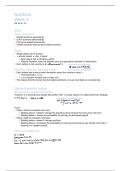
Auctions
Week 3
EK Ch 9, 15
Intro
Types of auction
• English auctions (ascending)
• Dutch auctions (descending)
• First price sealed bid auctions
• Vickery auctions (second price sealed auction)
Setup
• Single object up for auction
• ⫫ private values vinflul F'luffa
◦ Each player has a valuation 0,1
vie
◦ Players valuation does not depend upon his opponents valuation or information
• Each bidder is risk neutral, ie.U vilIwonthe
auction P
NpExpectedrevenueR.EE Itpayment
Winner’s curse and common values expected
• Each bidder has some private information about the common value, v
◦ Their estimate vᵢ =v+xᵢ
◦ xᵢ is a random number with a mean of 0
• This means that the winner has the highest estimate, so was most likely an overestimate
Game theoretic setup
Second price sealed bid auction
Theorem: in a second price sealed bid auction with ⫫ private values it is weakly dominant strategy
to bidBilvil Bilvil
ri ri ti
isBME
pity priceiwinningPoli
second wins
ri nnondoc I son Erin
Proof:
• Player i bids his valuation and wins
◦ Bidding above v doesn’t change the payo as price remains the same and i still wins
◦ Bidding below v lowers the probability of winning, so decreases payo
• Player i bids his valuation and loses
◦ Bidding below v doesn’t change anything
◦ Bidding above v increases the probability of winning and having to pay strictly more than v,
leading to a negative payo
First price sealed bid
Letvinvio.tl
BiddingfunctionBilvil IR
IU v b Prliw ins luibiPrbi Blu Hjit.lvbit PritiBluD
BME
Symmetric inlinearstrategies BWikkvi
, Sy eg
b
Vi Ivibill
tbias
3 my
bit
3
Ivibilln.tlE t É
n ri
o
4
Y
ribi biBi
bids
Secunda
bar
3NE Blv Eth
ie asnoneBilal 1
bid
somorecompetitioni ncreasesthe
µ
Revenue equivalence theorem
n
Pi vi in
In the setting with ⫫ private values, if two auctions:
• The equilibrium allocation rule is the same
• For a xed player the equilibrium payo is the same
Then expected equilibrium payments and revenue are the same
Increasing revenue
Assuming SIPV(+U), symmetric ⫫ private values (+ uniform distribution of valuations)
Byutv
The optimal selling mechanism requires that only the bidder with valuation strictly higher than a
speci c threshold wins the object
Vi to Vi max V 9 2,812 Erevenue
S
Pimax VoMax y
Sponsored search auctions
Pricing structure
Paying per click:
• Often surprisingly high, as it shows a user who issued the query, read the ad and clicks on the ad
• The price is an advertiser’s estimate of what it will gain in value for every user who clicks on the
ad
• As there are so many combinations of keywords with uctuating levels of demand for ads linked
to these, prices are set via auction
Designing an auction:
Week 3
EK Ch 9, 15
Intro
Types of auction
• English auctions (ascending)
• Dutch auctions (descending)
• First price sealed bid auctions
• Vickery auctions (second price sealed auction)
Setup
• Single object up for auction
• ⫫ private values vinflul F'luffa
◦ Each player has a valuation 0,1
vie
◦ Players valuation does not depend upon his opponents valuation or information
• Each bidder is risk neutral, ie.U vilIwonthe
auction P
NpExpectedrevenueR.EE Itpayment
Winner’s curse and common values expected
• Each bidder has some private information about the common value, v
◦ Their estimate vᵢ =v+xᵢ
◦ xᵢ is a random number with a mean of 0
• This means that the winner has the highest estimate, so was most likely an overestimate
Game theoretic setup
Second price sealed bid auction
Theorem: in a second price sealed bid auction with ⫫ private values it is weakly dominant strategy
to bidBilvil Bilvil
ri ri ti
isBME
pity priceiwinningPoli
second wins
ri nnondoc I son Erin
Proof:
• Player i bids his valuation and wins
◦ Bidding above v doesn’t change the payo as price remains the same and i still wins
◦ Bidding below v lowers the probability of winning, so decreases payo
• Player i bids his valuation and loses
◦ Bidding below v doesn’t change anything
◦ Bidding above v increases the probability of winning and having to pay strictly more than v,
leading to a negative payo
First price sealed bid
Letvinvio.tl
BiddingfunctionBilvil IR
IU v b Prliw ins luibiPrbi Blu Hjit.lvbit PritiBluD
BME
Symmetric inlinearstrategies BWikkvi
, Sy eg
b
Vi Ivibill
tbias
3 my
bit
3
Ivibilln.tlE t É
n ri
o
4
Y
ribi biBi
bids
Secunda
bar
3NE Blv Eth
ie asnoneBilal 1
bid
somorecompetitioni ncreasesthe
µ
Revenue equivalence theorem
n
Pi vi in
In the setting with ⫫ private values, if two auctions:
• The equilibrium allocation rule is the same
• For a xed player the equilibrium payo is the same
Then expected equilibrium payments and revenue are the same
Increasing revenue
Assuming SIPV(+U), symmetric ⫫ private values (+ uniform distribution of valuations)
Byutv
The optimal selling mechanism requires that only the bidder with valuation strictly higher than a
speci c threshold wins the object
Vi to Vi max V 9 2,812 Erevenue
S
Pimax VoMax y
Sponsored search auctions
Pricing structure
Paying per click:
• Often surprisingly high, as it shows a user who issued the query, read the ad and clicks on the ad
• The price is an advertiser’s estimate of what it will gain in value for every user who clicks on the
ad
• As there are so many combinations of keywords with uctuating levels of demand for ads linked
to these, prices are set via auction
Designing an auction: