International relations.
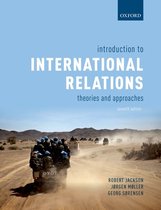
Introduction to International Relations. By, Jackson, Sørensen and Møller.
Read the key points at the end of each chapter.
Chapter 1. Why study IR?
International Relations can be defined as the study of relationships and interactions
between countries, including the activities and policies of national governments,
international organizations (IOs), non-governmental organizations (NGOs), and
multinational corporations (MNCs).
An independent nation or state may be defined as a bordered territory, with a
permanent population, under the jurisdiction of a supreme government that is
constitutionally separate (independent) from all foreign governments: a sovereign
state.
There are at least five basic social values that states are usually expected to uphold:
1. Security.
States can both defend and threaten people’s security. That paradox of the state
is usually referred to as the security dilemma. To ensure security, there is need
for balance of power.
2. Freedom.
We cannot be free unless our country is free too.
3. Order.
4. Justice.
5. Welfare.
Traditional view Alternative or Revisionist
view
States are valuable and States and the state system
necessary institutions: they are social choices that
provide security, freedom, create more problems than
Views of the state order, justice, and welfare. they solve.
People benefit from the The majority of the world’s
state system. people suffer more than
they benefit from the state
system.
State system is a historical invention. The state system was first European; now it
is global. The global state system contains states of very different types: great
powers and small states; strong, substantial states and weak quasi-states.
Stages of the globalization of the state system:
1. Transplantation of Western states to the Americas.
2. Incorporation of non-Western states that could not be colonized.
3. Via anti-colonialism by the colonial subjects of the Western empires.
1
,Chapter 2. IR as an Academic Subject.
There are four major classical theoretical traditions in IR:
1. Realism.
2. Liberalism.
3. International Society.
4. International Political Economy (IPE).
In addition to these, there are: social constructivism and post-positivist approaches.
There have been three major debates since IR became an academic subject at the
end of WWI, and we are now well into a fourth:
1. Debate between utopian liberalism ad realism
2. Debate between traditional approaches and behaviourism.
3. Debate between neorealism/neoliberalism and Neo-Marxism.
4. Debate between established traditions and post-positivist alternatives.
-> Utopian Liberalism.
Liberalism is a political and moral philosophy based on liberty and equal rights.
This first dominant theory of IR was shaped by the search for answers on the
questions about WWI. For instance; why was it that the war began in first place? Etc.
etc.
The fact that the early academic IR was influenced by liberalism had to do with the
fact that the liberal US intervened in the war. Especially, the then American
president, Woodrow Wilson, had appealing democratic plans for the world. Wilsonian
idealism can be summarized as follows: it is the conviction that, through a rational
and intelligently designed international organization, it should be possible to put an
end to war and to achieve more or less permanent peace. The claim is that it is
possible to tame states and states-people by subjecting them to the appropriate
international organizations, institutions, and laws. This thinking is based on a liberal
view of human beings: human beings are rational, and they can do things for the
benefit of all. The term ‘utopian’ indicates that these liberal arguments also
contained a little bit of wishful thinking. An indicator of this wishful thinking can be
the establishment of the ‘League of Nations’. This did not work out, so one cannot
state that liberal idealism was a good guide to international relations in the 1930s.
-> Realism.
Realism can be thought of as unified by the belief that world politics ultimately is
always and necessarily a field of conflict among actors pursuing power.
The most prominent critique of liberalism was that it was said that liberalists
profoundly missed the facts of history and misunderstood the nature of international
relations.
The first major view in realism was: that many realists saw humans as self-
interested and power-seeking that could easily result in aggression.
The second major element in realist views concerns the nature of international
politics: there is no world government. On the contrary, there is a system of
sovereign and armed states facing each other. World politics is an international
anarchy. International relations were a struggle for power and survival.
2
, The third major component of realism is a cyclical view of history. Contrary to the
optimistic liberal views that qualitative change for the better is possible, realism
stresses continuity and repetition. This also means that human beings do not have
any influence, which is called determinism.
-> Behaviourism.
Tries to explain political behaviour. This approach is characterized ‘above all by
explicit reliance upon the exercise of judgement’.
Traditional/classical approach: thinks that the use of power in human relations
always have to be justified and thus can never be divorced completely from
normative considerations.
The main tasks of behaviourists in IR is to collect empirical data about international
relations, preferably large amounts of data. Behaviourism is thus not a new IR
theory: it is a new method of studying IR.
• The traditional approach is a holistic one that accepts the complexity of the
human world, sees international relations as part of the human world, and seeks
to understand it in a humanistic way by getting inside it.
• Behaviourism has no place for morality or ethics in the study of IR because that
involves values, and values cannot be studied objectively.
-> Neoliberalism.
Neo-liberals share old liberal ideas about the possibility of progress and change, but
they repudiate idealism.
3
Introduction to International Relations. By, Jackson, Sørensen and Møller.
Read the key points at the end of each chapter.
Chapter 1. Why study IR?
International Relations can be defined as the study of relationships and interactions
between countries, including the activities and policies of national governments,
international organizations (IOs), non-governmental organizations (NGOs), and
multinational corporations (MNCs).
An independent nation or state may be defined as a bordered territory, with a
permanent population, under the jurisdiction of a supreme government that is
constitutionally separate (independent) from all foreign governments: a sovereign
state.
There are at least five basic social values that states are usually expected to uphold:
1. Security.
States can both defend and threaten people’s security. That paradox of the state
is usually referred to as the security dilemma. To ensure security, there is need
for balance of power.
2. Freedom.
We cannot be free unless our country is free too.
3. Order.
4. Justice.
5. Welfare.
Traditional view Alternative or Revisionist
view
States are valuable and States and the state system
necessary institutions: they are social choices that
provide security, freedom, create more problems than
Views of the state order, justice, and welfare. they solve.
People benefit from the The majority of the world’s
state system. people suffer more than
they benefit from the state
system.
State system is a historical invention. The state system was first European; now it
is global. The global state system contains states of very different types: great
powers and small states; strong, substantial states and weak quasi-states.
Stages of the globalization of the state system:
1. Transplantation of Western states to the Americas.
2. Incorporation of non-Western states that could not be colonized.
3. Via anti-colonialism by the colonial subjects of the Western empires.
1
,Chapter 2. IR as an Academic Subject.
There are four major classical theoretical traditions in IR:
1. Realism.
2. Liberalism.
3. International Society.
4. International Political Economy (IPE).
In addition to these, there are: social constructivism and post-positivist approaches.
There have been three major debates since IR became an academic subject at the
end of WWI, and we are now well into a fourth:
1. Debate between utopian liberalism ad realism
2. Debate between traditional approaches and behaviourism.
3. Debate between neorealism/neoliberalism and Neo-Marxism.
4. Debate between established traditions and post-positivist alternatives.
-> Utopian Liberalism.
Liberalism is a political and moral philosophy based on liberty and equal rights.
This first dominant theory of IR was shaped by the search for answers on the
questions about WWI. For instance; why was it that the war began in first place? Etc.
etc.
The fact that the early academic IR was influenced by liberalism had to do with the
fact that the liberal US intervened in the war. Especially, the then American
president, Woodrow Wilson, had appealing democratic plans for the world. Wilsonian
idealism can be summarized as follows: it is the conviction that, through a rational
and intelligently designed international organization, it should be possible to put an
end to war and to achieve more or less permanent peace. The claim is that it is
possible to tame states and states-people by subjecting them to the appropriate
international organizations, institutions, and laws. This thinking is based on a liberal
view of human beings: human beings are rational, and they can do things for the
benefit of all. The term ‘utopian’ indicates that these liberal arguments also
contained a little bit of wishful thinking. An indicator of this wishful thinking can be
the establishment of the ‘League of Nations’. This did not work out, so one cannot
state that liberal idealism was a good guide to international relations in the 1930s.
-> Realism.
Realism can be thought of as unified by the belief that world politics ultimately is
always and necessarily a field of conflict among actors pursuing power.
The most prominent critique of liberalism was that it was said that liberalists
profoundly missed the facts of history and misunderstood the nature of international
relations.
The first major view in realism was: that many realists saw humans as self-
interested and power-seeking that could easily result in aggression.
The second major element in realist views concerns the nature of international
politics: there is no world government. On the contrary, there is a system of
sovereign and armed states facing each other. World politics is an international
anarchy. International relations were a struggle for power and survival.
2
, The third major component of realism is a cyclical view of history. Contrary to the
optimistic liberal views that qualitative change for the better is possible, realism
stresses continuity and repetition. This also means that human beings do not have
any influence, which is called determinism.
-> Behaviourism.
Tries to explain political behaviour. This approach is characterized ‘above all by
explicit reliance upon the exercise of judgement’.
Traditional/classical approach: thinks that the use of power in human relations
always have to be justified and thus can never be divorced completely from
normative considerations.
The main tasks of behaviourists in IR is to collect empirical data about international
relations, preferably large amounts of data. Behaviourism is thus not a new IR
theory: it is a new method of studying IR.
• The traditional approach is a holistic one that accepts the complexity of the
human world, sees international relations as part of the human world, and seeks
to understand it in a humanistic way by getting inside it.
• Behaviourism has no place for morality or ethics in the study of IR because that
involves values, and values cannot be studied objectively.
-> Neoliberalism.
Neo-liberals share old liberal ideas about the possibility of progress and change, but
they repudiate idealism.
3