Kinesiology 150 UW-Madison Exam 1 Questions with well explained answers
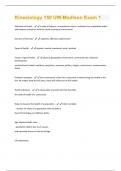
Definition of health - A state of balance, an equilibrium that an individual has established within and between oneself an with the social an physical environment domains of learning - cognitive, affective, psychomotor Types of Health - physical, mental, emotional, social, spiritual Factors of good health - physical: geography, environment, community size, industrial development social/cultural: beliefs, traditions, prejudices, economy, politics, religion, social norms, socioeconomic status Fishbowl metaphor - the environment of the fish is important in determining the health of the fish. No matter what the fish does, these will influence the fish health Health indicators - A measurable characteristic that describes the state of health of a community Ways to measure the health of a population - Infant mortality - number of infants in a population who die before their first birthday per 1000 live births Age-adjusted death rates - population deaths due to all causes, and especially those not due to old age Life expectancy- average number of years a person is expected to live based on current mortality rates Health equity - health equity means reducing and ultimately eliminating disparities in health and its determinants that adversely affect excluded or marginalized groups health equity =equal opportunity Health inequity vs health disparity - Health inequities are differences in health outcomes of a population or group that are systemic, avoidable, unfair, or unjust. Health disparities are population or group level differences in health (ex: breast cancer in women versus men) How do we measure health inequity - use health disparities to assess progress towards health equity Consequences of health inequity - -Economy: Disparities - costly to individuals, health care providers, health insurers, and taxpayers, Health care spending, Diminished productivity - Next generation: early life disadvantages = affect life as an adult -National security, business, income inequality 4 steps to achieve health equity - •Identify (Identify important health disparities) •Change and implement (Change and implement policies, laws, systems, environments, and practices to reduce inequities in the opportunities and resources needed to be as healthy as possible) •Evaluate and monitor (Evaluate and monitor efforts using short- and long-term measures) •Reassess (Reassess strategies in light of process and outcomes and plan next steps)
Escuela, estudio y materia
- Institución
- Kinesiology 150 UW-Madison
- Grado
- Kinesiology 150 UW-Madison
Información del documento
- Subido en
- 16 de mayo de 2024
- Número de páginas
- 11
- Escrito en
- 2023/2024
- Tipo
- Examen
- Contiene
- Preguntas y respuestas
Temas
-
kinesiology 150 uw madison

Documento también disponible en un lote