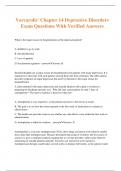
Varcarolis' Chapter 14 Depressive Disorders Exam Questions With Verified Answers
Varcarolis' Chapter 14 Depressive Disorders Exam Questions With Verified Answers What is the major reason for hospitalization of the depressed patient? A. Inability to go to work B. Suicidal Ideation C. Loss of appetite D. Psychomotor agitation - answerAnswer: B Suicidal thoughts are a major reason for hospitalization for patients with major depression. It is imperative to intervene with such patients to keep them safe from self-harm. The other options describe symptoms of major depression but aren't by themselves the major reason for hospitalization A client admitted with major depression and suicidal ideation with a plan to overdose is preparing for discharge and asks you, "Why did I get a prescription for only 7 days of amitriptyline?" The nurse's response is based on what fact? A. Amtriptyline is very expensive, so the patient may have to buy fewer at a time. B. The goal is to see how the client responds to the first week of medication to evaluate its effectiveness. C. The health care provider wants to see whether any side effects occur within the first week of administration D. Amtriptyline is lethal in overdose. - answerAnswer: D Amitriptyline is a tricyclic antidepressant (TCA); these drugs are known to be lethal in smaller doses than other antidepressants. Because the patient had a plan of overdose, the best course of action is to give a small prescription requiring her to visit her provider's office more often for monitoring of suicidal ideation and plan. Tricyclics are not known to be expensive. Antidepressant therapy usually takes several weeks to produce full results, so the patient would not be evaluated after only 1 week. Side effects are always a consideration but not the most important consideration with TCAs. When the nurse asks whether a client is having any thoughts of suicide, the client becomes angry and defensive, shouting, "I'm sick of you people! Are you ever do is ask me the same question over and over. Get out of here!" The nurse's response is based on what fact concerning hostility? A. The client is getting better and is able to be assertive. B. The client may be at high risk for self-harm. C. The client is probably experiencing transference. D. The client may be angry at someone else and projecting that anger to staff. - answerAnswer: B Overt hostility is highly correlated with suicide; therefore the patient may be considered high risk, and appropriate precautions should be taken. The other responses are incorrect with no evidence to support them A client prescribed fluoxetine demonstrates an understanding of the medication teaching when making which statement? A. "I will make sure to get plenty of sunshine and not use sunscreen to avoid a skin reaction." B. "I will not take any over-the-counter medication while on the fluoxetine." C. "I will report any symptoms of high fever, fast heartbeat, or abdominal pain to my provider right away." D. "I will report increased thirst and urination to my provider." - answerAnswer: C This describes symptoms of serotonin syndrome, a life-threatening complication of SRRI medication. The other options are incorrect because the patient should be wearing sunscreen to avoid sunburn, may take over-the-counter medications if sanctioned by the provider, and would not have been educated to report increased thirst and urination as a side effect of fluoxetine. A 38-year-old patient is admitted with major depression. Which statement made by the patient alerts the nurse to a common accompaniment to depression? A. "I still pray and read my Bible every day."
Escuela, estudio y materia
- Institución
- Varcarolis
- Grado
- Varcarolis
Información del documento
- Subido en
- 15 de mayo de 2024
- Número de páginas
- 21
- Escrito en
- 2023/2024
- Tipo
- Examen
- Contiene
- Preguntas y respuestas
Temas
-
varcarolis chapter 14 depressive disorders exam q

Documento también disponible en un lote