

nonviolent crisis intervention CPI Questions and Answers with 100%Correct Solutions.
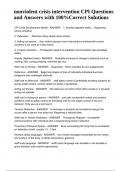
nonviolent crisis intervention CPI Questions and Answers with 100%Correct Solutions. CPI Crisis Development Model - ANSWER 1. Anxiety (agitated state).....Supportive (show empathy) 2. Defensive .....Directive (Give simple clear orders) 3. Acting out person.....Non-violent physical crisis interventions (nonharmful control positions to be used as a last resort) 4. Tension reduction.....Therapeutic rapport re-establish communication (de-escalated state) Anxiety (Agitated state) - ANSWER Noticable increase or change in behavior such as rocking, fists, crying,sweating, clenched jaw etc) Staff role to Anxiety - ANSWER Supportive - Show empathy be non-judgemental Defensive - ANSWER Beginning stages of loss of rationality-individual becomes beligerent and challenges authority. Staff role to defensive - ANSWER staff takes control of potentially escalting situation by giving simple orders, remind student of goals or guidelines. Acting-out Person - ANSWER The total loss of control which often results in a physical acting out episode staff role to Acting-out person - ANSWER use safe nonharmful control and restraint positions used to safely control an individual until he can regain control of his own behavior. Only use as a last resort. Tension Reduction - ANSWER A decrease in physical and emotional energy that occurs after a person has acted out. Regaining a rational state. Staff role in Tention Reduction - ANSWER Therapeutic Rapport - re-establish communications with individual who is experiencing tension reduction. Proxemics (Personal Space) - ANSWER Area surrounding the body that is considered an extention of self. usually 1.5 - 3 feet Kinesics (body language) - ANSWER non-verbal messages transmitted by the motion and posture of the body. ie facial expressions, gestures.
Información del documento
- Subido en
- 15 de mayo de 2024
- Número de páginas
- 5
- Escrito en
- 2023/2024
- Tipo
- Examen
- Contiene
- Preguntas y respuestas

