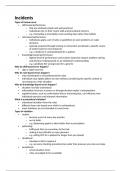
Incidents
Types of human error
skill-based performance
o that are relatively simple and well-practiced
o Individuals rely on their motor skills and procedural memory
o e.g. misreading a prescription and counting days rather than tablets
rule-based performance
o individuals apply a set of rules or guidelines to solve problems or make
decisions
o typically acquired through training or instruction and dictate a specific course
of action based on circumstances
o e.g. a medicine is contraindicated for a patient
knowledge-based performance
o highest level of performance and involves tasks that require problem-solving
and decision-making based on an individual's understanding
o e.g. substitute the wrong brand for a generic
Why do skill-based error happen?
sign or label incorrect
Why do rule-based errors happen?
may misinterpret or misunderstand the rules
individuals may rigidly adhere to rules without considering the specific context or
circumstances of the situation
Why do knowledge-based errors happen?
situation not fully understood
information incorrect at source or through decision maker’s interpretation
cognitive biases, such as confirmation bias or anchoring bias, can influence how
individuals perceive and interpret information
What is a procedural violation?
intentional deviation from the rules
different from rule-based error which is unintentional
most violations are not intended to cause harm
Types of violation
routine
o become a part of every day practice
o out of habit
o e.g. dispensing against a label rather than a prescription
optimising
o fulfil goals that are secondary to the task
o making it less effortful or more pleasant
o e.g. selling OTC for a patient for longer than you should
situational
o situation is felt to require it
o e.g. accuracy checking procedure but under time pressure you miss out steps
exceptional
o novel situation arises
o rules are judged to be unsuitable
Types of human error
skill-based performance
o that are relatively simple and well-practiced
o Individuals rely on their motor skills and procedural memory
o e.g. misreading a prescription and counting days rather than tablets
rule-based performance
o individuals apply a set of rules or guidelines to solve problems or make
decisions
o typically acquired through training or instruction and dictate a specific course
of action based on circumstances
o e.g. a medicine is contraindicated for a patient
knowledge-based performance
o highest level of performance and involves tasks that require problem-solving
and decision-making based on an individual's understanding
o e.g. substitute the wrong brand for a generic
Why do skill-based error happen?
sign or label incorrect
Why do rule-based errors happen?
may misinterpret or misunderstand the rules
individuals may rigidly adhere to rules without considering the specific context or
circumstances of the situation
Why do knowledge-based errors happen?
situation not fully understood
information incorrect at source or through decision maker’s interpretation
cognitive biases, such as confirmation bias or anchoring bias, can influence how
individuals perceive and interpret information
What is a procedural violation?
intentional deviation from the rules
different from rule-based error which is unintentional
most violations are not intended to cause harm
Types of violation
routine
o become a part of every day practice
o out of habit
o e.g. dispensing against a label rather than a prescription
optimising
o fulfil goals that are secondary to the task
o making it less effortful or more pleasant
o e.g. selling OTC for a patient for longer than you should
situational
o situation is felt to require it
o e.g. accuracy checking procedure but under time pressure you miss out steps
exceptional
o novel situation arises
o rules are judged to be unsuitable