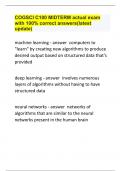
COGSCI C100 MIDTERM actual exam with 100% correct answers(latest update)
machine learning computers to "learn" by creating new algorithms to produce desired output based on structured data that's provided deep learning involves numerous layers of algorithms without having to have structured data neural networks networks of algorithms that are similar to the neural networks present in the human brain frontal lobes involved in speaking and muscle movements and in making plans/judgements parietal lobes sensory cortex occipital lobes visual areas temporal lobes auditory areas motor cortex at the rear of the frontal lobes that controls voluntary movements sensory cortex front of the parietal lobes that registers and processes body sensations amygdala components of the limbic system that are linked to emotion, particularly fear and aggression hippocampus important in memory are our behaviors determined by brain function? - physiological correlates can almost always be found for psychological states - abnormal EEG in schizophrenia, depression, OCD, and ADHD - doesn't mean that brain states cause mental states tho limitations of the experimental method - artificiality of experiments - best things in life cannot be quantified - belief as a confounding variable (Magellan's diary) sensation the process by which our sensory receptors and nervous system receive and represent stimulus energies from our environment and transduce them into neural impulses perception process of interpreting and organizing sensory model thru use of previous knowledge template matching object perception involves a comparison of the stimulus with set of templates or specific patterns stored in memory feature analysis discrimination of objects is based on small number of characteristics of stimuli recognition-by-components view that an object is represented as an arrangement of simple 3D shapes called geons prototype object perception involves a comparison of the stimulus with ideal, abstract example alternative modes of perception mindfulness is largely about seeing the suchness of things without conceptual filters perceptual constancy perceiving objects as unchanging even as illumination and retinal images change shape, lightness, size-distance modular processing - segregation of the various components of processing into separate locations - characterized by fixed neural architecture (determinate regions for particular types of processing) and specific breakdown patterns (modules can fail in certain ways -> clues on the form and structure of processing) subliminal perception messages that are presented below one's threshold for conscious awareness may influence behavior priming unconscious activation of particular associations in memory physiological/neurological measures of attention - activation of anterior and posterior attentional networks - orienting response - pupil dialtion - eye movement changes advantages of automaticity - work faster - multitasking - allows you to pay attention to higher levels of processing since lower levels become automatic disadvantages of automaticity - higher chance of inaccuracy - miss beauty, vividness, richness of life bottleneck theory quantity of info to which we can pay attention to is limited automatic processing processing is parallel and involuntary ex. scanning list of names for your own controlled processing processing is serial ex. scanning list of names for 3 unfamiliar names distributed attention - used to register single features automatically - parallel processing focused attention - used to search for combinations of features and for a feature that's missing - controlled, serial processing treatments for ADHD - medications (Ritalin) - parenting skills training classes - behavioral therapy biofeedback - form of operant conditioning in which person is trained to bring autonomic processes under conscious control - ADHD increases activation in the right inferior frontal cortex effects of sleep deprivation on cognition - causes irritability, fatigue, impaired concentration and creativity - impairs PFC -> negative impact on attention, memory, and decision making - reduces neuroplasticity in hippocampus - impairs making broad connections and gaining creative insight - predicts depression (shutdown of medial PFC) - cause metabolic and hormonal changes that mimic aging -> diabetes, obesity, hypertension hypnagogic dreams high rate of incorporation of memories of events from the day or from older related memories content of dreams in college students - falling - being attacked or pursued - trying repeatedly to do something - schools, teachers, studying - arriving too late - sexual experiences - eating induction techniques for lucid dreaming - practice dream recall - get ample sleep - napping - test diff sleeping positions - practice reality testing throughout the day - use autosuggestion/dream inoculation - strengthen desire/intention - MILD functionalism what makes something a thought, desire, pain is solely its function, or the role it plays, in the cognitive system of which it's a part of PSS hypothesis all intelligent behavior essentially involves transforming physical symbols according to rules global neuronal workspace theory - consciousness forms when specialized programs or modules access a shared repo of info - lends insight to access consciousness hypnosis decreased activity in the dorsal anterior cingulate and reduced connections between the dorsolateral PFC and DMN repression and dissociation PFC disengages processing in the hippocampus lucid dreaming increased activity in PFC, parietal cortex and precuneus, occipital and inferior temporal regions unilateral spatial neglect damage to RH, particularly in parietal and frontal lobes posterior hot zone generates the sights, sounds, and other sensations of life as we experience it access consciousness - ability to report on the content of awareness and pertains to accessibility of info - PFC and parietal - easy problem phenomenal consciousness - subjective awareness of what our mind is currently doing and how and why experience the world as we do - posterior hot zone - hard problem hypnotic susceptibility correlated with measures of imagery vividness and absorption
Escuela, estudio y materia
- Institución
- C100
- Grado
- C100
Información del documento
- Subido en
- 11 de mayo de 2024
- Número de páginas
- 26
- Escrito en
- 2023/2024
- Tipo
- Examen
- Contiene
- Preguntas y respuestas
Temas
-
cogsci c100 midterm actual exam

Documento también disponible en un lote