NR 503 week 2.docx
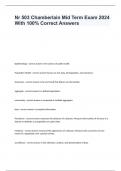
5 W's of descriptive epidemiology - correct answer Diagnosis or health event (what), Person (who), Place (where), Time (when) and Modes of Transmission (why/how) primary prevention - correct answer Efforts to prevent an injury or illness from ever occurring. how does primary prevention occur - correct answer through application of epidemiological concepts and database to assess risk factors. secondary prevention - correct answer screening for disease what is the most cost-effective strategy to improve health status - correct answer secondary prevention tertiary prevention - correct answer Interventions that would prevent complications from chronic conditions and prevent further illness, injury, or disability. natural history of disease - correct answer nature of the disease and how it progresses primary prevention - correct answer interventions aimed at preventing that condition disease or disorder secondary prevention - correct answer interventions aimed at detecting a disease early in the course tertiary prevention - correct answer limiting the effect of the disease once it's established true positive - correct answer hookers when do they test correctly reports disease presents when disease is in fact present false positive test - correct answer occurs when the test incorrectly reports disease presents when disease is in fact absent. false negative - correct answer occurs when the test incorrectly reports the absence of a disease when the disease is in fact present internal validity - correct answer weather the study measures what it is supposed to measure external validity - correct answer the generalizability of the result two other populations Reliability - correct answer the ability of a test result being replicated if the test is repeated. probability - correct answer the study of the laws of chance sensitivity - correct answer the test ability to yield a positive result when the person actually has a condition disorder or disease Specificity - correct answer the test ability to yield a negative results when a person does not have a condition gold standard - correct answer test with 100% sensitivity and specificity positive predictive value - correct answer the probability of a person actually having a disease when the test or diagnosis test is positive negative predictive value - correct answer the probability of a person being free of disease the disease when the screening test or diagnostic test is negative clinical significant - correct answer referring to the result that have clinical significance likelihood ratio - correct answer combined sensitivity and specificity data to help the collection edition quantify how much the odds of a disease changed based on a positive or negative test result. TP/(TP+FP) - correct answer Positive predictive value (PPV) TN/(TN+FN) - correct answer Negative predictive value equation (NPV) sensitivity / (1-specificity) - correct answer likelihood ratio (LR) TP/(TP+FN) - correct answer sensitivity formula TN / (TN+FP) - correct answer specificity formula Validity - correct answer The ability of a test to measure what it is intended to measure validity is based on both ____________+_____________. - correct answer specificity and sensitivity continuous variables - correct answer not positive or negative occur on a continuum such as blood glucose.
Escuela, estudio y materia
- Institución
- NR 503
- Grado
- NR 503
Información del documento
- Subido en
- 7 de mayo de 2024
- Número de páginas
- 5
- Escrito en
- 2023/2024
- Tipo
- Examen
- Contiene
- Preguntas y respuestas
Temas
-
nr 503 week 2docx