Calt exam'.docx
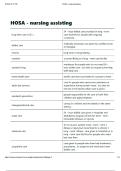
alphabetic language - correct answer English; meaning symbols and letters reflect pronunciation of a sound; ESL students' first lang may not be alphabetic because they use symbols; phonological knowledge must be taught, so alphabet needs to be taught Alphabetic Principle - correct answer an understanding that letters and letter patterns represent the sounds of spoken words. Analytic Phonics - correct answer In this approach, instruction begins with the identification of a familiar word. The teacher then introduces a particular sound/spelling relationship within that familiar word Synthetic Phonics - correct answer In this systematic and explicit approach, students learn to transform letters and letter combinations into sounds and then the sounds together to form recognizable words. Teach individual parts and build to whole auditory discrimination - correct answer The ability to hear differences in sounds auditory span - correct answer the number of words, numbers, or sounds a student can hold in his working memory. Can limit dictation or note taking. blend - correct answer two or more sounds that are frequently grouped together- each sound can be separated into its individual components cedilla - correct answer a diacritical mark (,) placed below the letter c to indicate that it is pronounced as an s circumflex - correct answer the code marked placed over vowels to indicate an unusual pronunciation compensatory approach - correct answer one does not attempt to remediate the problem but instead recommends modifications within the learning environment which allows the student to be successful Cloze Procedure - correct answer The use of semantic and syntactic clues to aid in completing sentences."Fill in the blank" Coding - correct answer putting code marks on words- encourages kinesthetic involvement and discourages guessing combination - correct answer a pattern of letters which occurs frequently together. They form an unexpected sound (vr's, qu, wh) comorbid - correct answer two or more disorders in the same individual consonant - correct answer sounds that are blocked or partially blocked by the tongue teeth and lips Decoding - correct answer using the sound/symbol system and structural analysis to unlock unfamiliar words (synthetic) derivative - correct answer adding a prefix or a suffix to a base word diacritical markings - correct answer a mark indicating pronunciation dieresis - correct answer two dots over an a (a) diphthong - correct answer The sound produced by combining two vowels in to a single syllable or running together the sounds. (ow, oi) discovery method - correct answer Presentation of new material which can be deduced or discovered by the students (Socratic Method) Dolch List - correct answer high frequency word list which may be regular or irregular crossed, mixed dominance - correct answer the student who is NOT right handed, right eyed, and right footed or left handed, left eyed, left footed Dyscalculia - correct answer unusual difficulty with math, probably originating from a distinct part of the brain Encoding - correct answer to spell (analytic) etymology - correct answer the study of word origins Fernald - correct answer developed a kinesthetic system for teaching the deaf by tracing words. Orton used her work as his kinesthetic model and was influenced by her work. Grapheme - correct answer Letter or group of letters used to spell a phoneme. A written representation of a sound using one or more letters. irregular words - correct answer Words that contain letters that stray from the most common sound pronunciation; words that do not follow common phonic patterns (e.g., were, was, laugh, been). linguistics - correct answer study of the production, properties, structure, meaning and use of language. "Multisensory letter introduction" Mathew Effect - correct answer the widening gap over time between strong and weak readers- rich get richer, poor get poorer metalinguistic awareness - correct answer the ability to reflect on the use of language; meta: thinking about. This includes phonological awareness, decoding, encoding mnuemonics - correct answer a device used to assist memory Modality - correct answer the sense a person is using (auditory, visual, kinesthetic) Morpheme - correct answer in a language, the smallest unit that carries meaning; may be a single phoneme, single syllable, or multisyllabic. A word may have more than one morpheme (sleepiness) morphology - correct answer the study of the structure of words (prefixes, suffixes, root words) orthography - correct answer the conventional spelling system of a language; the study of spelling and how letters combine to represent sounds and form words (only domain at written level) phoneme - correct answer in language, the smallest distinctive sound unit Phonemic Awareness - correct answer The ability to hear, identify,and manipulate the individual sounds, phonemes, in oral language. phonological awareness - correct answer an umbrella term that includes the ability to hear rhyme, to count syllables, and blend/unblend sounds Phonetics - correct answer the study of the sounds of a language- 44 speech sounds
Escuela, estudio y materia
- Institución
- CALT
- Grado
- CALT
Información del documento
- Subido en
- 5 de mayo de 2024
- Número de páginas
- 9
- Escrito en
- 2023/2024
- Tipo
- Examen
- Contiene
- Preguntas y respuestas
Temas
-
calt examdocx