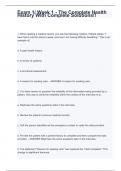
Exam 1/ Week 1 - The Complete Health
History With Complete Solutions!!
1. When reading a medical record, you see the following notation: Patient states, "I
have had a cold for about a week, and now I am having difficulty breathing." This is an
example of:
a. A past health history.
b. A review of systems.
c. A functional assessment.
d. A reason for seeking care. - ANSWER-A reason for seeking care.
2. You have reason to question the reliability of the information being provided by a
patient. One way to verify the reliability within the context of the interview is to:
a. Rephrase the same questions later in the interview.
b. Review the patient's previous medical records.
c. Call the person identified as the emergency contact to verify the data provided.
d. Provide the patient with a printed history to complete and then compare the data
provided. - ANSWER-Rephrase the same questions later in the interview.
3. The statement "Reason for seeking care" has replaced the "chief complaint." This
change is significant because:
, a. The "chief complaint" is really a diagnostic statement.
b. The newer term allows another individual to supply the necessary information.
c. The newer term incorporates wellness needs.
d. The "reason for seeking care" can incorporate the history of the present illness. -
ANSWER-The newer term incorporates wellness needs.
Rationale: The chief complaint only includes the problem while a reason for seeking
care can include how the issue is affecting their personal wellness.
For example. "Headaches that affect my work life." - just my guess for a rationale.
4. During an initial interview, the examiner says, "Mrs. J., tell me what you do when your
headaches occur?" This is an example of which type of information?
a. The patient's perception of the problem
b. Aggravating or relieving factors
c. The frequency of the problem
d. The severity of the problem - ANSWER-Aggravating or relieving factors
Rationale: You asked the patient what they do when their headaches occur, so that
would be a relieving factor.
5. Which is an appropriate recording of a patient's reason for seeking health care?
History With Complete Solutions!!
1. When reading a medical record, you see the following notation: Patient states, "I
have had a cold for about a week, and now I am having difficulty breathing." This is an
example of:
a. A past health history.
b. A review of systems.
c. A functional assessment.
d. A reason for seeking care. - ANSWER-A reason for seeking care.
2. You have reason to question the reliability of the information being provided by a
patient. One way to verify the reliability within the context of the interview is to:
a. Rephrase the same questions later in the interview.
b. Review the patient's previous medical records.
c. Call the person identified as the emergency contact to verify the data provided.
d. Provide the patient with a printed history to complete and then compare the data
provided. - ANSWER-Rephrase the same questions later in the interview.
3. The statement "Reason for seeking care" has replaced the "chief complaint." This
change is significant because:
, a. The "chief complaint" is really a diagnostic statement.
b. The newer term allows another individual to supply the necessary information.
c. The newer term incorporates wellness needs.
d. The "reason for seeking care" can incorporate the history of the present illness. -
ANSWER-The newer term incorporates wellness needs.
Rationale: The chief complaint only includes the problem while a reason for seeking
care can include how the issue is affecting their personal wellness.
For example. "Headaches that affect my work life." - just my guess for a rationale.
4. During an initial interview, the examiner says, "Mrs. J., tell me what you do when your
headaches occur?" This is an example of which type of information?
a. The patient's perception of the problem
b. Aggravating or relieving factors
c. The frequency of the problem
d. The severity of the problem - ANSWER-Aggravating or relieving factors
Rationale: You asked the patient what they do when their headaches occur, so that
would be a relieving factor.
5. Which is an appropriate recording of a patient's reason for seeking health care?