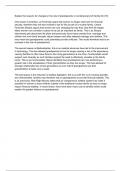
Explain the reasons for changes in the role of grandparents in contemporary UK family life (15)
One reason is Ambition, as Feminists argue that women no longer need men for financial
security, therefore they are less inclined to opt for life as part of a nuclear family. Liberal
Feminists Sharpe argues that women are now changing the way they view their life stages.
Many women now consider a career to be just as important as family. This is as Sharpe
interviewed girls about their life plans and previously found many wanted love, marriage and
children but now found that girls valued careers and often delayed marriage and children. This
may mean that grandparents could potentially provide childcare. This would therefore lead to an
increase in the role of grandparents.
The second reason is Medicalisation, this is as medical advances have led to the improvement
in technology. This has allowed grandparents to live for longer causing a rise in life expectancy,
causing families to often have three to four living generations at one time. Functionalists would
support such diversity as such families support the need to effectively socialise in the family
home. This is as Functionalists Harper identified how grandparents are now performing a
greater role in the socialisation of their grandchildren as they live longer. This has allowed for
stronger relationship ties across generations as over half of grandparents see their
grandchildren at least once a week.
The last reason is the reduction of welfare legislation, this is as with the cut in housing benefits
and child benefits, families may therefore rely on grandparents to provide financial stability. This
is as previously, New Right Murray states that an overgenerous welfare system has made it
possible for women to have children outside of the traditional nuclear family as they no longer
require financial stability. In recent times, there have been many cuts to benefits which would
explain the greater reliance on grandparents.
One reason is Ambition, as Feminists argue that women no longer need men for financial
security, therefore they are less inclined to opt for life as part of a nuclear family. Liberal
Feminists Sharpe argues that women are now changing the way they view their life stages.
Many women now consider a career to be just as important as family. This is as Sharpe
interviewed girls about their life plans and previously found many wanted love, marriage and
children but now found that girls valued careers and often delayed marriage and children. This
may mean that grandparents could potentially provide childcare. This would therefore lead to an
increase in the role of grandparents.
The second reason is Medicalisation, this is as medical advances have led to the improvement
in technology. This has allowed grandparents to live for longer causing a rise in life expectancy,
causing families to often have three to four living generations at one time. Functionalists would
support such diversity as such families support the need to effectively socialise in the family
home. This is as Functionalists Harper identified how grandparents are now performing a
greater role in the socialisation of their grandchildren as they live longer. This has allowed for
stronger relationship ties across generations as over half of grandparents see their
grandchildren at least once a week.
The last reason is the reduction of welfare legislation, this is as with the cut in housing benefits
and child benefits, families may therefore rely on grandparents to provide financial stability. This
is as previously, New Right Murray states that an overgenerous welfare system has made it
possible for women to have children outside of the traditional nuclear family as they no longer
require financial stability. In recent times, there have been many cuts to benefits which would
explain the greater reliance on grandparents.