Intermediate Systems Acquisitions
(ACQ 202) Exam/91 Questions and
Answers
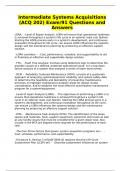
LORA - -Level of Repair Analysis: LORA will ensure that operational readiness
is achieved throughout a system's life cycle in an optimal, least cost fashion. Starting the LORA process early in a system's development, and continuous evaluation throughout its life cycle, can ensure LORA influences the systems design and the maintenance planning by producing an effective support solution. -LORA considers: - -Cost, performance, schedule, and supportability to aid in finalizing an effective and supportable design solution. -FTA - -Fault Tree Analysis: Involves using deductive logic to determine the possible causes of a defined undesired operational result. It is a top-down failure analysis of a system that analyzes a series of lower-level events. -RCM - -Reliability Centered Maintenance (RCM): consists of a systematic approach of analyzing system/equipment reliability and system safety data to determine the feasibility and desirability of preventive maintenance activities, to highlight maintenance problem areas for design review consideration, and to establish the most effective preventative maintenance program for a system/equipment. -Level of repair Analysis (LORA) - -The objectives of performing a LORA is to ensure that operational readiness is achieved throughout a system's life cycle in an optimal, least cost fashion. Starting the LORA process early in a system's development, and continuous evaluation throughout its life cycle, can ensure a LORA influences the systems design and the maintenance planning by producing an effective support solution. -MTA - -Maintenance Task Analysis (MTA): The identification of the steps, spares and materials, tools, support equipment, personnel skill levels as well as any facility issues that must be considered for a given repair task. Also include in the MTA are elapsed times required for the performance of each task. -The Four Prime factors that govern system acquisition programs are: - -
Cost, schedule, performance, and supportability. -Enclosure 6, Section 3 of DoDI 5000.02 requires that the Life-Cycle Sustainment Plan (LCSP) will: - -Describe sustainment influences on system design and the technical, business, and management activities to develop, implement, and deliver a product support package. -BIT (built in test) - -Component enables the system to conduct a self-test to
determine if the system is functioning properly. -70-80% of a system's entire cost is during the operation and support (O&S) cycle. - - -Reliability defined: - -How long an item or system will perform its function before it breaks. The term MTBF is used to quantify and measure reliability and is defined in the Capability Development Document (CDD). -Reliability is a mandatory Key Systems Attribute (KSA) for: - -ACAT I programs. For ACAT II programs and below, the user representative (service sponsor) will determine applicability. -MTTR (Mean Time To Repair) - -Used to quantify and measure maintainability. -Material Availability (Am): - -Is a mandatory Key Performance Parameter (KPP) and is contained in the Capability Development Document (CDD). -(Am) is defined as: - -the measure of the percentage of the total inventory of a system operational cable of performing an assigned mission given material condition. -Reliability, maintainability, and supportability are critical factors in achieving: - -maximum Operational Availability (Ao) -The primary purpose of the Future Years Defense Program (FYDP)? - -
Display the manpower, force structure, and funding of the DoD. -The Planning, Programming, Budgeting and Execution (PPBE) process provides a process by which the DoD can: - -Identify the fiscal needs of the services and decide how to allocate resources. -During the annual PPBE Programming activity, each service and defense agency submits: - -Their POM (program objectives memorandum) to the OSD. -What funding policy applies to the procurement appropriations category? - -Full Funding -PPBE - -Is the primary resource allocation process for DoD. The PPBE is an iterative, calendar-driven process that operates in one year year cycle.
(ACQ 202) Exam/91 Questions and
Answers
LORA - -Level of Repair Analysis: LORA will ensure that operational readiness
is achieved throughout a system's life cycle in an optimal, least cost fashion. Starting the LORA process early in a system's development, and continuous evaluation throughout its life cycle, can ensure LORA influences the systems design and the maintenance planning by producing an effective support solution. -LORA considers: - -Cost, performance, schedule, and supportability to aid in finalizing an effective and supportable design solution. -FTA - -Fault Tree Analysis: Involves using deductive logic to determine the possible causes of a defined undesired operational result. It is a top-down failure analysis of a system that analyzes a series of lower-level events. -RCM - -Reliability Centered Maintenance (RCM): consists of a systematic approach of analyzing system/equipment reliability and system safety data to determine the feasibility and desirability of preventive maintenance activities, to highlight maintenance problem areas for design review consideration, and to establish the most effective preventative maintenance program for a system/equipment. -Level of repair Analysis (LORA) - -The objectives of performing a LORA is to ensure that operational readiness is achieved throughout a system's life cycle in an optimal, least cost fashion. Starting the LORA process early in a system's development, and continuous evaluation throughout its life cycle, can ensure a LORA influences the systems design and the maintenance planning by producing an effective support solution. -MTA - -Maintenance Task Analysis (MTA): The identification of the steps, spares and materials, tools, support equipment, personnel skill levels as well as any facility issues that must be considered for a given repair task. Also include in the MTA are elapsed times required for the performance of each task. -The Four Prime factors that govern system acquisition programs are: - -
Cost, schedule, performance, and supportability. -Enclosure 6, Section 3 of DoDI 5000.02 requires that the Life-Cycle Sustainment Plan (LCSP) will: - -Describe sustainment influences on system design and the technical, business, and management activities to develop, implement, and deliver a product support package. -BIT (built in test) - -Component enables the system to conduct a self-test to
determine if the system is functioning properly. -70-80% of a system's entire cost is during the operation and support (O&S) cycle. - - -Reliability defined: - -How long an item or system will perform its function before it breaks. The term MTBF is used to quantify and measure reliability and is defined in the Capability Development Document (CDD). -Reliability is a mandatory Key Systems Attribute (KSA) for: - -ACAT I programs. For ACAT II programs and below, the user representative (service sponsor) will determine applicability. -MTTR (Mean Time To Repair) - -Used to quantify and measure maintainability. -Material Availability (Am): - -Is a mandatory Key Performance Parameter (KPP) and is contained in the Capability Development Document (CDD). -(Am) is defined as: - -the measure of the percentage of the total inventory of a system operational cable of performing an assigned mission given material condition. -Reliability, maintainability, and supportability are critical factors in achieving: - -maximum Operational Availability (Ao) -The primary purpose of the Future Years Defense Program (FYDP)? - -
Display the manpower, force structure, and funding of the DoD. -The Planning, Programming, Budgeting and Execution (PPBE) process provides a process by which the DoD can: - -Identify the fiscal needs of the services and decide how to allocate resources. -During the annual PPBE Programming activity, each service and defense agency submits: - -Their POM (program objectives memorandum) to the OSD. -What funding policy applies to the procurement appropriations category? - -Full Funding -PPBE - -Is the primary resource allocation process for DoD. The PPBE is an iterative, calendar-driven process that operates in one year year cycle.