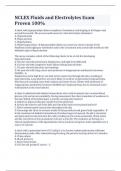
NCLEX Fluids and Electrolytes Exam Proven 100%
NCLEX Fluids and Electrolytes Exam Proven 100% A client with hypoparathyroidism complains of numbness and tingling in his fingers and around the mouth. The nurse would assess for what electrolyte imbalance? A. Hyponatremia B. Hypocalcemia C. Hyperkalemia D. Hypermagnesemia - B Hypoparathyroidism can cause low serum calcium levels. Numbness and tingling in extremities and in the circumoral area around the mouth are the hallmark signs of hypocalcemia. The nurse evaluates which of the following clients to be at risk for developing hypernatremia? A. 50-year-old with pneumonia, diaphoresis, and high fevers(Missed) B. 62-year-old with congestive heart failure taking loop diuretics C. 39-year-old with diarrhea and vomiting D. 60-year-old with lung cancer and syndrome of inappropriate antidiuretic hormone (SIADH) - A Diaphoresis and a high fever can lead to free water loss through the skin, resulting in hypernatremia. Loop diuretics are more likely to result in a hypovolemic hyponatremia. Diarrhea and vomiting cause both sodium and water losses. Clients with syndrome of inappropriate antidiuretic hormone (SIADH) have hyponatremia, due to increased water reabsorption in the renal tubules. A client is admitted with diabetic ketoacidosis who, with treatment, has a normal blood glucose, pH, and serum osmolality. During assessment, the client complains of weakness in the legs. Which of the following is a priority nursing intervention? A. Request a physical therapy consult from the physician B. Ensure the client is safe from falls and check the most recent potassium level C. Allow uninterrupted rest periods throughout the day D. Encourage the client to increase intake of dairy products and green leafy vegetables - B In the treatment of diabetic ketoacidosis, the blood sugar is lowered, the pH is corrected, and potassium moves back into the cells, resulting in low serum potassium. Client safety and the correction of low potassium levels are a priority. The weakness in the legs is a clinical manifestation of the hypokalemia. Dairy products and green, leafy vegetables are a source of calcium. A client with a potassium level of 5.5 mEq/L is to receive sodium polystyrene sulfonate (Kayexalate) orally. After administering the drug, the priority nursing action is to monitor A. Urine output. B. Blood pressure. C. Bowel movements. D. ECG for tall, peaked T waves. - C Kayexalate causes potassium to be exchanged for sodium in the intestines and excreted through bowel movements. If client does not have stools, the drug cannot work properly. Blood pressure and urine output are not of primary importance. The nurse would already expect changes in T waves with hyperkalemia. The nurse is caring for a client who has been in good health up to the present and is admitted with cellulitis of the hand. The client's serum potassium level was 4.5 mEq/L yesterday. Today the level is 7 mEq/L. Which of the following is the next appropriate nursing action? A. Call the physician and report results B. Question the results and redraw the specimen C. Encourage the client to increase the intake of bananas D. Initiate seizure precautions - B A client who has been in good health up to the present is admitted for cellulitis of the hands. When the serum potassium goes from 4.5 mEq/L to 7.0 mEq/L with no risk factors for hyperkalemia, false high results should be suspected because of hemolysis of the specimen A client is receiving an intravenous magnesium infusion to correct a serum level of 1.1 mEq/L. Which of the following assessments would alert the nurse to immediately stop the infusion? A. Absent patellar reflex B. Diarrhea C. Premature ventricular contractions D. Increase in blood pressure - A Clinical manifestations of hypermagnesemia are the result of depressed neuromuscular transmission. Absent reflexes indicate a magnesium level around 7 mEq/L. Diarrhea and PVCs are not clinical manifestations of high magnesium levels. Hypermagnesemia causes hypotension. A client with chronic renal failure reports a 10 pound weight loss over 3 months and has had difficulty taking calcium supplements. The total calcium is 6.9 mg/dl. Which of the following would be the first nursing action? A. Assess for depressed deep tendon reflexes B. Call the physician to report calcium level C. Place an intravenous catheter in anticipation of administering calcium gluconate D. Check to see if a serum albumin level is available - D. A client with chronic renal failure who reports a 10 pound weight loss over 3 months and has difficulty taking calcium supplements is poorly nourished and likely to have hypoalbuminemia. A drop in serum albumin will result in a false low total calcium level A client with heart failure is complaining of nausea. The client has received IV furosemide (Lasix), and the urine output has been 2500 ml over the past 12 hours. The client's home drugs include metoprolol (Lopressor), digoxin (Lanoxin), furosemide, and multivitamins. Which of the following are the appropriate nursing actions before administering the digoxin? Select all that apply. A. Administer an antiemetic prior to giving the digoxin B. Encourage the client to increase fluid intake C. Call the physician D. Report the urine output E. Report indications of nausea - C. Call the physician D. Report the urine output E. Report indications of nausea Potassium is lost during diuresis with a loop diuretic such as furosemide (Lasix). Hypokalemia can cause digitalis toxicity, which often results in nausea. The physician should be notified, and digoxin should be held until potassium levels and digoxin levels are checked The nurse is caring for a bedridden client admitted with multiple myeloma and a serum calcium level of 13 mg/dl. Which of the following is the most appropriate nursing action? A. Provide passive ROM exercises and encourage fluid intake B. Teach the client to increase intake of whole grains and nuts C. Place a tracheostomy tray at the bedside D. Administer calcium gluconate IM as ordered - A A client with a serum sodium of 115 mEq/L has been receiving 3% NS at 50 ml/hr for 16 hours. This morning the client feels tired and short of breath. Which of the following interventions is a priority? A. Turn down the infusion B. Check the latest sodium level C. Assess for signs of fluid overload D. Place a call to the physician - C A complication of hypertonic sodium solution administration is fluid overload. While turning down the infusion, checking the latest sodium level, and notifying the physician may all be reasonable, the priority intervention is to assess for manifestations of fluid overload. Assessment is always the priority to determine what action to take next A client with chronic renal failure receiving dialysis complains of frequent constipation. When performing discharge teaching, which over-the-counter products should the nurse instruct the client to avoid at home? A. Bisacodyl (Dulcolax) suppository B. Fiber supplements C. Docusate sodium D. Milk of magnesia - D Milk of magnesia contains magnesium, an electrolyte that is excreted by kidneys. Clients with renal failure are at risk for hypermagnesemia, since their bodies cannot excrete the excess magnesium. The client should avoid magnesium-containing laxatives. A client is receiving intravenous potassium supplementation in addition to maintenance fluids. The urine output has been 120 ml every 8 hours for the past 16 hours and the next dose is due. Before administering the next potassium dose, which of the following is the priority nursing action? A. Encourage the client to increase fluid intake B. Administer the dose as ordered C. Draw a potassium level and administer the dose if the level is low or normal D. Notify the physician of the urine output and hold the dose - D Urine output is an indication of renal function. Normal urine output is at least 30 ml/hour. Clients with impaired renal function
Escuela, estudio y materia
- Institución
- NCLEX Fluids and Electrolytes
- Grado
- NCLEX Fluids and Electrolytes
Información del documento
- Subido en
- 27 de abril de 2024
- Número de páginas
- 12
- Escrito en
- 2023/2024
- Tipo
- Examen
- Contiene
- Preguntas y respuestas
Temas
-
hyponatremia
-
hyperkalemia
-
nclex fluids and electrolytes exam proven 100
-
the nurse evaluates which of the following clients

Documento también disponible en un lote