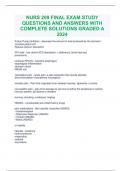
NURS 209 FINAL EXAM STUDY QUESTIONS AND ANSWERS WITH COMPLETE SOLUTIONS GRADED A 2024
Proton Pump Inhibitors - decrease the amount of acid produced by the stomach - increase gastric pH Reduce calcium absorption PPI risks - low vitamin B12 absorption -> deficiency, bone fractures pneumonia continue PPIs for - barrett's esophagus esophageal inflammation stomach ulcers NSAID use nociceptive pain - acute pain; a pain sensation that results abruptly direct stimulation of peripheral nociceptors somatic pain - Pain that originates from skeletal muscles, ligaments, or joints. neuropathic pain - pain from damage to neurons of either the peripheral or central nervous system, by lesions or disease burning, shooting, numbness, tingling NSAIDs - nonsteroidal anti-inflammatory drugs pain medications - Non-opioids: Ibuprofen (NSAID) • Acetaminophen • Naproxen/ Naprosyn (NSAID) • Toradol (NSAID) • Mobic (NSAID) or opioids Opioids - morphine hydromorphone meperidine codeine oxycodone fentanyl tramadol methadone buprenorphine Allodynia - Pain due to a stimulus that does not normally provoke pain Hyperalgesia - increased sensitivity to pain PACSLAC-II - Pain Assessment Checklist for Seniors with Limited Ability to Communicate Acute pain - sudden in onset time limited benefits - to avoid actual injury up to 7 days chronic pain - longer than 3 months, no biological advantage adjuvant analgesics - anticonvulsants, antidepressants, multipurpose drugs Opioid Pharmacokinetics - opioid can be taken orally - best results are injectable versions olized in liver, where certain opioids have active metabolites ted in kidneys, dysfunction may effect metabolic clearance codeine - requires conversion to active metabolite to have analgesic effect elderly have poor cytochrome P-450 enzyme metabolism, codeine will have no analgesic effects but ALL side effects OPQRSTUV - onset of the pain, precipitation of pain, quality-quanitity, region or radiation, severity scale, treatments, understanding(what do you think is causing it?) and values(goals and expectations of care) Pain assessment in cognitively impaired - active indicators - rocking, negative vocalizations, frowning, grimacing, noisy breathing, irritability absence indicators - flat effects, decreased interaction/intake, altered sleep pattern Mild pain (1-3) - non-opioid +/- adjuvant Moderate Pain (4-6) - Opioid for mild-moderate pain +/- non opioid +/- adjuvant Severe pain (7-10) - Opioid +/- non-opioid +/- adjuvant non-pharmacological pain therapy - music therapy acupuncture dance massage hot/cold rhythmic breathing opioid risk tool - 1. family Hx of substance abuse 2. personal history of substance abuse 3. age 4. history of preadolescent sexual abuse 5. psychological disease - ADHD, OCD, schizoprenia, depression analgesics in elderly - may recieve greater peak longer duration dosing at lower doses, titrated to effect NSAIDs adverse effects - GI: heartburn to severe GI bleeding Acute renal failure Noncardiogenic pulmonary edema Increased risk of MI and stroke Altered hemostasis Hepatotoxicity Skin eruption, sensitivity reaction Tinnitus, hearing loss normal bladder capacity - 300-600mL normal micturition - 8/day 1 or fewer/night micturition center - pons & brainstem of CNS activated via afferent signals from bladder sends inhibitory impulses to spinal reflex for bladder voiding sacral micturition center - group of neurons in the sacral region of the spinal cord that controls urination; acts reflexively unless its action is modified by higher brain centers to allow voluntary urination SNS in T11-L2
Escuela, estudio y materia
- Institución
- Excelsior College
- Grado
- NURS 209
Información del documento
- Subido en
- 23 de abril de 2024
- Número de páginas
- 28
- Escrito en
- 2023/2024
- Tipo
- Examen
- Contiene
- Preguntas y respuestas
Temas
-
nurs 209 final exam
-
nurs 209
-
nurs 209 final exam study questions and answers
-
nurs 209 final exam study questions

Documento también disponible en un lote