Unit #8: Authority and Expertise
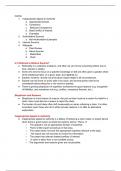
The text discusses the appropriate use of authority and expertise when evaluating claims. It emphasizes the importance of skepticism and critical thinking when faced with expert advice. The text also highlights the fallacy of inappropriate appeal to authority and provides several criteria for determining whether an appeal to authority is appropriate or not. The text further explains the concept of an appropriate domain of expertise, stating that certain subjective areas like ethics and aesthetics are excluded from expertise. It also mentions the need for consensus among experts in a particular field and the importance of relevant competence. The text discusses bias and conflicts of interest, stating that funding from a specific source does not necessarily discount an expert's claim, but it is important to consider potential biases. Examples are provided to illustrate inappropriate appeals to authority, such as relying on a celebrity endorsement or an unsupported claim from a non-credible source. The text distinguishes between authoritative and non-authoritative sources, highlighting the importance of credible, corroborated, and sanctioned information. It warns against relying on summary sources, social media posts, or self-published documents. The text discusses the challenges of internet research, including the ease of finding information but also the need to verify sources and avoid click-bait. Wikipedia is mentioned as a preliminary source of information, but caution is advised as the system is not perfect and some quality information may be excluded or dubious information included. Peer review is highlighted as an important process for evaluating the authority and quality of information. Different types of peer-reviewed publications are explained, such as abstracts and review articles. The text acknowledges that news reporting is a business and warns against media bias. It cautions against confirmation bias and the formation of information bubbles. Overall, the text provides guidance on how to evaluate and verify information from experts, sources, and media outlets, emphasizing the importance of critical thinking, skepticism, and seeking authoritative and credible sources.
Escuela, estudio y materia
- Institución
- Sam Houston State University
- Grado
- PHIL 2303
Información del documento
- Subido en
- 23 de abril de 2024
- Número de páginas
- 5
- Escrito en
- 2023/2024
- Tipo
- Notas de lectura
- Profesor(es)
- Brommage
- Contiene
- Todas las clases
Temas
-
authority and expertise
-
appropriate domain
-
consensus
-
relevant competence
-
biasconflict of interest
-
inappropriate appeal to authority

Documento también disponible en un lote