IPMA - Module 4 - Classification Exam Questions With Complete Answers!!
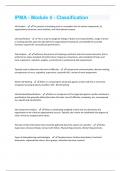
Job Analysis - The process of analyzing a job or occupation into its various components, its organizational structure, work activities, and informational content. Job Classification - This is used to categorize listings of duties and responsibilities, assign a formal or working job title, place the job within the organizational framework, and identify the essential functions required for successful job performance. Task Analysis - Addresses the process of analyzing a particular task into various elements, that is, performance steps; standards of performance; frequency, importance, and complexity of tasks; and tools, equipment, materials, supplies, and technical or professional skill requirements. Typically used to determine the level of difficulty - Interpersonal communication, decision-making, consequences of error, originality, supervision, required KSA's, variety of work assignments Whole Job Ranking - Relies on comparing the whole job against another job that is commonly recognized as being properly classified. AKA - Benchmarking Job Standards/Specifications - Relies on comparison of the target job against a written standard or specification that generally defines/describes the tasks, level of difficulty, complexity, etc. encompassed by a specific job classification. Job Component Analysis - Relies on developing weighted criteria that are deemed by the organization to be critical to organizational success. Typically, the criteria are subdivided into degrees of value, which are assigned point values. The type of data information that should be gathered about the aspects of a position - Duties, Supervision, Decisions Made, Contact with Others, Physical Requirements, Worker Requirements. Types of data-gathering methodologies - Questionnaires, Position descriptions, functional statements, organizational charts, focus groups, individual interview, researchWhen conducting audit with employee - Place employee at ease, the tone should be conversational and informal, the interview should be conducted at the employee's worksite, explain the purpose of the interview Job Standards/Specifications - A generalized description of a group of jobs, that for classification purposes, have the same title. When developing job standards include the following: - Class Title and numeric code, class definition, examples of work, special requirements, experience and training experience, and KSA's. Class Title and Numeric Code - The title expressive of the generic occupation of work and the code would distinguish each class in the job family. Class definition - Describes all of the critical factors that distinguish this specific class title from all other job titles Examples of work - Examples of work actually performed, action statements that depict work, representative statements of work normally performed at that level. Knowledge, Skills and Abilities - Information concerning facts, principles, procedures, rules. laws, or processes that is possessed in a manner that can be evaluated or tested. The capability of using knowledge with competency. Involves the proficient use of knowledge, or proficiency in a motor or physical work environment. Experience and Training requirements - Includes the minimum experience, education, and/or training which and applicant must possess. Necessary Special Requirements - Examples would be licensure, certification, or registration. Duties Test - Involves determining whether the job falls into one of the three categories: Executive, Professional, Administrative.Salary level and basis test - If an employee makes less than $23,600 per year, or $455 per week the job is non-exempt. Executive jobs duties typically include - Regularly supervises two or more employees and has management as the primary duty of the position. Has genuine input into the job status of other employees, which includes activities such as hiring, terminating, etc.
Escuela, estudio y materia
- Institución
- IPMA - Module 4 - Classification
- Grado
- IPMA - Module 4 - Classification
Información del documento
- Subido en
- 22 de abril de 2024
- Número de páginas
- 5
- Escrito en
- 2023/2024
- Tipo
- Examen
- Contiene
- Preguntas y respuestas
Temas
-
ipma module 4 classification

Documento también disponible en un lote