Learning Objectives IS
The objective of the course is to help you to:
• Develop an ability to discuss how the presence of IT enables new business models and how
digital transformation changes industry structure, and alter marketing, sales, operations, and
business practices.
• Learn the contemporary issues in e-commerce, the changes in consumer behavior, and the
opportunities for different forms of electronic markets and auctions.
• Describe pricing and versioning of digital goods and recognize the importance of platform
mediated networks.
About the reading - Ask yourself the following question:
• Do I like or dislike the reading and why?
• What was surprising about the reading?
• To what other examples can you apply the theory and lessons of the reading?
• What are other examples or counter-examples (not mentioned in the reading) related
to the issues raised in the reading?
Week 1 – Digital disruption
1. Evaluate how can digital technologies change industry structure.
• How can IT be used to reengineer core value activities and change the basis of the
competition? -- How digital technologies influences industry structure?
Example: Book industry – Amazon.com VS Barnes & Noble
Amazon entitles as “Book broker”
- Cheaper due to much lower (initial) capital costs
- Many more products than just books
- Pull the demand for niche books
- Recommendations based on customer’s orders
- Bigger variety
Carli Wischhoff IS 2018-2019 1
, • How can IT build or reduce barriers to entry?
→ IT lowers barriers for entrance tremendously!
Barriers to entry for Amazon – weaker
Substitutes for Amazon – stronger
Bargaining power of suppliers – stronger/weaker
Bargaining Power of buyers - stronger
Competition – rivalry among existing competitors - stronger
• How can IT add value to existing products and services or create new ones?
Product proliferation – power bar
Different versions of kinds of the same products, i.e power bar
- Product proliferation occurs when organizations market many variations of the
same products. This can be done through different color combinations; product sizes
and different product uses. This produces diversity for the firm as it is able to capture
its sizable portion of the market.
- With all the media, offline and online, a description of what the customers wants is
available.
- Recommendations systems, search engines, alerts, you can find the project that you
asked for, and you know exactly who sells it.
- Increased personification and need for differentiations
• How can IT change the nature of relationships and the balance of power among
buyers and suppliers?
Bargaining power of suppliers – stronger/weaker
- Disintermediate – Cut of the middleman – Dell
- Access to more customers
- Standardized goods services and processes
Bargaining Power of buyers - stronger
- Eliminate powerful channels and improves bargaining power over existing channels
- Shifts bargaining power to end use
- Reduces switching costs – near zero
• How can IT increase or decrease switching costs?
→ Reduces switching costs – (near to) zero!
Example of cellular companies with their high cancellation costs. The rise of Internet retailers
and fast shipping made it even easier for consumers to shop for apparel at their homes across
multiple online platforms.
How digital technologies influence industry structure?
Economic fundamentals of strategy
- The unit of strategic analysis is the industry - Defining the relevant industry is
essential to sound strategy
- Company economic performance results from two distinct cases:
Carli Wischhoff IS 2018-2019 2
, 1) Industry Structure – Overall rules of competition → Porter’s five forces
2) Relative position within the industry – sources of competitive advantage
Note: Strategic thinking must encompass both
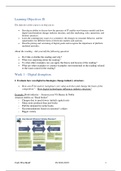
Threat of new Entrants – Lower barriers to entry
Access to sales force
Access to channels
Proprietary information
Threat of Substitutes
Proliferation of Internet approaches creates new substitute threats
Overall industry more efficient, internet can expand the market
Bargaining power of suppliers
Access to more customers
Get rid of middleman
Standardized goods, services, processes
Example: Again, Dell
Bargaining power of buyers
Eliminate powerful channels and improve bargaining power over existing channels
Shifts bargaining power to end user
Reduces switching costs
Rivalry among existing competitors
Expand the geographic market, bringing many more companies into competition with
one another
Intensify the rivalry among competitors, difficult to maintain proprietary offerings
More price driven competition, increased price discounting due to lower variable
costs relative to fixed costs
2. Explain how AI is being used today in business and how much disruption will it have
on business in the near future
Q: How AI is being used today in business? How much disruption will it have on
business in the near future?
Artificial intelligence (AI) makes it possible for machines to learn from experience,
adjust to new inputs and perform human-like tasks. Most AI examples that you hear
about today – from chess-playing computers to self-driving cars – rely heavily on
deep learning and natural language processing. Using these technologies, computers
can be trained to accomplish specific tasks by processing large amounts of data and
recognizing patterns in the data.
Natural language processing (NLP) is a branch of artificial intelligence that helps
computers understand, interpret and manipulate human language. NLP draws from
many disciplines, including computer science and computational linguistics, in its
pursuit to fill the gap between human communication and computer understanding.
Carli Wischhoff IS 2018-2019 3
, - Digital marketing
- Customer relationship management
- Data analytics
- Customer self-service
- Enterprise resource planning
→ So, AI is already used in quite a few business spheres as of today
Adoption rates over the last decades/ century has grown extraordinarily
→ So, expectations are high when it comes to the disruptive impact AI will have in the future
Disruption of self-driving cars?
- Class Discussion
https://www.youtube.com/watch?v=ld33EUK2fis&feature=youtu.be
https://www.youtube.com/watch?v=w6qoFGjqhH0
https://youtu.be/S38hcD96kFI
Why now? What does it affect? What are the opportunities?
Disruption of self-driving cars?
- Computer vision
- Investments made my companies in the concept of a self-driving car
Why now?
- Awareness of sustainability & technological transitions
What does it affect?
- All kinds of industry (car, industry, regulatory) Car manufacturers, customers,
municipalities, other institutions
- Social inclusion – more people can afford it (driving)
Carli Wischhoff IS 2018-2019 4
The objective of the course is to help you to:
• Develop an ability to discuss how the presence of IT enables new business models and how
digital transformation changes industry structure, and alter marketing, sales, operations, and
business practices.
• Learn the contemporary issues in e-commerce, the changes in consumer behavior, and the
opportunities for different forms of electronic markets and auctions.
• Describe pricing and versioning of digital goods and recognize the importance of platform
mediated networks.
About the reading - Ask yourself the following question:
• Do I like or dislike the reading and why?
• What was surprising about the reading?
• To what other examples can you apply the theory and lessons of the reading?
• What are other examples or counter-examples (not mentioned in the reading) related
to the issues raised in the reading?
Week 1 – Digital disruption
1. Evaluate how can digital technologies change industry structure.
• How can IT be used to reengineer core value activities and change the basis of the
competition? -- How digital technologies influences industry structure?
Example: Book industry – Amazon.com VS Barnes & Noble
Amazon entitles as “Book broker”
- Cheaper due to much lower (initial) capital costs
- Many more products than just books
- Pull the demand for niche books
- Recommendations based on customer’s orders
- Bigger variety
Carli Wischhoff IS 2018-2019 1
, • How can IT build or reduce barriers to entry?
→ IT lowers barriers for entrance tremendously!
Barriers to entry for Amazon – weaker
Substitutes for Amazon – stronger
Bargaining power of suppliers – stronger/weaker
Bargaining Power of buyers - stronger
Competition – rivalry among existing competitors - stronger
• How can IT add value to existing products and services or create new ones?
Product proliferation – power bar
Different versions of kinds of the same products, i.e power bar
- Product proliferation occurs when organizations market many variations of the
same products. This can be done through different color combinations; product sizes
and different product uses. This produces diversity for the firm as it is able to capture
its sizable portion of the market.
- With all the media, offline and online, a description of what the customers wants is
available.
- Recommendations systems, search engines, alerts, you can find the project that you
asked for, and you know exactly who sells it.
- Increased personification and need for differentiations
• How can IT change the nature of relationships and the balance of power among
buyers and suppliers?
Bargaining power of suppliers – stronger/weaker
- Disintermediate – Cut of the middleman – Dell
- Access to more customers
- Standardized goods services and processes
Bargaining Power of buyers - stronger
- Eliminate powerful channels and improves bargaining power over existing channels
- Shifts bargaining power to end use
- Reduces switching costs – near zero
• How can IT increase or decrease switching costs?
→ Reduces switching costs – (near to) zero!
Example of cellular companies with their high cancellation costs. The rise of Internet retailers
and fast shipping made it even easier for consumers to shop for apparel at their homes across
multiple online platforms.
How digital technologies influence industry structure?
Economic fundamentals of strategy
- The unit of strategic analysis is the industry - Defining the relevant industry is
essential to sound strategy
- Company economic performance results from two distinct cases:
Carli Wischhoff IS 2018-2019 2
, 1) Industry Structure – Overall rules of competition → Porter’s five forces
2) Relative position within the industry – sources of competitive advantage
Note: Strategic thinking must encompass both
Threat of new Entrants – Lower barriers to entry
Access to sales force
Access to channels
Proprietary information
Threat of Substitutes
Proliferation of Internet approaches creates new substitute threats
Overall industry more efficient, internet can expand the market
Bargaining power of suppliers
Access to more customers
Get rid of middleman
Standardized goods, services, processes
Example: Again, Dell
Bargaining power of buyers
Eliminate powerful channels and improve bargaining power over existing channels
Shifts bargaining power to end user
Reduces switching costs
Rivalry among existing competitors
Expand the geographic market, bringing many more companies into competition with
one another
Intensify the rivalry among competitors, difficult to maintain proprietary offerings
More price driven competition, increased price discounting due to lower variable
costs relative to fixed costs
2. Explain how AI is being used today in business and how much disruption will it have
on business in the near future
Q: How AI is being used today in business? How much disruption will it have on
business in the near future?
Artificial intelligence (AI) makes it possible for machines to learn from experience,
adjust to new inputs and perform human-like tasks. Most AI examples that you hear
about today – from chess-playing computers to self-driving cars – rely heavily on
deep learning and natural language processing. Using these technologies, computers
can be trained to accomplish specific tasks by processing large amounts of data and
recognizing patterns in the data.
Natural language processing (NLP) is a branch of artificial intelligence that helps
computers understand, interpret and manipulate human language. NLP draws from
many disciplines, including computer science and computational linguistics, in its
pursuit to fill the gap between human communication and computer understanding.
Carli Wischhoff IS 2018-2019 3
, - Digital marketing
- Customer relationship management
- Data analytics
- Customer self-service
- Enterprise resource planning
→ So, AI is already used in quite a few business spheres as of today
Adoption rates over the last decades/ century has grown extraordinarily
→ So, expectations are high when it comes to the disruptive impact AI will have in the future
Disruption of self-driving cars?
- Class Discussion
https://www.youtube.com/watch?v=ld33EUK2fis&feature=youtu.be
https://www.youtube.com/watch?v=w6qoFGjqhH0
https://youtu.be/S38hcD96kFI
Why now? What does it affect? What are the opportunities?
Disruption of self-driving cars?
- Computer vision
- Investments made my companies in the concept of a self-driving car
Why now?
- Awareness of sustainability & technological transitions
What does it affect?
- All kinds of industry (car, industry, regulatory) Car manufacturers, customers,
municipalities, other institutions
- Social inclusion – more people can afford it (driving)
Carli Wischhoff IS 2018-2019 4