Week 5: Endocrine System Case Study : Advanced Pharmacology Fundamentals-Ghaeli
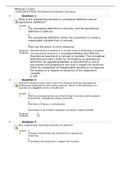
Week 5: Endocrine System Case Study Due Mar 31 at 11:59pm Points 100 Questions 51 Time Limit None Instructions Purpose The purpose of this assignment is to apply the principles of pharmacology to support evidence-based prescribing practices for the management of common diseases of the endocrine system. This assignment allows students to use clinical practice guidelines to guide treatment decisions for common patient scenarios in the clinical setting. Course Outcomes This assignment enables the student to meet the following course outcomes: CO 1: Identify the most commonly prescribed agents in the major drug classes. (POs 1, 2) CO 2: Make appropriate evidence-based therapeutic treatment decisions for individual patients utilizing drugs from the major drug classes.(POs 1, 2) CO 3: Apply knowledge of pharmacokinetics, pharmacodynamics and pharmacogenomics in prescribing patient treatment. (POs 1, 2) CO 4: Distinguish internal and external environment factors affecting drug action, reaction, efficacy, and interaction. (POs 1, 2) CO 5: Identify client indicators of therapeutic, ineffective, adverse responses and side effects to drug therapy. (POs 1, 2) Due Date The Late Assignment Policy applies to this assignment. The assignment title is due by Wednesday 11:59 p.m. MT of Week 5. Total Points Possible 100 Preparing the Assignment Follow these guidelines when completing each component of the assignment. Contact your course faculty if you have questions. There are three patient cases presented in this assignment. You are to use the following resources in addition to your textbook to answer the questions. American Diabetes Association. (2020). Figure 9.1 [Graph]. Standards of Medical Care in Diabetes—2020 Abridged for Primary Care Rosenthal, L., Burchum, J. (2021). Lehne's pharmacotherapeutics for Advanced Practice Nurses and Physician Assistants (2nd ed.). Elsevier. General web search. You will be presented with a patient case and then answer a series of questions. Questions are worth 2 points each. After each question, you will receive feedback on your answer. However, this does mean that you will not be able to change your answer so be sure to use the resources listed to locate the answers to the questions. When you are ready to begin this assignment, click the "Take the Quiz" button near the bottom of this page. Endocrine Case Studies Case Study #1: John Jones Case Study #2: Alfonso Giuliani Case Study # Helen Smit Attempt History Attempt Time Score LATEST Attempt 1 399 minutes 95.1 out of 100 Score for this quiz: 95.1 out of 100 Submitted Mar 31 at 6:38pm This attempt took 399 minutes. Correct! Use the John Jones case study to answer the following question. Which glucose level equates with a Hgb A1C of 8.1%? Correct! ~183 mg/dl ~175 mg/dl ~204 mg/dl ~160 mg/dl The correct answer is ~183mg/ dl. See page 400, Table 48.4, Hemoglobin A1c levels and their corresponding eAG levels for complete information. Use the John Jones case study to answer the following question. John calls the office and reports that he is scheduled for diagnostic testing that requires IV contrast for imaging. He inquires if there are concerns with undergoing this procedure while taking his medications. What instructions should be given to John regarding his metformin regimen? Take the metformin the morning of the procedure but don’t take it for 48 hours afterward. Correct! Don’t take the metformin the day of the procedure and for 48 hours afterward. No special instructions are needed. Don’t take the metformin the day of the procedure but resume the following day. Metformin must be withheld on the day of the procedure and for 48 hours afterward. Serum creatinine levels should be normal before resuming metformin. Correct! Correct! Use the John Jones case study to answer the following question. Which of the following lab test should be evaluated before prescribing metformin? Correct! Complete metabolic profile (CMP) Lipid Panel Urinalysis Complete blood count (CBC) CMP provides a baseline evaluation for both hepatic and renal function which should be evaluated throughout treatment with metformin. Question 7 2 / 2 pts Use the John Jones case study to answer the following question. Which of John’s behaviors should be addressed to encourage lifestyle changes and decrease A1C levels? Select all that apply. Correct! Sits at a desk several hours a day. Correct! His diet largely consists of fast-food meals. He drinks sweet tea with every meal. Correct! Weight 235lbs He drinks 3-4 cups of coffee per day. Correct! BP 130/90 Family history is significant for diabetes. The combination of moderate exercise and weight loss reduces the risk for the development of type 2 diabetes and improves outcomes for patients with type 2 diabetes (Rosenthal & Burchum, 2021). Use the John Jones case study to answer the following question. Which behavior in John’s social history poses a potential concern with initiating metformin? His diet largely consists of fast-food meals. He drinks sweet tea with every meal. Correct! He reports drinking “a few beers on the weekend during football season”. He drinks 3-4 cups of coffee per day. No answer text provided.
Escuela, estudio y materia
- Institución
- Advanced Pharmacology
- Grado
- Advanced Pharmacology
Información del documento
- Subido en
- 4 de abril de 2024
- Número de páginas
- 51
- Escrito en
- 2023/2024
- Tipo
- Examen
- Contiene
- Preguntas y respuestas
Temas
-
week 5 endocrine system case study due mar 31 at