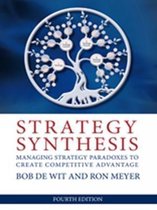
Strategy Synthesis
Chapter 1 - Introduction
Two different ways of presenting a broad spectrum of theoretical lenses.
1) Tools-driven: Study the characteristics and functioning of all tools individually and
only apply when appropriate. No picture on how everything relates to one another.
2) Problem-driven: First learn what is needed, check the solutions and the problem.
Then study the necessary tools.
Three-dimensional view of strategy with each their own chapter topics, strategy tension and
paradoxes.
Strategy
a) Introduction
b) Strategizing (logic vs intuition / analytical vs holistic)
c) Missioning and visioning (profitability vs responsibility / shareholder vs
stakeholder)
1) Strategy content: Combination of decisions and choices that lead a company into the
future. ‘What.’
a) Business level (markets vs resources / outside-in vs inside-out)
b) Corporate level (responsiveness vs synergy / portfolio vs integrated)
c) Network level (competition vs cooperation / discrete vs embedded)
2) Strategy process: The manner in which strategies come about. ‘How, who and when.’
a) Strategy formation (deliberateness vs emergence / planning vs
incrementalism)
b) Strategic change (revolution vs evolution / discontinuous vs continuous)
c) Strategic innovation (exploitation vs exploration / improvement vs
rejuvenation)
3) Strategy context: The set of circumstances under which the strategy content and
process are determined. ‘Where.’
a) Industry context (compliance vs choice / dynamics vs leadership)
b) Organizational context (control vs chaos / leadership vs dynamics)
c) International context (globalization vs localization / convergence vs diversity)
The levels of strategy (strategy content).
1) Network level = Between companies
2) Corporate level = Between business units of 1 company
3) Business level = Between different departments of one unit
4) Functional level = Within a department
Aspects of the strategy process
Strategic innovation > strategy formation > strategic change
Either/or problems
a) Puzzle (decreasing market share, one solution)
, b) Dilemma (merge with firm A or B, two solutions)
Both/and problems
a) Trade-offs (one optimal solution line, find a balance)
b) Paradoxes (business units working together but independent, get the best of
both worlds)
Dealing with paradoxes
1) Navigating = focus on one contrary at the time
2) Parallel processing = separating the contrary demands in different internal or external
units
3) Balancing = choosing constituting elements of each demand to create a
company-specific balance that is dynamic
4) Juxtaposing = simultaneously manage opposite demands on a permanent basis
5) Resolving = developing a new synthesis between competing demands or by
exploiting the tension
6) Embracing = actively use the tension as a source of creativity and opportunity
Chapter 2 - Strategizing
1) Cognitive Activities = application level, strategic thinking elements:
a) Identifying = what is a problem?
b) Diagnosing = what is the nature of the problem?
c) Conceiving = how should it be addressed?
d) Realizing = what actions should be taken?
2) Cognitive Maps = operating system level, mental models
a) Formed over time by experiences
3) Cognitive Abilities = hardware level, mental faculties. Can be limited by:
a) Limited information-sensing ability = we cannot directly identify how the world
works and the relationships
b) Limited information-processing capacity
c) Limited information storage capacity
The paradox of logic and intuition
1) Intuitive thinking
Does not follow usual steps but creates a holistic judgement process. You include multiple
inputs and relate them to the information and experiences in the cognitive map. Intuitive
responses are often correct. When it makes sense, the search for evidence starts and logic
is used to justify an understanding. But to challenge a cognitive map, thinking outside of the
box is needed.
a) Built up through years of experience
, b) Richer assessment of qualitative information
c) Faster
d) Unreliable and imprecise
e) Focuses on a few variables and interprets them in a particular way as per
your experience. To re-evaluate your view it requires logical thinking.
2) Logical thinking
To be successful strategists and managers need to escape their own cognitive maps and
those of other stakeholders in the process. They must be capable of reflecting if their
assumptions are based on actual facts.
a) Help to avoid outdated habits and routines
b) Expand cognitive map
c) Making a distinction between fantasy and feasibility
d) Analyze factors that determine success or failure
It’s hard to combine them because both require a different mindset and cognitive skills that it
is hard to do at the same time. Not only individuals, but also for groups. Opposing styles lead
to opposing people, logically a blend is then difficult.
The analytic reasoning perspective
+ Resembles the problem-solving approach of chess
+ Based on facts and hence, reliable
+ Scientific like
- Strategist often have to re-do steps in the strategic process because new information
becomes available or strategy does not work out
- Limited by incomplete information and imperfect cognitive abilities
- Emotions can influence
The holistic reasoning perspective
+ Opens up the fixed set of problem solutions
+ Room for redefining the problem and innovative approaches
+ Opportunities and threats do not exist
- Willing to operate without security of analysing, testing and arguing
Solution to manage the paradox of logic and intuition
1) Navigating: applying at the same time is difficult but could be done by build in mental
time-outs.
2) Parallel processing: not all levels of the organization need both as the nature of
problems differ throughout a firm. By organizing the company’s activities in different
units, employees with different competences are seperated.
3) Embracing: both can be brought in one team to capture the advantages.
Chapter 3 - Missioning and visioning
Vision = business ambition, long-term aim, future state
1) Envisioned contextual environment: factors that influence the future of the company
Chapter 1 - Introduction
Two different ways of presenting a broad spectrum of theoretical lenses.
1) Tools-driven: Study the characteristics and functioning of all tools individually and
only apply when appropriate. No picture on how everything relates to one another.
2) Problem-driven: First learn what is needed, check the solutions and the problem.
Then study the necessary tools.
Three-dimensional view of strategy with each their own chapter topics, strategy tension and
paradoxes.
Strategy
a) Introduction
b) Strategizing (logic vs intuition / analytical vs holistic)
c) Missioning and visioning (profitability vs responsibility / shareholder vs
stakeholder)
1) Strategy content: Combination of decisions and choices that lead a company into the
future. ‘What.’
a) Business level (markets vs resources / outside-in vs inside-out)
b) Corporate level (responsiveness vs synergy / portfolio vs integrated)
c) Network level (competition vs cooperation / discrete vs embedded)
2) Strategy process: The manner in which strategies come about. ‘How, who and when.’
a) Strategy formation (deliberateness vs emergence / planning vs
incrementalism)
b) Strategic change (revolution vs evolution / discontinuous vs continuous)
c) Strategic innovation (exploitation vs exploration / improvement vs
rejuvenation)
3) Strategy context: The set of circumstances under which the strategy content and
process are determined. ‘Where.’
a) Industry context (compliance vs choice / dynamics vs leadership)
b) Organizational context (control vs chaos / leadership vs dynamics)
c) International context (globalization vs localization / convergence vs diversity)
The levels of strategy (strategy content).
1) Network level = Between companies
2) Corporate level = Between business units of 1 company
3) Business level = Between different departments of one unit
4) Functional level = Within a department
Aspects of the strategy process
Strategic innovation > strategy formation > strategic change
Either/or problems
a) Puzzle (decreasing market share, one solution)
, b) Dilemma (merge with firm A or B, two solutions)
Both/and problems
a) Trade-offs (one optimal solution line, find a balance)
b) Paradoxes (business units working together but independent, get the best of
both worlds)
Dealing with paradoxes
1) Navigating = focus on one contrary at the time
2) Parallel processing = separating the contrary demands in different internal or external
units
3) Balancing = choosing constituting elements of each demand to create a
company-specific balance that is dynamic
4) Juxtaposing = simultaneously manage opposite demands on a permanent basis
5) Resolving = developing a new synthesis between competing demands or by
exploiting the tension
6) Embracing = actively use the tension as a source of creativity and opportunity
Chapter 2 - Strategizing
1) Cognitive Activities = application level, strategic thinking elements:
a) Identifying = what is a problem?
b) Diagnosing = what is the nature of the problem?
c) Conceiving = how should it be addressed?
d) Realizing = what actions should be taken?
2) Cognitive Maps = operating system level, mental models
a) Formed over time by experiences
3) Cognitive Abilities = hardware level, mental faculties. Can be limited by:
a) Limited information-sensing ability = we cannot directly identify how the world
works and the relationships
b) Limited information-processing capacity
c) Limited information storage capacity
The paradox of logic and intuition
1) Intuitive thinking
Does not follow usual steps but creates a holistic judgement process. You include multiple
inputs and relate them to the information and experiences in the cognitive map. Intuitive
responses are often correct. When it makes sense, the search for evidence starts and logic
is used to justify an understanding. But to challenge a cognitive map, thinking outside of the
box is needed.
a) Built up through years of experience
, b) Richer assessment of qualitative information
c) Faster
d) Unreliable and imprecise
e) Focuses on a few variables and interprets them in a particular way as per
your experience. To re-evaluate your view it requires logical thinking.
2) Logical thinking
To be successful strategists and managers need to escape their own cognitive maps and
those of other stakeholders in the process. They must be capable of reflecting if their
assumptions are based on actual facts.
a) Help to avoid outdated habits and routines
b) Expand cognitive map
c) Making a distinction between fantasy and feasibility
d) Analyze factors that determine success or failure
It’s hard to combine them because both require a different mindset and cognitive skills that it
is hard to do at the same time. Not only individuals, but also for groups. Opposing styles lead
to opposing people, logically a blend is then difficult.
The analytic reasoning perspective
+ Resembles the problem-solving approach of chess
+ Based on facts and hence, reliable
+ Scientific like
- Strategist often have to re-do steps in the strategic process because new information
becomes available or strategy does not work out
- Limited by incomplete information and imperfect cognitive abilities
- Emotions can influence
The holistic reasoning perspective
+ Opens up the fixed set of problem solutions
+ Room for redefining the problem and innovative approaches
+ Opportunities and threats do not exist
- Willing to operate without security of analysing, testing and arguing
Solution to manage the paradox of logic and intuition
1) Navigating: applying at the same time is difficult but could be done by build in mental
time-outs.
2) Parallel processing: not all levels of the organization need both as the nature of
problems differ throughout a firm. By organizing the company’s activities in different
units, employees with different competences are seperated.
3) Embracing: both can be brought in one team to capture the advantages.
Chapter 3 - Missioning and visioning
Vision = business ambition, long-term aim, future state
1) Envisioned contextual environment: factors that influence the future of the company