Week 6 – Fat soluble vitamins
Vitamin A
Deficiency: blindness
Retinol: preformed vitamin A only found in animal sources linked to a fatty acid: retinyl esters
Beta-carotene: provitamin A in plant-based foods beta-carotene can be converted to become
vitamin A in the small intestine.
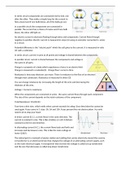
Vitamin A is found in 5 forms inside the body:
Retinol is major form of vitamin A.
Retinol is unstable, so stored in tissues
as retinyl ester, mainly linked to the
fatty acid palmitate to form retinyl
palmitate.
Retinal is the oxidized form of retinol.
Retinals can be oxidized to produce
retinoic acid.
And also carotenoids.
Each of these forms performs different functions that the other cannot.
Beta-carotene: yellow, orange and red pigments most abundant and efficient pro-vitamin A in our
foods.
Cells can convert retinol and retinal to the other active forms of vitamin A as needed.
The conversion of retinol to retinal is reversible.
The further conversion of retinal to retinoic acid is irreversible.
Main source of vitamin A: liver, dairy, fish
Provitamin A carotenoids found in: carrots, yellow and green leafy vegetables, pumpkin etc.
, RDA: around 900-700 mg/ day
Absorption and metabolism
Retinol is present in foods linked to a fatty acid. These need to be hydrolysed by lipase (secreted from
pancreas).
This occurs in upper part of small intestine. The retinol is then absorbed by intestinal cells and coupled
again to a fatty acid.
The esterified retinol is then incorporated into chlyomicrons and passes through the lymphatics into
the systemic circulation.
Most of it is taken up by liver where it is stored in stellate cells.
Carotenoids can also be absorbed in intestinal cells, not as efficient as retinol.
In the intestinal cell, carotenoids can be split by an enzyme to form retinal.
This enzyme (15,15-dideoxygenase) is controlled a high vitamin A supply, is a low enzyme
activity.
The retinal molecules are converted to retinol molecules chylomicrons liver storage
Vitamin A is not soluble in blood so when released from liver bind to retinol binding protein
(RBP, synthesized by liver).
RBP-retinol complex is very small lost via excretion in the kidneys.
However, when coupling the complex to transthyretin (TTR), the RBP-TTR-retinol complex is formed
and can bind to receptors that are on the surface of target cells. After binding, retinol is released and
taken up in the cell.
Retinol can either be stored or directly converted to another form of vitamin A.
Functions:
- Promoting vision
- Participating in protein synthesis and cell differentiation (maintaining health of epithelial
tissues and skin)
- Supporting reproduction, growth and immune system functioning
Retinol supports reproduction and is the major transport and storage form of the vitamin.
Retinal active in vision and in an intermediate in the conversion of retinol to retinoic acid.
Retinoic acid acts like a hormone, regulating cell differentiation, growth and embryonic development
but with solely retinoic acid, they become blind cannot convert to retinal.
Retinol supports reproduction men: sperm development
Women: fetal development
11-cis retinal and all-trans retinoic acid represent active forms of vitamin A in the body.
Light causes the conversion of retinal from the 11-cis form to all-trans form.
When retinoic acid binds to RAR, multiple genes are activated.
The forms of vitamin A involved in gene regulation are all-trans-retinoic acid and 9-cis-retinoic acid.
The receptor for vitamin A contain one domain that binds retinoic acid and one domain that binds to
DNA.
RAR alone is not able to bind to DNA.
Vitamin A regulates gene expression as retinoic acid.
The form of vitamin A involved in vision is the aldehyde form (retinal).
Vitamin A
Deficiency: blindness
Retinol: preformed vitamin A only found in animal sources linked to a fatty acid: retinyl esters
Beta-carotene: provitamin A in plant-based foods beta-carotene can be converted to become
vitamin A in the small intestine.
Vitamin A is found in 5 forms inside the body:
Retinol is major form of vitamin A.
Retinol is unstable, so stored in tissues
as retinyl ester, mainly linked to the
fatty acid palmitate to form retinyl
palmitate.
Retinal is the oxidized form of retinol.
Retinals can be oxidized to produce
retinoic acid.
And also carotenoids.
Each of these forms performs different functions that the other cannot.
Beta-carotene: yellow, orange and red pigments most abundant and efficient pro-vitamin A in our
foods.
Cells can convert retinol and retinal to the other active forms of vitamin A as needed.
The conversion of retinol to retinal is reversible.
The further conversion of retinal to retinoic acid is irreversible.
Main source of vitamin A: liver, dairy, fish
Provitamin A carotenoids found in: carrots, yellow and green leafy vegetables, pumpkin etc.
, RDA: around 900-700 mg/ day
Absorption and metabolism
Retinol is present in foods linked to a fatty acid. These need to be hydrolysed by lipase (secreted from
pancreas).
This occurs in upper part of small intestine. The retinol is then absorbed by intestinal cells and coupled
again to a fatty acid.
The esterified retinol is then incorporated into chlyomicrons and passes through the lymphatics into
the systemic circulation.
Most of it is taken up by liver where it is stored in stellate cells.
Carotenoids can also be absorbed in intestinal cells, not as efficient as retinol.
In the intestinal cell, carotenoids can be split by an enzyme to form retinal.
This enzyme (15,15-dideoxygenase) is controlled a high vitamin A supply, is a low enzyme
activity.
The retinal molecules are converted to retinol molecules chylomicrons liver storage
Vitamin A is not soluble in blood so when released from liver bind to retinol binding protein
(RBP, synthesized by liver).
RBP-retinol complex is very small lost via excretion in the kidneys.
However, when coupling the complex to transthyretin (TTR), the RBP-TTR-retinol complex is formed
and can bind to receptors that are on the surface of target cells. After binding, retinol is released and
taken up in the cell.
Retinol can either be stored or directly converted to another form of vitamin A.
Functions:
- Promoting vision
- Participating in protein synthesis and cell differentiation (maintaining health of epithelial
tissues and skin)
- Supporting reproduction, growth and immune system functioning
Retinol supports reproduction and is the major transport and storage form of the vitamin.
Retinal active in vision and in an intermediate in the conversion of retinol to retinoic acid.
Retinoic acid acts like a hormone, regulating cell differentiation, growth and embryonic development
but with solely retinoic acid, they become blind cannot convert to retinal.
Retinol supports reproduction men: sperm development
Women: fetal development
11-cis retinal and all-trans retinoic acid represent active forms of vitamin A in the body.
Light causes the conversion of retinal from the 11-cis form to all-trans form.
When retinoic acid binds to RAR, multiple genes are activated.
The forms of vitamin A involved in gene regulation are all-trans-retinoic acid and 9-cis-retinoic acid.
The receptor for vitamin A contain one domain that binds retinoic acid and one domain that binds to
DNA.
RAR alone is not able to bind to DNA.
Vitamin A regulates gene expression as retinoic acid.
The form of vitamin A involved in vision is the aldehyde form (retinal).