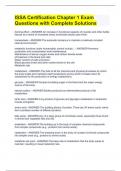
ISSA Certification Chapter 1 Exam
Questions with Complete Solutions
training effect - ANSWER-An increase in functional capacity of muscles and other bodily
tissues as a result of increased stress (overload) placed upon them.
homeostasis - ANSWER-The automatic tendency to maintain a relatively constant
internal environment.
metabolic functions under homeostatic control include... - ANSWER-Hormone
production and concentration level maintenance
Maintenance of serum oxygen levels and carbon dioxide levels
pH balance in the blood and cells
Water content of cells and blood
Blood glucose levels and other nutrient levels in the cell
Metabolic rate
metabolism - ANSWER-The total of all the chemical and physical processes by which
the body builds and maintains itself (anabolism) and by which it breaks down its
substances for the production of energy (catabolism).
glucose: - ANSWER-Principal circulating sugar in the blood and the major energy
source of the body.
ketone bodies: - ANSWER-Bodies produced as intermediate products of fat
metabolism.
lactic acid - ANSWER-A by-product of glucose and glycogen metabolism in anaerobic
muscle energetics
amino acid - ANSWER-The building blocks of protein. There are 24 amino acids, which
form countless number of different proteins.
fatty acids - ANSWER-Any of a large group of monobasic acids, especially those found
in animal and vegetable fats and oils.
anabolism - ANSWER-The building up in the body of complex chemical compounds
from simpler compounds (e.g., proteins from amino acids).
catabolism - ANSWER-The breaking down in the body of complex chemical compounds
into simpler ones (e.g., proteins to amino acids).
metabolic set point - ANSWER-The base rate of metabolism that the body seeks to
maintain; resulting in basal metabolic rate.
Questions with Complete Solutions
training effect - ANSWER-An increase in functional capacity of muscles and other bodily
tissues as a result of increased stress (overload) placed upon them.
homeostasis - ANSWER-The automatic tendency to maintain a relatively constant
internal environment.
metabolic functions under homeostatic control include... - ANSWER-Hormone
production and concentration level maintenance
Maintenance of serum oxygen levels and carbon dioxide levels
pH balance in the blood and cells
Water content of cells and blood
Blood glucose levels and other nutrient levels in the cell
Metabolic rate
metabolism - ANSWER-The total of all the chemical and physical processes by which
the body builds and maintains itself (anabolism) and by which it breaks down its
substances for the production of energy (catabolism).
glucose: - ANSWER-Principal circulating sugar in the blood and the major energy
source of the body.
ketone bodies: - ANSWER-Bodies produced as intermediate products of fat
metabolism.
lactic acid - ANSWER-A by-product of glucose and glycogen metabolism in anaerobic
muscle energetics
amino acid - ANSWER-The building blocks of protein. There are 24 amino acids, which
form countless number of different proteins.
fatty acids - ANSWER-Any of a large group of monobasic acids, especially those found
in animal and vegetable fats and oils.
anabolism - ANSWER-The building up in the body of complex chemical compounds
from simpler compounds (e.g., proteins from amino acids).
catabolism - ANSWER-The breaking down in the body of complex chemical compounds
into simpler ones (e.g., proteins to amino acids).
metabolic set point - ANSWER-The base rate of metabolism that the body seeks to
maintain; resulting in basal metabolic rate.