TEST BANK PATIENT CARE IN RADIOGRAPHY, 9TH EDITION, RUTH ANN EHRLICH, DAWN M COAKES
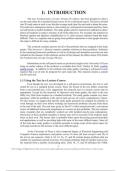
Chapter 01: Introduction to Radiography Ehrlich: Patient Care in Radiography: With an Introduction to Medical Imaging, 9th Edition MULTIPLE CHOICE 1. X-rays were discovered in 1895 by: a. Coolidge. b. Crookes. c. Roentgen. d. Edison. ANS: C REF: p. 2 OBJ: 1 2. Of the following types of electromagnetic energy, which has the shortest wavelength? a. Radio waves b. X-rays c. Visible light d. Ultraviolet light ANS: B REF: p. 7 OBJ: 7 3. Which of the following is NOT an accurate statement regarding the characteristics of x-rays? a. They can penetrate matter that is impenetrable to light. b. They cause certain crystals to fluoresce. c. They can be refracted by a lens. d. They cannot be detected by the human senses. ANS: C REF: pp. 7-8 OBJ: 8 4. An electron cloud surrounding a hot cathode is referred to as a(n): a. focusing cup. b. ampere. c. space charge. d. filament. ANS: C REF: p. 6 OBJ: 6 5. The purpose of rotating the x-ray tube target is to: a. create a space charge. b. remove long-wavelength photons from the x-ray beam. c. focus the electron stream on a small target area. d. increase the heat capacity of the anode. ANS: D REF: p. 9 OBJ: 6 6. An imaginary photon that is emitted from the center of the focal spot, perpendicular to the long axis of the x-ray tube, is called the: a. electron stream. b. x-ray beam. c. central ray
Libro relacionado
- 2016
- 9780323377713
- Desconocido
Escuela, estudio y materia
- Institución
- Harvard University
- Grado
- NURSING
Información del documento
- Subido en
- 8 de marzo de 2024
- Número de páginas
- 5
- Escrito en
- 2023/2024
- Tipo
- Examen
- Contiene
- Preguntas y respuestas
Temas
-
radiography
-
coakes
-
dawn m coakes
-
ruth ann ehrlich
-
ehrlich
-
test bank patient care in radiography 9th edition
-
patient care in radiography 9th edition