PSY 317 EXAM 3 Ch 7 Neo-Freudians Exam Questions and Answers
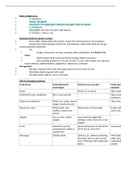
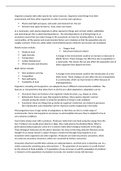
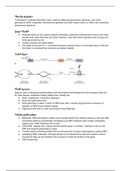
PSY 317 EXAM 3 Ch 7 Neo-Freudians Exam Questions and Answers Who founded the interpersonal personality theory? - Answer-Harry Stack Sullivan What was Sullivan's main source of data? - Answer-schizophrenia What is the main emphasis of interpersonal theory? - Answer-personality can only be observed in interpersonal interaction Sullivan's doctor-patient relationship - Answer-approach doctor like you already know what they're going to be like (dad, boss, etc) SULLIVAN'S VIEW OF TRANSFERENCE Sullivan's concept of self - Answer-SELF-DYNAMISM - like Freud's ego - protects from disapproval Sullivan's 2 interpersonal needs - Answer-pursuit of security: the need for approval pursuit of satisfaction: bodily needs Sullivan's anxiety - Answer-extreme fear of disapproval - babies are able to have empathy, pick up nonverbal cues - communicated to baby by careless/bad parenting - BAD MOTHER = BAD ME Sullivan's dynamisms - Answer-habits of interacting with people in a certain way Sullivan's self-dynamism - Answer-involves pursuit of security - warding off anxiety: dissociation & ignorance hate dynamism - Answer-aggressive & hostile, FIGHT paranoid dynamism - Answer-internalized anxiety, FLIGHT genital lust dynamism - Answer-love-oriented Sullivan's 3 cognitive modes - Answer-1. Prototaxic: moment-to-moment experience - INFANCY 2. Parataxic: illogical connection of events - very simplistic way of thinking - SUPERSTITIONS 3. Syntaxic: consensual validation - more sophisticated way of thinking - voicing what you believe & see of others agree - OTHER PEOPLE MUST AGREE Sullivan's personifications - Answer-interpretations of self & others - first personification = parents - later in life = friend, teacher, boss, student, etc Sullivan's 6 epochs of personality development - Answer-1. Infancy to the maturation of the capacity for language behavior 2. Childhood to the maturation of the capacity for living w compeers 3. Juvenile era to the maturation of the capacity for isophilic intimacy (like equals) 4. Preadolescence to the maturation of the genital lust dynamism 5. Early adolescence to the patterning of lustful behavior 6. Late adolescence to maturity infancy to the maturation of the capacity for language behavior - Answer-EMPATHY
Escuela, estudio y materia
- Institución
- PSY 317
- Grado
- PSY 317
Información del documento
- Subido en
- 28 de febrero de 2024
- Número de páginas
- 6
- Escrito en
- 2023/2024
- Tipo
- Examen
- Contiene
- Preguntas y respuestas
Temas
-
psy 317 exam 3 ch 7 neo freudians exam questions a