Med-Surg HESI RN Examination Questions and Answers 100% Pass
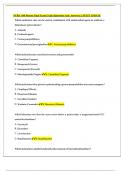
Med-Surg HESI RN Examination Questions and Answers 100% Pass Based on the clinical manifestations of Cushing syndrome, which nursing intervention would be appropriate for a client who is newly diagnosed with Cushing syndrome? A. Monitor blood glucose levels daily. B. Increase intake of fluids high in potassium. C. Encourage adequate rest between activities. D. Offer the client a sodium-enriched menu. -Answer-A. Monitor Blood Glucose Levels Cushing syndrome results from a hypersecretion of glucocorticoids in the adrenal cortex. Clients with Cushing syndrome often develop diabetes mellitus. Monitoring of serum glucose levels assesses for increased blood glucose levels so that treatment can begin early. A common finding in Cushing syndrome is generalized edema. Although potassium is needed, it is generally obtained from food intake, not by offering potassium-enhanced fluids. Fatigue is usually not an overwhelming factor in Cushing syndrome, so an emphasis on the need for rest is not indicated A low-calorie, low- carbohydrate, low-sodium diet is not recommended. The nurse is assessing a male client with acute pancreatitis. Which finding requires the most immediate intervention by the nurse? A. The client's amylase level is three times higher than the normal level. B.While the nurse is taking the client's blood pressure, he has a carpal spasm. C.On a 1 to 10 scale, the client tells the nurse that his epigastric pain is at 7. D.The client states that he will continue to drink alcohol after going home. -Answer- B.While the nurse is taking the client's blood pressure, he has a carpal spasm. Rationale: A positive Trousseau sign indicates hypocalcemia and always requires further assessment and intervention, regardless of the cause (40% to 75% of those with acute pancreatitis experience hypocalcemia, which can have serious, systemic effects). A key diagnostic finding of pancreatitis is serum amylase and lipase levels that are two to five times higher than the normal value. Severe boring pain is an expected symptom for this diagnosis, but dealing with the hypocalcemia is a priority over administering an analgesic. Long-term planning and teaching do not have the same immediate importance as a positive Trousseau sign. The nurse is completing an admission interview for a client with Parkinson disease. Which question will provide additional information about manifestations that the client is likely to experience? A. "Have you ever experienced any paralysis of your arms or legs?" B. "Do you have frequent blackout spells?" C."Have you ever been frozen in one spot, unable to move?" D. "Do you have headaches, especially ones with throbbing pain?" -Answer-C. Have you ever been frozen in one spot, unable to move?" Rationale: Clients with Parkinson disease frequently experience difficulty in initiating, maintaining, and performing motor activities. They may even experience being rooted to the spot and unable to move. Parkinson disease does not typically cause option A, B, or D. The nurse notes that the client's drainage has decreased from 50 to 5 mL/hr 12 hours after chest tube insertion for hemothorax. What is the best initial action for the nurse to take? A. Document this expected decrease in drainage. B. Clamp the chest tube while assessing for air leaks. C. Milk the tube to remove any excessive blood clot buildup. D. Assess for kinks or dependent loops in the tubing. -Answer-D.Assess for kinks or dependent loops in the tubing. Rationale: The least invasive nursing action should be performed first to determine why the drainage has diminished. Option A is completed after assessing for any problems causing the decrease in drainage. Option B is no longer considered standard protocol because the increase in pressure may be harmful to the client. Option C is an appropriate nursing action after the tube has been assessed for kinks or dependent loops. A 77-year-old female client is admitted to the hospital with confusion and anorexia of several days' duration. She has symptoms of nausea and vomiting and is currently complaining of a headache. The client's pulse rate is 43 beats/min. The nurse is most concerned about the client's history related to which medication? A. Warfarin (Coumadin) B. Ibuprofen (Motrin) C. Nitroglycerin (Nitrostat) D. Digoxin (Lanoxin) -Answer-D. Digoxin Rationale: Older persons are particularly susceptible to the buildup of cardiac glycosides, such as digoxin or digitoxin (medications derived from digitalis), to a toxic level in their systems. Toxicity can cause anorexia, nausea, vomiting, diarrhea, headache, and fatigue. Options A, B, and C are unlikely to result in the symptoms described. The nurse is observing an unlicensed assistive personnel (UAP) performing morning care for a bedridden client with Huntington disease. Which care measure is most important for the nurse to supervise? A. Oral care B.Bathing C. Foot care D. Catheter care -Answer-A. Oral care Rationale: The client with Huntington disease experiences problems with motor skills such as swallowing and is at high risk for aspiration, so the highest priority for the nurse to observe is the UAP's ability to perform oral care safely. Options B, C, and D do not necessarily require registered nurse (RN) supervision because they do not ordinarily pose life-threatening consequences. A client who is receiving an angiotensin-converting enzyme (ACE) inhibitor for hypertension calls the clinic and reports the recent onset of a cough to the nurse. Which action should the nurse implement? A. Advise the client to come to the clinic immediately for further assessment. B. Instruct the client to discontinue use of the drug and to make an appointment at the clinic. C. Suggest that the client learn to accept the cough as a side effect to a necessary prescription. D. Encourage the client to keep taking the drug until seen by the health care provider. - Answer-D. Encourage the client to keep taking the drug until seen by the health care provider. Rationale: Coughing is a common side effect of ACE inhibitors and is not an indication to discontinue the medication. Immediate evaluation is not needed. Antihypertensive medications should not be stopped abruptly because rebound hypertension may occur. Option C is demeaning because the cough may be very disruptive to the client, and other antihypertensive medications may produce the desired effect without the adverse effect
Escuela, estudio y materia
- Institución
- Med-Surg HESI RN
- Grado
- Med-Surg HESI RN
Información del documento
- Subido en
- 24 de febrero de 2024
- Número de páginas
- 67
- Escrito en
- 2023/2024
- Tipo
- Examen
- Contiene
- Preguntas y respuestas
Temas
-
med surg hesi rn examination questions and answers