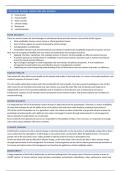
7 SIX MAIN GLOBAL ISSUES FOR SOIL SCIENCE
1) Food security
2) Human health
3) Water security
4) Climate change
5) Biodiversity
6) Land Restoration
FOOD SECURITY
There are several reasons for food shortages in sub-Saharan Africa and Latin America, Asia and the Pacific regions:
Most smallholder farmers cannot access or afford agricultural inputs;
Some of these regions are severely impacted by climate change;
Soil degradation is problematic;
Competition between local and international communities for biodiversity and globally important ecosystem services
New ways of managing soil fertility that may restore soil productivity and ecosystem functions:
Applying “precision” agriculture. One valuable resource is farmers’ local knowledge on different nutrient sources;
A systems approach to nutrient flows in smallholder crop-livestock systems; processes such as nutrient recycling are
crucial for overall systems efficiency;
Agro-ecological strategies to restore degraded soils and maintain soil physical properties. A new institutional
arrangement around land tenure and collective resource management is needed.
Capitalizing on recent and growing understanding of the soil food web to increase nutrient and water use efficiency.
HUMAN HEALTH
Soils sustain life; they affect human health via the quantity and quality of food and water, as a source of essential medicines, and
via direct exposure of humans to soils.
The soil–health relationship involves both risks and benefits for human health. One risk is posed by pathogens in soil. On the
other hand, the soil microbial community may also function as a powerful water filter and soil bacteria and fungi are an
indispensable source of new powerful antibiotics and of medicines to treat diseases such as tuberculosis and cancer.
Furthermore, exposure to soil microbes seems to boost the human immune system, help prevent asthma and contribute to
mental well-being.
WATER SECURITY
It is estimated that 74% of all freshwater used by humans is abstracted from the groundwater. Therefore, to ensure availability
of water and sanitation for all, the ability of the soil to deliver clean and fresh water should be protected and enhanced.
92% of the world’s freshwater use is in agriculture. Likely, the volume of water required for crop growth will also increase. By
protecting and enhancing the soil’s ability to store water and supply it to plants through improvements in soil management
there is potential to make better use of rainwater.
Excess nutrients from agricultural sources are responsible for the pollution of lakes, rivers and seas. It is important to manage
soils well to reduce pollution with excess nutrients.
CLIMATE CHANGE
Predicting the response of soils to climate change is extremely important, as the top meter of soils globally contains three times
more carbon than the atmosphere. Small changes in soil carbon stocks can therefore affect the global climate. A 4% annual
growth rate of the soil carbon stock, makes possible to halt the present increase in atmospheric CO2.
On the one hand soils may be affected by climate change, on the other hand, soils may also be able to affect climate change
through improvements in soil management. For instance, soil management can be used to reduce greenhouse gas emissions or
to increase soil carbon stocks. Soil management can therefore be applied as a climate mitigation option.
BIODIVERSITY
A large proportion of the Earth’s biodiversity can be found underground. One square metre of land may contain as many as
20,000 “species” of viruses, bacteria, fungi, protozoa, nematodes, enchytraeids, collembolans, mites, earthworms, insects and
1) Food security
2) Human health
3) Water security
4) Climate change
5) Biodiversity
6) Land Restoration
FOOD SECURITY
There are several reasons for food shortages in sub-Saharan Africa and Latin America, Asia and the Pacific regions:
Most smallholder farmers cannot access or afford agricultural inputs;
Some of these regions are severely impacted by climate change;
Soil degradation is problematic;
Competition between local and international communities for biodiversity and globally important ecosystem services
New ways of managing soil fertility that may restore soil productivity and ecosystem functions:
Applying “precision” agriculture. One valuable resource is farmers’ local knowledge on different nutrient sources;
A systems approach to nutrient flows in smallholder crop-livestock systems; processes such as nutrient recycling are
crucial for overall systems efficiency;
Agro-ecological strategies to restore degraded soils and maintain soil physical properties. A new institutional
arrangement around land tenure and collective resource management is needed.
Capitalizing on recent and growing understanding of the soil food web to increase nutrient and water use efficiency.
HUMAN HEALTH
Soils sustain life; they affect human health via the quantity and quality of food and water, as a source of essential medicines, and
via direct exposure of humans to soils.
The soil–health relationship involves both risks and benefits for human health. One risk is posed by pathogens in soil. On the
other hand, the soil microbial community may also function as a powerful water filter and soil bacteria and fungi are an
indispensable source of new powerful antibiotics and of medicines to treat diseases such as tuberculosis and cancer.
Furthermore, exposure to soil microbes seems to boost the human immune system, help prevent asthma and contribute to
mental well-being.
WATER SECURITY
It is estimated that 74% of all freshwater used by humans is abstracted from the groundwater. Therefore, to ensure availability
of water and sanitation for all, the ability of the soil to deliver clean and fresh water should be protected and enhanced.
92% of the world’s freshwater use is in agriculture. Likely, the volume of water required for crop growth will also increase. By
protecting and enhancing the soil’s ability to store water and supply it to plants through improvements in soil management
there is potential to make better use of rainwater.
Excess nutrients from agricultural sources are responsible for the pollution of lakes, rivers and seas. It is important to manage
soils well to reduce pollution with excess nutrients.
CLIMATE CHANGE
Predicting the response of soils to climate change is extremely important, as the top meter of soils globally contains three times
more carbon than the atmosphere. Small changes in soil carbon stocks can therefore affect the global climate. A 4% annual
growth rate of the soil carbon stock, makes possible to halt the present increase in atmospheric CO2.
On the one hand soils may be affected by climate change, on the other hand, soils may also be able to affect climate change
through improvements in soil management. For instance, soil management can be used to reduce greenhouse gas emissions or
to increase soil carbon stocks. Soil management can therefore be applied as a climate mitigation option.
BIODIVERSITY
A large proportion of the Earth’s biodiversity can be found underground. One square metre of land may contain as many as
20,000 “species” of viruses, bacteria, fungi, protozoa, nematodes, enchytraeids, collembolans, mites, earthworms, insects and