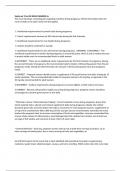
Study set 9 for RN NCLEX GRADED A+
should be restricted to 2 g/day. 5. Nutritional requirements for zinc will increase during pregnancy. -ANSWERS- 1) INCORRECT - The nutritional requirement for protein during pregnancy is around 60 g/day, which is only a modest increase in protein intake over the recommended levels in adult women. 2) INCORRECT - There are no additional caloric requirements for the first trimester of pregnancy. During the second trimester of pregnancy, the recommended caloric intake is 340 kcal/day greater than the pre-pregnancy needs. During the third trimester, the amount is 462 kcal/day greater than pre-pregnancy needs. 3) CORRECT - Pregnant women should receive a supplement of 30 mg of ferrous iron daily, starting by 12 weeks' gestation. The recommended daily intake for pregnant women is 60 mg/day, as opposed to the 30 mg/day recommended for adult women. 4) INCORRECT - Sodium requirements during pregnancy increase slightly, as fluid volume increases. 5) CORRECT - Because cell growth is rapidly occurring during pregnancy, pregnant women should be encouraged to consume good sources of zinc daily. *Think Like a Nurse: Clinical Decision-Making* Current standard of care during pregnancy shows that clients typically take a vitamin and mineral supplement daily during pregnancy. Ideally, the mother should be given folic acid even before the baby is conceived. For most pregnant women, supplements of 27 mg of iron and between 400 to 800 mcg of folic acid per day are recommended. Generally, the nurse teaches the pregnant client to increase consumption of fruits and vegetables, consume unsaturated fats, choose whole instead of refined grains, avoid hydrogenated fats, abstain from alcohol, eat at least two servings of fish weekly, and consume at least 2 liters of water daily. *Content Refresher* Each day, pregnant women need to eat at least three servings of protein, six or more servings of whole grains, five or more servings of fruits and vegetables, an An LPN/LVN reports to the nurse that a client admitted with persistent chest pain is experiencing moderate, spastic lower abdominal pain, nausea, and some vomiting. Which action does the nurse take first? 1. Determine what medications the client is receiving. 2. Perform a comprehensive abdominal assessment. 3. Ask the client about a history of GI problems. 4. Notify the admitting health care provider. -ANSWERS- 1) INCORRECT - Nausea and vomiting are side effects of many medications, but the nurse should first assess the client's abdomen to detect any abnormal findings. 2) CORRECT— Abdominal pain is not usually associated with myocardial infarction. The nurse should assess for GI issues. The nurse should assess the abdomen prior to notifying the health care provider. 3) INCORRECT - The priority is first to assess the current physical status. 4) INCORRECT - This may be needed, but the nurse should obtain assessment data prior to contacting the health care provider.
Escuela, estudio y materia
- Institución
- NCLEX RN
- Grado
- NCLEX RN
Información del documento
- Subido en
- 12 de febrero de 2024
- Número de páginas
- 60
- Escrito en
- 2023/2024
- Tipo
- Examen
- Contiene
- Preguntas y respuestas
Temas
-
with updated solutions
-
study set 9 for rn nclex graded a

Documento también disponible en un lote