Zoe Pearson
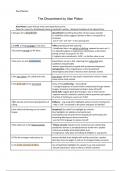
The Discardment by Alan Platon
Alan Platon: South African writer+anti-Apartheid activist
Fame for novel, Cry the Beloved Country+involved in politics,- National President of the Liberal Party.
1.We gave her a discardment discardment:something discarded, thrown away, rejected
A: indefinite article suggests identity of item is nonspecific or
irrelevant.
-use of “we” and “her” in the opening line
2.A trifle, a thing no longer to be worn, Trifle:something of little value/nb
- Established item is an article of clothing- appears be worn out. 1.
3.Its purpose served, its life done. It is tatty/threadbear in appearance emphasises as described
having ‘served’ its purpose+ its ‘life’ .
2. explains why considered a ‘trifle’- no further value or use
4.She put it on with exclamations, Expectations set up in title +opening lines subverted quite
suddenly+unexpectadely
-woman spontaneously erupted with excitement+happiness.
Juxtaposition of the insignificance of the discardment
[meaningless] and what it meant to their domestic worker.
5.Her eyes shone, she called and cried, Eyes shone: allusion to way pupils involuntarily moisten +dilate
when person feels excited
6.The great bulk of her pirouetted Sense of her performing - “pirouetting”
-> energy+happiness of scene further emphasised through vibrant
imagery of woman impulsively twirling to show off outfit
Great bulk: suggest great deal energy to spin in that manner.
-captures woman’s cheerful, carefree nature+questions perception
of article of clothing as a worn-out ‘trifle’
7.She danced and mimed, sang snatches of Sibilance - sing song effect highlights jubilant mood of excitement.
a song. - why is “she” not named in the poem and given an identity?
8.she called out blessings on her native Anaphora[“she called”] to highlight the division -
tongue Also highlights her jubilance and excitement.
Innate generosity of spirit+sense of gratitude confirmed by her
bestowing blessings on those around her.
uses her first language to express herself.
9.She called out to her fellow-servants “Fellow-servants: Alludes to the master/servant relationship.
establishes woman as servabt/domestic worker+we- speaker
+family as probably white SA[multiple d.w.]
incongruence: tatty piece of clothing © delights vs -pay poorly
10.The the strangers and passers-by woman decided share delight with world around her- speaker
describes how she began to call out to strangers+fellow servants.
11.To all the continent of Africa Use of hyperbole highlights the speaker’s joy and excitement.
-natural exuberance: want to share to whole continent
The Discardment by Alan Platon
Alan Platon: South African writer+anti-Apartheid activist
Fame for novel, Cry the Beloved Country+involved in politics,- National President of the Liberal Party.
1.We gave her a discardment discardment:something discarded, thrown away, rejected
A: indefinite article suggests identity of item is nonspecific or
irrelevant.
-use of “we” and “her” in the opening line
2.A trifle, a thing no longer to be worn, Trifle:something of little value/nb
- Established item is an article of clothing- appears be worn out. 1.
3.Its purpose served, its life done. It is tatty/threadbear in appearance emphasises as described
having ‘served’ its purpose+ its ‘life’ .
2. explains why considered a ‘trifle’- no further value or use
4.She put it on with exclamations, Expectations set up in title +opening lines subverted quite
suddenly+unexpectadely
-woman spontaneously erupted with excitement+happiness.
Juxtaposition of the insignificance of the discardment
[meaningless] and what it meant to their domestic worker.
5.Her eyes shone, she called and cried, Eyes shone: allusion to way pupils involuntarily moisten +dilate
when person feels excited
6.The great bulk of her pirouetted Sense of her performing - “pirouetting”
-> energy+happiness of scene further emphasised through vibrant
imagery of woman impulsively twirling to show off outfit
Great bulk: suggest great deal energy to spin in that manner.
-captures woman’s cheerful, carefree nature+questions perception
of article of clothing as a worn-out ‘trifle’
7.She danced and mimed, sang snatches of Sibilance - sing song effect highlights jubilant mood of excitement.
a song. - why is “she” not named in the poem and given an identity?
8.she called out blessings on her native Anaphora[“she called”] to highlight the division -
tongue Also highlights her jubilance and excitement.
Innate generosity of spirit+sense of gratitude confirmed by her
bestowing blessings on those around her.
uses her first language to express herself.
9.She called out to her fellow-servants “Fellow-servants: Alludes to the master/servant relationship.
establishes woman as servabt/domestic worker+we- speaker
+family as probably white SA[multiple d.w.]
incongruence: tatty piece of clothing © delights vs -pay poorly
10.The the strangers and passers-by woman decided share delight with world around her- speaker
describes how she began to call out to strangers+fellow servants.
11.To all the continent of Africa Use of hyperbole highlights the speaker’s joy and excitement.
-natural exuberance: want to share to whole continent