Organizations And Society
Summary Articles
Course code: MOD004
Master: Business Administration
Specialization: Organizational Design and Development
Academic year: 2017-2018
Period: Block 1
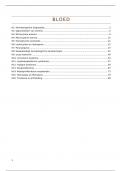
,Contents
Freeman, E., Martin, K., and Parmar, B. (2007) Stakeholder Capitalism ................................................ 1
Friedman, Milton (1970) The Social Responsibility of Business is to Increase its Profits ....................... 6
Johnson, D.G. (2002) Globalization: what it is and who benefits ........................................................... 7
Lee, M.D.P. (2008) A review of the theories of corporate social responsibility: Its evolutionary path
and the road ahead ................................................................................................................................. 9
Stiglitz, Joseph E. (2008) Making Globalisation Work ........................................................................... 13
Achterbergh, Jan & Dirk Vriens (2009) Organizational structures supporting rich survival ................. 16
Athanassoulis, N. (2010) Virtue Ethics .................................................................................................. 19
BBC - Ethics – Introduction to ethics: Duty-based ethics. ..................................................................... 23
Fieser, J. (2009) Ethics ........................................................................................................................... 26
Haines, W. (2006) Consequentialism .................................................................................................... 30
McCormick, M. (2005) Kant’s Ethics (only sections 8 and 9) ................................................................ 33
Kaler, John (2002) Morality and Strategy in Stakeholder Identification ............................................... 36
Mitchell, R.K., B.R. Agle & D.J. Wood (1997) Toward a theory of stakeholder identification and
salience: Defining the principle of who and what really counts ........................................................... 37
Wheeler David, Barry Colbert and R. Edward Freeman (2003) Focusing on Value: Reconciling
Corporate Social Responsibility, Sustainability and a Stakeholder Approach in a Network ................. 43
Campbell, John L (2006) Institutional Analysis and the Paradox of Corporate Social Responsibility ... 45
O'Connell, L.L., Stephens, C.U., Betz, M., Shepard, J.M., & Hendry, J.R. (2005). An organizational field
approach to corporate rationality: The role of stakeholder activism ................................................... 48
Scott, R. (2008) Crafting an Analytic Framework I: Three pillars of institutions ................................... 52
Scott, R. (2008) Crafting an Analytic Framework II: Content, agency, carriers, and levels ................... 58
Suchman, M. C. (1995). Managing Legitimacy - Strategic and Institutional Approaches ..................... 61
Fostering Co-ownership in Sustainable International Value Chains: The Case of Agrofair................... 73
New Belgium Brewing case (Beyond The Law: Responsibility At New Belgium Brewing; Brewing Up
Fun in the Workplace; Ethical and Environmental Responsibility; Maintains Quality, Sustainability and
Growth). O.C. Ferrell.............................................................................................................................. 75
,Freeman, E., Martin, K., and Parmar, B. (2007) Stakeholder Capitalism
This article forces on the principles of stakeholder capitalism and how we can describe this view that
rejects problematic assumptions in the current narratives of capitalism. This article differs from the
standard one due to:
- Traditional narratives of capitalism rely upon: Assumption of competition, limited resources
and a winner-takes all mentally.
- These traditional approaches know little ethical analysis, and have a simplistic view of human
beings.
- These traditional approaches focus on a value capturing process for value-creation.
Freeman (2007) argues that this traditional narrative approach needs to be restructured into: “We
wish to reframe the narrative of capitalism around the reinforcing concepts of stakeholders couples
with value creation and trade.
Introduction.
In this article, we see a reason for change of the macro-economic characteristics, which matter, that
in the last 200 years’ markets have unleashed a tremendous amount of innovation and progress in the
West. Through this economic develop we recognise, through capitalisation, that markets have
notoriously increase the division between Rich and Poor, both within and across nation.
To tackle this, we are going to offer five contemporary narratives of capitalism and show that each
privilege the rights of one group over the others.
A basic assumption of Freeman (2007) is that institutional structure and market design surely go a long
way in helping markets thrive. But three need to be added the following:
- Value creation: this creates outcomes we want or not want;
All these definitions of capitalism create the following four narrative problems:
The narratives of capitalism.
Narrative – a story that accounts for the history of a certain topic.
In this section, we will examine five contemporary narratives of capitalism that dominate academic:
1. Political
2. Capitalism that discourse and thinking.
Each of these narratives fall short in explaining the rich definition of a stakeholders.
Narrative one – Labour capitalism. Marx
This narrative is strongly related to Marx and Engels, the term capitalism has been tied to class division:
specifically, the self-aggrandizement of the capitalist at the expense of the proleriaat. We can recognise
the following separation, within society:
- Capitalist (Bourgeoisie);
- Workers (People that work for the capitalist).
This creates a tension in the wishes and needs that both groups have. This Marxist version of capitalism
tells a story where the opposing groups of labour and capital, fight over the fixed resources of
productive assets. Economic and business activity itself is amoral and the only inevitable solution for
labour is to take control for those productive assets by force.
1
, Narrative two – Government capitalism. Keynes
John Maynard Keynes, leading author within this narrative, was concerned with the vagaries of the
labour market. More specifically, the stability in national unemployment rates. Keynes profoundly
economical thinking by re-shifting its’ focus from a micro view (pricing and cost mechanisms) to a
macro view (national income and employment) vision. This created a prosperous groundwork for his
idea that institutions/ capital should be managed by the government. Due to:
- Society is far too complex to be handled by one individual;
- This cannot result in a change that we need;
- This resulted in the creation of government capitalism;
This is where the government has the rights to dominate the nee of all other stakeholders in the
narrative of capitalism.
Keynes groundwork of arguing – was influenced by the philosopher G.E. Moore – sounded as follows:
Keynes belief in the rationality of ends and the homogeneity of values.
Narrative three – Investor capitalism. M. Friedman.
Friedman focusses on the fair distribution of capital values, freedom, the ability to buy and sell without
interference from the government, is central in line of reasoning. Hereby, Friedman focusses on the
shareholder perspective. His shift focuses away from government and its regulation of capital, he
focuses the limelight on a new dominant group; investors.
The core notion of this idea is: If shareholders thrive, they will invest more, which will result in a higher
overall capitalism value, which is beneficial for all.
Narrative Four – Managerial capitalism. M. Friedman. Berle
Keynes, Marx and Friedman assume that the investor (or stockholders) is the owner of the means for
production and has responsibility and control over its use. In managerial capitalism, on the other hand,
clearly differentiates the managers of the organizations from the investors and other stakeholders.
Berle differentiates between ownership and control. This control tends to move further and further
away from ownership and ultimately to lie in the hand of the management itself. Business ethics is
quite sophisticated developed within this narrative, neither the claims of ownership nor those of
control can stand against the paramount interest of the community.
Narrative five – Entrepreneurial capitalism. M. Friedman. Berle
The other four narratives lightly touch upon the topic, the entrepreneur. Within modern theory,
economist such as:
- Schumpeter (1942);
- Kirzner (1979)
- Baumol (1990)
Emphasize the role of the entrepreneur within capitalism. The function of an entrepreneur is: the
dominant player within the capitalist function. This is so profound, that the entrepreneur is the
livelihood, or also called the blood of the capitalist environment.
2
Summary Articles
Course code: MOD004
Master: Business Administration
Specialization: Organizational Design and Development
Academic year: 2017-2018
Period: Block 1
,Contents
Freeman, E., Martin, K., and Parmar, B. (2007) Stakeholder Capitalism ................................................ 1
Friedman, Milton (1970) The Social Responsibility of Business is to Increase its Profits ....................... 6
Johnson, D.G. (2002) Globalization: what it is and who benefits ........................................................... 7
Lee, M.D.P. (2008) A review of the theories of corporate social responsibility: Its evolutionary path
and the road ahead ................................................................................................................................. 9
Stiglitz, Joseph E. (2008) Making Globalisation Work ........................................................................... 13
Achterbergh, Jan & Dirk Vriens (2009) Organizational structures supporting rich survival ................. 16
Athanassoulis, N. (2010) Virtue Ethics .................................................................................................. 19
BBC - Ethics – Introduction to ethics: Duty-based ethics. ..................................................................... 23
Fieser, J. (2009) Ethics ........................................................................................................................... 26
Haines, W. (2006) Consequentialism .................................................................................................... 30
McCormick, M. (2005) Kant’s Ethics (only sections 8 and 9) ................................................................ 33
Kaler, John (2002) Morality and Strategy in Stakeholder Identification ............................................... 36
Mitchell, R.K., B.R. Agle & D.J. Wood (1997) Toward a theory of stakeholder identification and
salience: Defining the principle of who and what really counts ........................................................... 37
Wheeler David, Barry Colbert and R. Edward Freeman (2003) Focusing on Value: Reconciling
Corporate Social Responsibility, Sustainability and a Stakeholder Approach in a Network ................. 43
Campbell, John L (2006) Institutional Analysis and the Paradox of Corporate Social Responsibility ... 45
O'Connell, L.L., Stephens, C.U., Betz, M., Shepard, J.M., & Hendry, J.R. (2005). An organizational field
approach to corporate rationality: The role of stakeholder activism ................................................... 48
Scott, R. (2008) Crafting an Analytic Framework I: Three pillars of institutions ................................... 52
Scott, R. (2008) Crafting an Analytic Framework II: Content, agency, carriers, and levels ................... 58
Suchman, M. C. (1995). Managing Legitimacy - Strategic and Institutional Approaches ..................... 61
Fostering Co-ownership in Sustainable International Value Chains: The Case of Agrofair................... 73
New Belgium Brewing case (Beyond The Law: Responsibility At New Belgium Brewing; Brewing Up
Fun in the Workplace; Ethical and Environmental Responsibility; Maintains Quality, Sustainability and
Growth). O.C. Ferrell.............................................................................................................................. 75
,Freeman, E., Martin, K., and Parmar, B. (2007) Stakeholder Capitalism
This article forces on the principles of stakeholder capitalism and how we can describe this view that
rejects problematic assumptions in the current narratives of capitalism. This article differs from the
standard one due to:
- Traditional narratives of capitalism rely upon: Assumption of competition, limited resources
and a winner-takes all mentally.
- These traditional approaches know little ethical analysis, and have a simplistic view of human
beings.
- These traditional approaches focus on a value capturing process for value-creation.
Freeman (2007) argues that this traditional narrative approach needs to be restructured into: “We
wish to reframe the narrative of capitalism around the reinforcing concepts of stakeholders couples
with value creation and trade.
Introduction.
In this article, we see a reason for change of the macro-economic characteristics, which matter, that
in the last 200 years’ markets have unleashed a tremendous amount of innovation and progress in the
West. Through this economic develop we recognise, through capitalisation, that markets have
notoriously increase the division between Rich and Poor, both within and across nation.
To tackle this, we are going to offer five contemporary narratives of capitalism and show that each
privilege the rights of one group over the others.
A basic assumption of Freeman (2007) is that institutional structure and market design surely go a long
way in helping markets thrive. But three need to be added the following:
- Value creation: this creates outcomes we want or not want;
All these definitions of capitalism create the following four narrative problems:
The narratives of capitalism.
Narrative – a story that accounts for the history of a certain topic.
In this section, we will examine five contemporary narratives of capitalism that dominate academic:
1. Political
2. Capitalism that discourse and thinking.
Each of these narratives fall short in explaining the rich definition of a stakeholders.
Narrative one – Labour capitalism. Marx
This narrative is strongly related to Marx and Engels, the term capitalism has been tied to class division:
specifically, the self-aggrandizement of the capitalist at the expense of the proleriaat. We can recognise
the following separation, within society:
- Capitalist (Bourgeoisie);
- Workers (People that work for the capitalist).
This creates a tension in the wishes and needs that both groups have. This Marxist version of capitalism
tells a story where the opposing groups of labour and capital, fight over the fixed resources of
productive assets. Economic and business activity itself is amoral and the only inevitable solution for
labour is to take control for those productive assets by force.
1
, Narrative two – Government capitalism. Keynes
John Maynard Keynes, leading author within this narrative, was concerned with the vagaries of the
labour market. More specifically, the stability in national unemployment rates. Keynes profoundly
economical thinking by re-shifting its’ focus from a micro view (pricing and cost mechanisms) to a
macro view (national income and employment) vision. This created a prosperous groundwork for his
idea that institutions/ capital should be managed by the government. Due to:
- Society is far too complex to be handled by one individual;
- This cannot result in a change that we need;
- This resulted in the creation of government capitalism;
This is where the government has the rights to dominate the nee of all other stakeholders in the
narrative of capitalism.
Keynes groundwork of arguing – was influenced by the philosopher G.E. Moore – sounded as follows:
Keynes belief in the rationality of ends and the homogeneity of values.
Narrative three – Investor capitalism. M. Friedman.
Friedman focusses on the fair distribution of capital values, freedom, the ability to buy and sell without
interference from the government, is central in line of reasoning. Hereby, Friedman focusses on the
shareholder perspective. His shift focuses away from government and its regulation of capital, he
focuses the limelight on a new dominant group; investors.
The core notion of this idea is: If shareholders thrive, they will invest more, which will result in a higher
overall capitalism value, which is beneficial for all.
Narrative Four – Managerial capitalism. M. Friedman. Berle
Keynes, Marx and Friedman assume that the investor (or stockholders) is the owner of the means for
production and has responsibility and control over its use. In managerial capitalism, on the other hand,
clearly differentiates the managers of the organizations from the investors and other stakeholders.
Berle differentiates between ownership and control. This control tends to move further and further
away from ownership and ultimately to lie in the hand of the management itself. Business ethics is
quite sophisticated developed within this narrative, neither the claims of ownership nor those of
control can stand against the paramount interest of the community.
Narrative five – Entrepreneurial capitalism. M. Friedman. Berle
The other four narratives lightly touch upon the topic, the entrepreneur. Within modern theory,
economist such as:
- Schumpeter (1942);
- Kirzner (1979)
- Baumol (1990)
Emphasize the role of the entrepreneur within capitalism. The function of an entrepreneur is: the
dominant player within the capitalist function. This is so profound, that the entrepreneur is the
livelihood, or also called the blood of the capitalist environment.
2