

Hematologic and Immune Disorders NCLEX
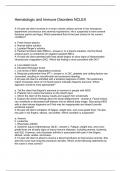
A 16-year-old client involved in a motor vehicle collision arrives in the emergency department unconscious and severely hypotensive. He is suspected to have several fractures (pelvis and legs). Which parenteral fluid is the best choice for his current condition? a. Fresh frozen plasma b. Normal saline solution c. Lactated Ringer's solution d. Packed red blood cells (RBCs) - answer-d. In a trauma situation, the first blood product given is unmatched (O negative) packed RBCs. A 19-year-old client admitted with heat stroke begins to show signs of disseminated intravascular coagulation (DIC). Which lab finding is most consistent with DIC? a. Low platelet count b. Elevated fibrinogen levels c. Low levels of fibrin degradation products d. Reduced prothrombin time (PT) - answer-a. In DIC, platelets and clotting factors are consumed, resulting in microthrombi and excessive bleeding. A 32-year-old client is admitted with a tentative diagnosis of AIDS. The preliminary report of biopsies done on his facial lesions indicates Kaposi's sarcoma. Which approach would be most appropriate? a. Tell the client that Kaposi's sarcoma is common in people with AIDS b. Pretend not to notice the lesions on the client's face c. Inform the client of the biopsy results and support him emotionally d. Explore the client's feelings about his facial disfigurement - answer-d. Facial lesions can contribute to decreased self-esteem and an altered body image. Discussing AIDS with a client whose diagnosis isn't final may be inappropriate and doesn't provide emotional support. A 36-year-old client complains of fatigue, weight loss, and a low-grade fever. He also has pain in his fingers, elbows, and ankles. Which condition is suspected? a. Anemia b. Leukemia c. Rheumatic arthritis
Información del documento
- Subido en
- 3 de febrero de 2024
- Número de páginas
- 20
- Escrito en
- 2023/2024
- Tipo
- Examen
- Contiene
- Preguntas y respuestas

