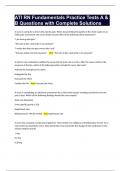
ATI PHARMACOLOGY PROCTORED EXAM
ATI PHARMACOLOGY PROCTORED EXAM (Exam solutions, with updated complete resources for 2022 ATI Exams) 1. A nurse is providing teaching to a client who has prescription for trimethoprim/sulfamethoxazole. Which of the following instructions should the nurse include in the teaching? a. Take the medication with food b. Expect a fine, red rash as a transient effect (not normal with any drug) c. Drink 8-10 glasses of water daily (decrease chance of kidney damage) d. Store the medication in the refrigerator (only suspensions go in the fridge) 2. A nurse at an urgent care clinic is collecting a history from a female client who has a UTI. The nurse anticipated a prescription for ciprofloxacin. The nurse should identify that which of the following client statements indicates a contraindication for administering this medication? Cipro=C. Diff a. “I have tendonitis, so I haven’t been able to exercise” (increase risk for tendon rupture) b. “I take a stool softener for chronic constipation” (Cipro= C. Diff) c. “I take medication for my thyroid” (most thyroids don’t interact with antibiotics) d. “I am allergic to sulfa” (not a sulfa) 3. A nurse is teaching a client who has an URI about guaifenesin. Which of the following statement should the nurse include in the teaching? a. “constipation is an expected adverse effect of this medication” (not anticholinergic drug) b. “increase your fluid intake to at least 2 liters per day while taking guaifenesin. An increase in fluid intake facilitates the removal of secretions and helps to create a more productive cough.” c. “store your medication in the refrigerator” (not usually in fridge) d. “You can expect to experience insomnia while taking this medication” (Normally drowsiness happens) 4. A nurse is reviewing the medical record of a client who has schizophrenia and a prescription for clozapine. Which of the following lab tests should the nurse review before administering the meds? –ine=psych meds a. Troponin (cardiac) b. Total cholesterol (causes hyperlipidemia) c. Creatinine (not metabolized in kidneys) d. TSH (doesn’t affect thyroid) 5. A nurse is developing a teaching plan for a client who has a new prescription for simvastatin. Which of the following instruction should the nurse include in the teaching plan? SELECT ALL THAT APPLY. a. Report muscle pain to the provider (rhabdomyolosis) This study source was downloaded by from CourseH on :53:00 GMT -06:00 b. Avoid taking the medication with grapefruit juice (grapefruit is almost always right-increase muscle injury risk) c. Take the medication in the early morning (take at night because cholesterol is created at night) d. Expect a flushing of the skin as a reaction to the medicine (goes with niacin) e. Expect therapy with this medication to be lifelong (cholesterol levels will increase without) 6. A nurse is caring for a client who has heart failure and is receiving an IV infusion of dopamine. Which of the following findings indicates that the medication is effective? (What do we want to do with HF?) a. Decreased blood pressure b. Increased heart rate c. Increased Cardiac Output (goal for HF tx) d. Decreased serum potassium 7. A nurse is caring for a client who is taking acetazolamide for chronic open-angle glaucoma. For which of the following adverse effects should the nurse instruct the client to monitor and report? Diuretic, causes wet sx, carbonic an
Escuela, estudio y materia
- Institución
- ATI PHARMACOLOGY PROCTORE
- Grado
- ATI PHARMACOLOGY PROCTORE
Información del documento
- Subido en
- 2 de febrero de 2024
- Número de páginas
- 8
- Escrito en
- 2023/2024
- Tipo
- Examen
- Contiene
- Preguntas y respuestas
Temas
-
ati pharmacology proctore
-
ati pharmacology proctored exam