CCRN PEDS AACN Exam Questions & Answers
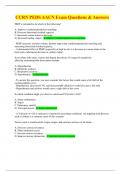
CCRN PEDS AACN Exam Questions & Answers-PEEP is intended to do which of the following? A. Improve ventilation/perfusion matching B. Decrease functional residual capacity C. Increased venous return to the heart D. Increased cardiac output - A. Improve ventilation/perfusion matching - PEEP increases alveolar volume, thereby improving ventilation/perfusion matching and increasing functional residual capacity. - A detrimental effect of PEEP (especially at high levels) is a decrease in venous return to the heart and a subsequent decrease in cardiac output. In an infant with sepsis, factors that impair the release of oxygen by negatively affecting oxyhemoglobin dissociation include: A. Hyperthermia B. Metabolic acidosis C. Respiratory acidosis D. Hypothermia - D. Hypothermia - To answer this question, you must consider the factors that would cause a left shift of the oxyhemoglobin curve. - Hypothermia, decreased CO2, and increased pH (alkalosis) would all cause a left shift. - Hyperthermia and acidosis would cause a right shift of the curve In which condition might you observe a decreased V/Q ratio (0.8)? A. Status asthmaticus B. Sepsis C. Pulmonary emboli D. Tricuspid atresia - A. Status asthmaticus - A V/Q ratio of 0.8 is indicative of perfusion exceeding ventilation. Air trapping from diseases such as asthma is a common cause of this scenario Factors such as small nostrils, larger tongue, and narrower airways in an infant.... A. Decrease airway resistance B. Make intubation easier C. Increase airway resistance D. Improve airway obstruction - C. Increase airway resistance - There are a number of factors that increase airway resistance and obstruction in young infants, including their larger heads and tongues, smaller nostrils, decreased muscle tone, and narrower airways. - Intubation is more difficult because of an anterior larynx and narrow cricoid ring. Indications that a patient is ready to wean from mechanical ventilation include: A. Hemodynamic instability B. Adequate cough and gag reflexes C. Persistent coma D. PEEP 8 - B. Adequate cough and gag reflexes - Before being extubated, a child needs to have an adequate level of consciousness to protect his or her airway. This includes having an adequate cough and gag; hemodynamic stability (not instability); and a PEEP 5, with an oxygen requirement generally less than an FiO2 of 0.4. A toddler who was found unresponsive in a swimming pool is in respiratory distress. On chest x-ray you see bilateral infiltrates and the PaO2/FiO2 ratio is 190. These findings suggest: A. Aspiration pneumonia B. Viral pneumonia C. Acute respiratory distress syndrome D. Pneumothorax - C. Acute respiratory distress syndrome - This child has signs of acute respiratory distress syndrome (ARDS), which include bilateral infiltrates on chest x-ray, PaO2/FiO2 ratio 200, and pulmonary edema, among other things. - Both aspiration and viral pneumonia may lead to ARDS, but that's not the correct answer for this question. - The symptoms described are not consistent with a pneumothorax. An infant with bronchiolitis is intubated due to an acute respiratory failure. Post-intubation ABG results demonstrate: pH 7.22 PaCO2 62 PaO2 75 HCO3 22 O2 sat 90% This blood gas reflects: A. Metabolic acidosis B. Respiratory acidosis C. Metabolic alkalosis D. Respiratory alkalosis - B. Respiratory acidosis This child's blood gas results include a decreased pH and an increase in PaCO2 — both of which indicate a state of respiratory acidosis. An intubated, mechanically ventilated patient has a sudden decrease in SpO2 from 95% to 78%, and the ventilator is alarming high peak pressures. Your first intervention is to: A. Increase the FiO2 and ventilator rate B. Assess the patency of the endotracheal tube C. Administer a neuromuscular blocking agent D. Prepare to reposition the endotracheal tube - B. Assess the patency of the endotracheal tube
Información del documento
- Subido en
- 2 de febrero de 2024
- Número de páginas
- 33
- Escrito en
- 2023/2024
- Tipo
- Examen
- Contiene
- Preguntas y respuestas