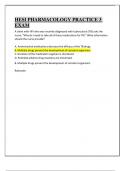
HESI PHARMACOLOGY PRACTICE 3 EXAM
HESI PHARMACOLOGY PRACTICE 3 EXAM A client with HIV who was recently diagnosed with tuberculosis (TB) asks the nurse, "Why do I need to take all of these medications for TB?" What information should the nurse provide? A. Antiretroviral medications decrease the efficacy of the TB drugs. B. Multiple drugs prevent the development of resistant organisms. C. Duration of the medication regimen is shortened. D. Potential adverse drug reactions are minimized. B. Multiple drugs prevent the development of resistant organisms. Rationale: A multidrug regimen is prescribed for a client with HIV and TB to prevent the development of resistance of the tubercle bacilli (B). Although antitubercular medications can inhibit some antiretrovirals (A), a multidrug regimen is needed to inhibit the proliferation of the virulent tubercle bacilli. The duration of antitubercular therapy is typically 6 to 9 months and is not shortened (C) by the use of multiple medications. A client who is receiving HIV and TB therapy is at an increased risk of adverse reactions (D) because of the complex medication regimens and complications secondary to immunosuppression. A client experiencing dysrhythmias is given quinidine 200 mg PO every 6 hours. The nurse plans to observe this client for which common side effect associated with the use of this medication? Diarrhea In addition to nitrate therapy, a client is receiving nifedipine (Procardia) 10 mg PO every 6 hours. The nurse should plan to observe for which common side effect of this treatment regimen? Hypotension A 59-year-old client with congestive heart failure is taking furosemide (Lasix) 40 mg twice daily. The nurse plans to monitor this client for development of which complication? Hyponatremia The daughter of a female client with Alzheimer disease reports to the nurse that her mother has recently lost her appetite and refuses to eat. The client recently started taking rivastigmine tartrate (Exelon). What instructions are important for the nurse to provide the client's daughter? The prescribershould be notified about this adverse effect of the medication right away. The nurse working in the community health clinic is assessing risk factors that can decrease medication effectiveness for clients with schizophrenia. Which client behavior is likely to decrease the effectiveness of psychotropic medications? Smokes at least 20 cigarettes daily A client is being discharged with a prescription for sulfasalazine (Azulfidine) to treat ulcerative colitis. Which instruction should the nurse provide to this client prior to discharge? A. Maintain good oral hygiene. B. Take the medication 30 minutes before a meal. C. Discontinue use of the drug gradually. D. Drink eight glasses of fluid a day. D. Drink 8 glasses of fluid a day. Rationale: Adequate hydration isimportant for allsulfa drugs because they can crystallize in the urine (D). If possible, the drug should be taken after eating to provide longer intestinal transit time (B). (A) is important for other medications, such as phenytoin (Dilantin), because of the incidence of gingival hyperplasia, and (C) is important for steroid administration, but (D) is most important to stress with this client. Daily doses of calcium citrate-malate (Citrucel) and vitamin D are prescribed for a 70-year-old female client. Which instruction should the nurse provide this client regarding taking the prescribed medications? Divide the medication over the course of the day and take it in small doses 1 hour after meals and at bedtime. A female client with trichomoniasis (T. vaginalis) receives a prescription for metronidazole (Flagyl). Which instruction is most important for the nurse to include this client's teaching plan? Avoid alcohol consumption Which physiologic mechanism explains a drug's increased metabolism that is triggered by a disease process? A. Selectivity response B. Pharmacokinetics C. Pharmacodynamics D. Pharmacotherapeutics B. Pharmacokinetics Pharmacokinetics (B) describes the physiologic process of a drug's movement throughout the body and how the drug's interaction is impacted by an underlying disease. Selectivity (A), or a selective drug, is defined as a drug that elicits only the response for which it is given. Pharmacodynamics (C) is the impact of drugs on the body. Pharmacotherapeutics (D) is defined as the use of drugs to diagnose, prevent, or treat disease or prevent pregnancy.
Escuela, estudio y materia
- Institución
- HESI PHARMACOLOGY
- Grado
- HESI PHARMACOLOGY
Información del documento
- Subido en
- 1 de febrero de 2024
- Número de páginas
- 71
- Escrito en
- 2023/2024
- Tipo
- Examen
- Contiene
- Preguntas y respuestas
Temas
-
hesi pharmacology
-
hesi pharmacology practice 3 exam
-
hesi pharmacology practice

Documento también disponible en un lote