NUR 206 206 Practice exam 1 100% COMPLETE QUESTIONS AND ANSWERS, study guide.
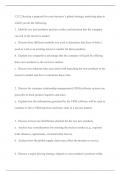
1. After surgery for insertion of a coronary artery bypass graft (CABG), a client develops a temperature of 102 F. What priority concern related to elevated temperatures does a nurse consider when notifying the health care provider about the client’s temperature? a. A fever may lead to diaphoresis b. A fever increases the cardiac output c. An increased temperature indicates cerebral edema d. An increased temperature may be a sign of hemorrhage 2. A client is prescribed prolonged bedrest after surgery. Which complication does the nurse expect to prevent by teaching this client to avoid pressure on the popliteal space? a. Cerebral embolism b. Pulmonary embolism c. Dry gangrene of a limb d. Coronary vessel occlusion 3. A nurse in the post-anesthesia care unit is caring for a client who received a general anesthetic. Which finding should the nurse report to the health care provider? a. Client pushes the airway out b. Client has snoring respirations c. Respirations of 16 breaths/min are shallow d. Systolic blood pressure drops from 130 to 90 mmHg 4. While being prepare for surgery for a ruptured spleen, a client complains of feeling light-headed. The client’s color is pale and the pulse is rapid. What should the nurse conclude about the client’s condition? a. Hyperventilating b. Going into shock c. Experiencing anxiety d. Developing an infection 5. The nurse has just reassessed the condition of a postoperative client who was admitted 1 hour ago to the surgical unit. The nurse plans to monitor which parameter most carefully during the next hour? a. Urinary output of 20 ml/hr b. Temperature of 99.6 F c. Blood pressure of 100/70 mmHg d. Serous drainage on the surgical dressing 6. A postoperative client asks the nurse why it is so important to deep-breathe and cough after surgery. When formulating a response, the nurse incorporates the understanding that retained pulmonary secretions in a postoperative client can lead to which condition? a. Pneumonia b. Hypoxemia c. Fluid imbalance d. Pulmonary embolism
Escuela, estudio y materia
- Institución
- Bradley University
- Grado
- NUR 206
Información del documento
- Subido en
- 26 de enero de 2024
- Número de páginas
- 10
- Escrito en
- 2023/2024
- Tipo
- Examen
- Contiene
- Desconocido
Temas
-
nur 206
-
206 practice exam 1