Economic and Consumer Psychology
Hoorcolleges aantekeningen
2023-2024
Introduction clip
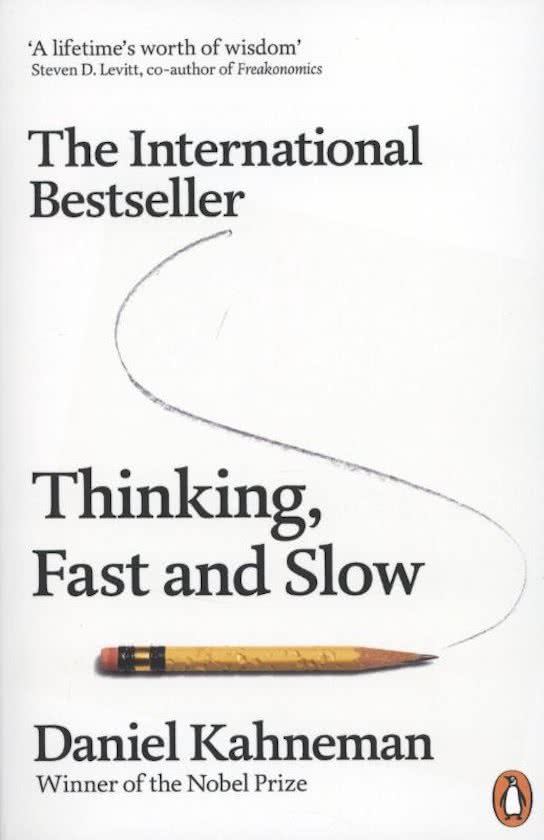
Book: Thinking fast and slow by Kaniel Kahneman
Material in the exam
- All lecture readings
- All information presented or discussed during the lectures
- All information related to the lectures (e.g., knowledge clips)
- All seminar readings
Seminars
- Assignments
o Create a campaign
o Organize half a interactive seminar
- Exercises
o Debate
o Discussions
,Final grade
Exam grade 50%
Seminar grade 50%
- Assignment 1 (sufficient vs. insufficient)
- Assignment 2 free form presentation (25%)
- Assignment 3 cover letter (75%)
Social cognition in a nutshell
Social perception
Attributions
- Persons
- Chance
- Circumstances
Decisions
- Intuitive
- Rational
Attitudes
Typical of contemporary cognitive social psychology
Experimental (lab) research on social behavior
Cognitive and physiological measurements
Individual, unconscious, schema-driven behavior
Cross-fertilization (cognitive psychology, neuroscience)
Relevant ‘real world’ phenomena
- Highly relevant for ECP
College 1
4-9-2023
Mental effort and ease
A tale of two systems
System 1
- Always runs up front
- Fast (first)
, - Intuitive
- Easy questions
System 2
- Monitors system 1
- Slow (second)
- Effortful
- Lazy
- Hard questions
Dual processing model
- Heuristic Systematic Model (geen examenstof)
- Elaboration Likelihood Model
Elaboration Likelihood Model
Two routes from information to attitude change
- Peripheral route (system 1)
- Central route (system 2)
Which route? Depends on ‘Elaboration likelihood’
- High likelihood central route
- Low likelihood peripheral route
Premises of the ELM
- People want to have correct attitudes
- Elaboration likelihood depends on motivation and ability
- Peripheral cues are most influential under low elaboration likelihood
- Attitude via the central route is …
o More stable
o Stronger
o More predictive of behaviour
Factors that promote the central route
Motivation
- Involvement with topic (in particular material outcomes)
- Accountability/ responsibility
- Need for cognition/ uncertainty reduction
Ability
, - Prior knowledge, expertise, intelligence (+)
- Repetition, experience (+)
- Distraction (-)
- Time pressure (-)
Peripheral cues
Secondary features of the information or the context, e.g.:
- Repetition (logo)
o Mere exposure (after break)
- Number of arguments (many vs. few)
- Source credibility (attractive, famous, reliable, expert)
- Product origin (e.g., wine from France)
- Product ‘characteristics’ (‘new’, ‘improved recipe’)
- Format/ design (e.g., well-designed advert positive affect)
- Etc.
Nature of Cognitive Responses: Quality of Arguments
In case of high elaboration likelihood (central route)
Strong arguments lead to positive thoughts on the opinion expressed in the message
Weak arguments lead to negative thoughts on the opinion expressed in the message
Hoorcolleges aantekeningen
2023-2024
Introduction clip
Book: Thinking fast and slow by Kaniel Kahneman
Material in the exam
- All lecture readings
- All information presented or discussed during the lectures
- All information related to the lectures (e.g., knowledge clips)
- All seminar readings
Seminars
- Assignments
o Create a campaign
o Organize half a interactive seminar
- Exercises
o Debate
o Discussions
,Final grade
Exam grade 50%
Seminar grade 50%
- Assignment 1 (sufficient vs. insufficient)
- Assignment 2 free form presentation (25%)
- Assignment 3 cover letter (75%)
Social cognition in a nutshell
Social perception
Attributions
- Persons
- Chance
- Circumstances
Decisions
- Intuitive
- Rational
Attitudes
Typical of contemporary cognitive social psychology
Experimental (lab) research on social behavior
Cognitive and physiological measurements
Individual, unconscious, schema-driven behavior
Cross-fertilization (cognitive psychology, neuroscience)
Relevant ‘real world’ phenomena
- Highly relevant for ECP
College 1
4-9-2023
Mental effort and ease
A tale of two systems
System 1
- Always runs up front
- Fast (first)
, - Intuitive
- Easy questions
System 2
- Monitors system 1
- Slow (second)
- Effortful
- Lazy
- Hard questions
Dual processing model
- Heuristic Systematic Model (geen examenstof)
- Elaboration Likelihood Model
Elaboration Likelihood Model
Two routes from information to attitude change
- Peripheral route (system 1)
- Central route (system 2)
Which route? Depends on ‘Elaboration likelihood’
- High likelihood central route
- Low likelihood peripheral route
Premises of the ELM
- People want to have correct attitudes
- Elaboration likelihood depends on motivation and ability
- Peripheral cues are most influential under low elaboration likelihood
- Attitude via the central route is …
o More stable
o Stronger
o More predictive of behaviour
Factors that promote the central route
Motivation
- Involvement with topic (in particular material outcomes)
- Accountability/ responsibility
- Need for cognition/ uncertainty reduction
Ability
, - Prior knowledge, expertise, intelligence (+)
- Repetition, experience (+)
- Distraction (-)
- Time pressure (-)
Peripheral cues
Secondary features of the information or the context, e.g.:
- Repetition (logo)
o Mere exposure (after break)
- Number of arguments (many vs. few)
- Source credibility (attractive, famous, reliable, expert)
- Product origin (e.g., wine from France)
- Product ‘characteristics’ (‘new’, ‘improved recipe’)
- Format/ design (e.g., well-designed advert positive affect)
- Etc.
Nature of Cognitive Responses: Quality of Arguments
In case of high elaboration likelihood (central route)
Strong arguments lead to positive thoughts on the opinion expressed in the message
Weak arguments lead to negative thoughts on the opinion expressed in the message