CHAPTER 1, THE CELL IN HEALTH AND ILLNESS
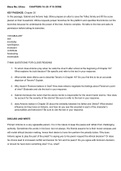
CHAPTER 1, THE CELL IN HEALTH AND ILLNESS Multiple Choice Identify the choice that best completes the statement or answers the question. 1. Which statement regarding the sodium–potassium pump is correct? 1. The cell’s plasma membrane is more soluble to sodium ions than potassium ions. 2. The concentration of sodium ions should be higher inside the cell compartment. 3. The concentration of potassium ions should be higher outside the cell compartment. 4. The active transport involves pumping out three sodium ions and pumping in two potassium ions. 2. In the absence of oxygen, which cellular function creates the same amount of energy as is created in the presence of oxygen? 1. Dissipation of pyruvic acid 2. Initiation of the citric acid cycle 3. Activation of acetyl-coenzyme A 4. Creation of acidosis via lactic acid 3. How many adenosine triphosphates (ATPs) are produced in aerobic energy metabolism? 1. 2 2. 3 3. 34 4. 53 NURSINGTB.COM 4. Endoplasmic reticula 8. Which are the key proteins in the contractile units of the muscle cells? 1. Actin and myosin 2. Prohormone and tubulin 3. Tubulin and actin 4. Myosin and prohormone 9. Which deficiency causes Tay–Sachs disease? 1. Proteasome 2. Peroxisome 3. Macrophage 4. Lysosomal enzymes 10. Which is a characteristic of adrenoleukodystrophy? 1. Accumulation of ganglioside 2. Cessation of ribosomal protein synthesis 3. Acceleration of cellular proteasome activity 4. Accumulation of long-chain fatty acids in the nervous system 11. Which statement regarding endoplasmic reticulum (ER) stress is correct? 1. During ER stress, proteins are rapidly degraded. 2. During ER stress, lipids cannot travel to their proper intracellular locations. 3. During ER stress, long-chain fatty acids accumulate in the nervous system. 4. During ER stress, nondeNgUraRdeSdIsNubGsTtaBnc.eCs OacMcumulate in the cells. 12. A client is diagnosed with type 1 diabetes mellitus. At a cellular level, which function is likely to be involved? 1. Inability of ribosomes to produce a specific type of protein 2. Incorrect processing of a protein by the Golgi apparatus 3. Stagnation of a previously dynamic action in microtubules 4. Obstruction of the smooth endoplasmic reticulum 13. A newborn patient exhibits characteristics of severe physical deformities. Which cellular component is examined to determine the cause and probability of the disease being genetically transferred? 1. Transfer RNA 2. Ribosomal RNA 3. Double helix of DNA 4. Mitochondrial DNA 14. A hiker experiences muscle pain and acidosis while ascending a mountain during a long, steep climb. Which is the reason for these manifestations? 1. Cellular hypoxia 2. Autolysis 3. Heterolysis 4. Cellular edema 15. Which factor provides DNA the unique molecular ability to replicate? 1. The pairing of nitrogenous bases 2. The presence of pyrimidine bases 3. The presence of nucleotides 4. The nitrogenous base and phosphate bond 16. How many nitrogenous bases compose a single codon? 1. 2 2. 3 3. 4 4. 5 17. Which components form the structure of DNA? 1. Nucleotides 2. Amino acids 3. Fatty acids 4. Phosphates 18. Which factor is essential in order for protein synthesis to occur? 1. Free-standing ribosomes within the cell 2. Protein blueprint from the cell of the DNA 3. Specific information from the nucleus of the cell 4. Transfer RNA to move the protein out of the cell 19. Tetracycline antibiotic is prescribed for an adult client with chlamydia infection. Which is the mechanism of action of the drug? 1. It prevents the replicatioNnUoRf bSaIctNerGiaT. B.COM 2. It alters the configuration of bacterial cytoplasm. 3. It interferes with the function of bacterial ribosomes. 4. It inhibits the functions of bacterial mitochondria. 20. Where does the conversion of a prohormone into a hormone take place? 1. In the ribosomes 2. In the Golgi apparatus 3. In the sec
Escuela, estudio y materia
- Institución
- CHAPTER 1, THE CELL IN HEALTH AND ILLNESS
- Grado
- CHAPTER 1, THE CELL IN HEALTH AND ILLNESS
Información del documento
- Subido en
- 24 de enero de 2024
- Número de páginas
- 640
- Escrito en
- 2023/2024
- Tipo
- Examen
- Contiene
- Preguntas y respuestas
Temas
-
chapter 1 the cell in health and illness