PHTLS pre test 8th edition Questions And Answers
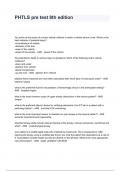
PHTLS pre test 8th edition Questions And Answers You arrive at the scene of a motor vehicle collision in which a vehicle struck a tree. Which is the best indicator of potential injury? -circumference of vehicle -diameter of the tree -mass of the vehicle -speed of the vehicle - ANS speed of the vehicle the potential for death or serious injury is greatest in which of the following motor vehicle collisions? -down and under -ejection from vehicle -lateral compression -up and over - ANS ejection from vehicle bilateral femur fractures are most often associated with which type of motorcycle crash? - ANS head-on impact what is the preferred fluid for resuscitation of hemorrhagic shock in the prehospital setting? - ANS lactated ringers what is the most common cause of upper airway obstruction in the trauma patient? - ANS tongue what is the preferred adjunct device for verifying placement of an ET tub in a patient with a perfusing rhythm? - ANS end-tidal CO2 monitoring what is the most important reason to maintain an open airway in the trauma patient? - ANS prevents hypoxemia and hypercarbia essential airway skills include manual clearing of the airway, manual maneuvers, suctioning and what? - ANS oropharyngeal airway your patient is a middle aged male who crashed his motorcycle. He is unresponsive. After opening the airway using a modified jaw thrust, you note the patient has respirations at a rate of 6. Auscultation reveals breath sounds are absent on the left side. What is the most appropriate next intervention? - ANS begin ventilation with BVM what best describes shock? - ANS generalized inadequate tissue perfusion your patient has a deep laceration to his antecubital fossa with significant bleeding. What is the most appropriate initial action? - ANS apply direct pressure hypotension of unknown etiology in a trauma patient should be assumed to result from what? - ANS blood loss which assessment is most beneficial in differentiating hemorrhagic shock from neurogenic shock in the prehospital setting? - ANS skin the body initially compensates for blood loss through activation of what? - ANS sympathetic nervous system medication used by trauma patients for pre-existing conditions may cause what? - ANS beta-blockers may prevent tachycardia with blood loss the target blood pressure for a trauma patient with suspected intra abdominal hemorrhage is what? - ANS 80-90 mmHg what best explains the mechanism by which gas exchange is impaired in pulmonary contusion? - ANS blood in the alveoli what is a key finding that differentiates cardiac tamponade from tension pneumothorax? - ANS equal breath sounds your patient is a 20yr old male who struck his head on a teammate's knee while diving to catch a football. He was not wearing a helmet. He demonstrates decerebrate posturing and has a GCS score of 4. His heart rate is 58, blood pressure 180/102 and his left pupil is dilated. What is the best ventilation rate to use when managing this patient? - ANS 20 breaths per minute a 20 yr old female was ejected from her vehicle during a high speed roll-over motor vehicle collision. She has significant bleeding from a large laceration. Your initial assessment reveals a GCS score of 7, systolic bp of 70 and pupils that are equal but respond sluggishly to light. After establishing two large bore IV lines, you should titrate the infusion rate to achieve a target bp of at least - ANS 90 mmHg what is the preferred prehospital wound management for a patient which a 36% body surface area flame burn? - ANS dry sterile dressings the most immediate life threatening condition resulting from injury to solid abdominal organs is what? - ANS hemorrhage
Escuela, estudio y materia
- Institución
- PHTLS
- Grado
- PHTLS
Información del documento
- Subido en
- 24 de enero de 2024
- Número de páginas
- 3
- Escrito en
- 2023/2024
- Tipo
- Examen
- Contiene
- Preguntas y respuestas
Temas
-
phtls pre test 8th edition

Documento también disponible en un lote