The Trinity
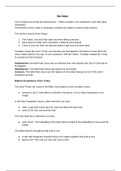
The Christian God exists as three persons - Father (creator), Son (redeemer), and Holy Spirit
(Sustainer).
The Doctrine of the Trinity is necessary to define the relation of these three persons.
The doctrine asserts three things:
1. The Father, Son and Holy Spirit are three distinct persons
2. Each person is fully God: Coexistent, coeternal and coequal
3. There is only one God: the doctrine doesn’t split God into three parts.
Tertullian coined the word ‘Trinity’ and the idea was formalised in the Nicene Creed (325 CE)
which stated that the Son was ‘of one substance’ with the Father. Tertullian created the Trinity
to counteract three heresies:
Adoptionism: the belief that Jesus was an ordinary man who became the Son of God only at
his baptism.
Sabellianism: The belief that Jesus was divine but not human
Arianism: The belief that Jesus was the highest of all created beings but not of the same
substance as God.
Biblical foundations of the Trinity
The word ‘Trinity’ isn’t used in the Bible, but evidence of the concept is there.
● Genesis 1:26-27 God refers to himself in the plural: ‘Let us make humankind in our
image’.
In the New Testament Jesus is often referred to as God:
● John 1 says that Jesus was the word and that word was God.
● John 20:28 “My Lord and My God’.
The Holy Spirit too is referred to as God:
● John 14:23 - The indwelling of the Holy Spirit is linked to the indwelling of Jesus and his
Father
The Bible teaches throughout that God is one.
● In the Old Testament, Deuteronomy 6:4-5 states explicitly that God is one.
● Mark 12:29 ‘The Lord our God, the Lord is One’.
The Christian God exists as three persons - Father (creator), Son (redeemer), and Holy Spirit
(Sustainer).
The Doctrine of the Trinity is necessary to define the relation of these three persons.
The doctrine asserts three things:
1. The Father, Son and Holy Spirit are three distinct persons
2. Each person is fully God: Coexistent, coeternal and coequal
3. There is only one God: the doctrine doesn’t split God into three parts.
Tertullian coined the word ‘Trinity’ and the idea was formalised in the Nicene Creed (325 CE)
which stated that the Son was ‘of one substance’ with the Father. Tertullian created the Trinity
to counteract three heresies:
Adoptionism: the belief that Jesus was an ordinary man who became the Son of God only at
his baptism.
Sabellianism: The belief that Jesus was divine but not human
Arianism: The belief that Jesus was the highest of all created beings but not of the same
substance as God.
Biblical foundations of the Trinity
The word ‘Trinity’ isn’t used in the Bible, but evidence of the concept is there.
● Genesis 1:26-27 God refers to himself in the plural: ‘Let us make humankind in our
image’.
In the New Testament Jesus is often referred to as God:
● John 1 says that Jesus was the word and that word was God.
● John 20:28 “My Lord and My God’.
The Holy Spirit too is referred to as God:
● John 14:23 - The indwelling of the Holy Spirit is linked to the indwelling of Jesus and his
Father
The Bible teaches throughout that God is one.
● In the Old Testament, Deuteronomy 6:4-5 states explicitly that God is one.
● Mark 12:29 ‘The Lord our God, the Lord is One’.