MTTC Integrated Science - Life Sciences Part 1 Accurate 100%
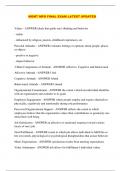
Who uses photosynthesis? - ANSWER autotrophs Where does photosynthesis occur? - ANSWER chloroplasts chemosyntheis - ANSWER used by prokaryotic autotrophs as an inorganic chemical reaction to produce energy heterotrophs - ANSWER require food and use cellular respiration to release energy from chemical bonds in the food who uses cellular respiration to release energy from stored food? - ANSWER all organisms light capturing events - ANSWER The first stage in photosynthesis; thylakoids found in the chloroplasts capture light energy and produce excited electrons light-dependent reactions - ANSWER convert light energy and water into ATP, NADPH, and O2 by the way of moving excited electrons in the stroma of plant cells Light Independent Reactions - ANSWER Use ATP and NADPH (from the light-dependent reactions) plus CO2 to produce carbohydrate sugars photorespiration - ANSWER a wasteful process that uses energy and decreases sugar synthesis that occurs in plants during photosynthesis. It occurs when the enzyme rubisco binds to oxygen instead of atmospheric CO2. How do C4 plants minimize photorespiration? - ANSWER The light reactions and the Calvin cycle occur in different cells, so oxygen does not come into contact with rubisco. How do CAM plants minimize photorespiration? - ANSWER Stomata are only opened at night, storing carbon dioxide in malate. During the day the carbon dioxide is released for photosynthesis. how do C3 plants minimize photorespiration? - ANSWER They don't. They have no special adaptations to do so. This is more than 85% of plants! aerobic respiration - ANSWER Respiration that requires oxygen. a series of enzyme-controlled reactions in which oxygen + glucose - CO2 + H2O + energy (ATP). aerobic respiration occurs in a series of 3 reactions. what are they? - ANSWER 1) glycolysis 2) the Krebs cycle 3) the electron-transport system Glycolysis - ANSWER the breakdown of glucose by enzymes, releasing energy (2 ATP molecules), pyruvic acid (2 molecules), and NADH (2 molecules). Krebs Cycle (Citric Acid Cycle) - definition - ANSWER a metabolic pathway in which the bonds of glucose (and occasionally fats/lipids) are broken down and reformed into ATP. Krebs cycle - the actual cycle - ANSWER Acetyl CoA - citric acid - isocitric acid - ketoglutaric acid (with amino acid and CO2 products) - succinyl CoA - succinic acid - fumaric acid - malic acid - oxaloacetic acid electron transport chain - ANSWER electrons are transported from enzyme to enzyme until they reach a final acceptor, including a series of RedOx molecules involved in the release of energy Fermentation - ANSWER An anaerobic (without oxygen) cellular process in which glucose is only partially broken down and energy is released through the oxidation of sugars or other organic molecules. How is fermentation different from cellular respiration? - ANSWER it uses neither Krebs cycle nor electron transport chains, and the final acceptor in fermentation is an organic molecule. which is more efficient: fermentation (an anaerobic respiration) or aerobic respiration? - ANSWER aerobic respiration homolactic fermentation - ANSWER produces lactic acid only heterolactic fermentation - ANSWER produces lactic acid and other compounds lactic acid fermentation - ANSWER - breakdown of glucose and 6-carbon sugars into lactic acid to release energy - anaerobic process (does not require oxygen) - can occur in muscle cells - performed by streptoococcus and lactobacillus bacteria - the type of fermentation in yogurts and foods alcohol fermentation - ANSWER - breakdown of glucose and 6-carbon sugars into ethanol and CO2 to release energy - anaerobic process (does not require oxygen) - performed by yeast bacteria - used in pr
Escuela, estudio y materia
- Institución
- MTTC Integrated Science - Life Sciences
- Grado
- MTTC Integrated Science - Life Sciences
Información del documento
- Subido en
- 24 de enero de 2024
- Número de páginas
- 12
- Escrito en
- 2023/2024
- Tipo
- Examen
- Contiene
- Preguntas y respuestas
Temas
-
mttc integrated science life sciences part 1 acc
-
mttc integrated science stuvia
-
who uses photosynthesis answer autotrophs wher
-
where does photosynthesis occur answer chloropl