Depth Study
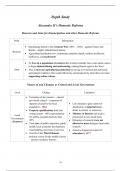
Alexander II’s Domestic Reforms
Reasons and Aims for Emancipation and other Domestic Reforms
Point Information
• Humiliating defeat in the Crimean War (1853 – 1856) – against France and
Britain – highly industrialised nations
Reasons
• Agricultural production low, technology underdeveloped, serfdom inefficient,
ineffective, and backwards
• To free up a population of workers that would eventually move into urban centres
to begin industrialising and modernising, making Russia equal to the West
Aims • Also to increase agricultural production by having a revitalised and motivated
agricultural workforce that would effectively and productively farm their own land
supporting urban reform
Nature of and Changes to Central and Local Government
Level Change Limitation
• Formation of the zemstva – elected
provincial council – composed of
deputies elected by the local • Lost attempt to gain control of
population - 1864 distribution of imperial taxes –
• Property qualifications built into desire to reform vs. autocracy
voting system – 40% representation • Ministry of Interior had to give
Local
for nobles, peasants had less than permission to any raised taxes
Government
40% • Delegates of councils were not
(Zemstva)
• Took care of public education, public allowed to meet delegates from other
health, local economic development, councils
road building, provision of services • Zemstva stripped of control of
• Growth of the Third Element – education In 1877
political voices for the middle classes
– doctors, teachers, lawyers
62
, • Municipal Statute – Dumas
Local • At local level, representation much
established 1869
Government broader than the liberal West
• Elected male Russian male property
(Duma) • No control over police
owners over 25
• Alex refused to take the next steps of
Central
setting up a National Duma due to
Government
the autocratic nature of his rule
Living and Working Conditions
Type Living Conditions Working Conditions
• Consisted of a single room, wooden • The Emancipation edict (1861)
hut, heated by an oven freed peasants from the land they had
• Usually overcrowded, animals were previously been tied to
housed in the same hut • However, peasants had to pay
• The houses were cheap to construct, compensation through redemption
Rural
and peasants had total control over its payments
use • Administration, as well as the
• However, conditions were control of produce, agricultural
horrendous – no access to electricity, systems, and resources were
clean water, sewage systems, gas controlled by mir (village council)
• The Russian diet consisted of rye, grain, buckwheat, dumplings, pancakes,
cereals, a lack of meat, fish, vegetables, and fruit
Food • 1864 – placed the zemstvo in charge of drawing up emergency measures in
times of famine
• However, people still died from hunger in large numbers
• After emancipation, peasants began to • Industrial working conditions (in
move to urban centres such as Kiev, factories) were dangerous and
Riga, St Petersburg, and Moscow unhealthy throughout Alex II’s reign
• The infrastructure for urbanisation, • There was no factory inspectorate,
Urban
industrialisation, and modernisation leading to injury and health problems
was not in place, leading to slums, remaining unaddressed, child labour,
poor conditions, and public health and exploitation of labour was
issues such as cholera and typhus common
63
Alexander II’s Domestic Reforms
Reasons and Aims for Emancipation and other Domestic Reforms
Point Information
• Humiliating defeat in the Crimean War (1853 – 1856) – against France and
Britain – highly industrialised nations
Reasons
• Agricultural production low, technology underdeveloped, serfdom inefficient,
ineffective, and backwards
• To free up a population of workers that would eventually move into urban centres
to begin industrialising and modernising, making Russia equal to the West
Aims • Also to increase agricultural production by having a revitalised and motivated
agricultural workforce that would effectively and productively farm their own land
supporting urban reform
Nature of and Changes to Central and Local Government
Level Change Limitation
• Formation of the zemstva – elected
provincial council – composed of
deputies elected by the local • Lost attempt to gain control of
population - 1864 distribution of imperial taxes –
• Property qualifications built into desire to reform vs. autocracy
voting system – 40% representation • Ministry of Interior had to give
Local
for nobles, peasants had less than permission to any raised taxes
Government
40% • Delegates of councils were not
(Zemstva)
• Took care of public education, public allowed to meet delegates from other
health, local economic development, councils
road building, provision of services • Zemstva stripped of control of
• Growth of the Third Element – education In 1877
political voices for the middle classes
– doctors, teachers, lawyers
62
, • Municipal Statute – Dumas
Local • At local level, representation much
established 1869
Government broader than the liberal West
• Elected male Russian male property
(Duma) • No control over police
owners over 25
• Alex refused to take the next steps of
Central
setting up a National Duma due to
Government
the autocratic nature of his rule
Living and Working Conditions
Type Living Conditions Working Conditions
• Consisted of a single room, wooden • The Emancipation edict (1861)
hut, heated by an oven freed peasants from the land they had
• Usually overcrowded, animals were previously been tied to
housed in the same hut • However, peasants had to pay
• The houses were cheap to construct, compensation through redemption
Rural
and peasants had total control over its payments
use • Administration, as well as the
• However, conditions were control of produce, agricultural
horrendous – no access to electricity, systems, and resources were
clean water, sewage systems, gas controlled by mir (village council)
• The Russian diet consisted of rye, grain, buckwheat, dumplings, pancakes,
cereals, a lack of meat, fish, vegetables, and fruit
Food • 1864 – placed the zemstvo in charge of drawing up emergency measures in
times of famine
• However, people still died from hunger in large numbers
• After emancipation, peasants began to • Industrial working conditions (in
move to urban centres such as Kiev, factories) were dangerous and
Riga, St Petersburg, and Moscow unhealthy throughout Alex II’s reign
• The infrastructure for urbanisation, • There was no factory inspectorate,
Urban
industrialisation, and modernisation leading to injury and health problems
was not in place, leading to slums, remaining unaddressed, child labour,
poor conditions, and public health and exploitation of labour was
issues such as cholera and typhus common
63