Unit 1A
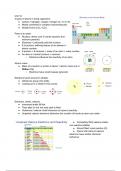
4 types of atoms in living organisms:
● Carbon, hydrogen, oxygen, nitrogen (C, H, O, N)
● Mostly combined in complex macromolecules
● Simple forms (CO2, H2O)
Parts of an atom
● Nucleus: dense core in center (protons and
neutrons present)
● Electrons: Continually orbit the nucleus
● # of protons: defining feature of an element =
atomic number
● # protons + # neutrons = mass of an atom = mass number
● An atom is ‘neutral’ protons = neutrons
○ Electrons influence the reactivity of an atom
Atomic mass
● Mass of a neutron or proton is about 1 atomic mass unit or
Dalton (Da)
○ Electrons have small masses (ignored)
Electrons travel around in orbitals
● Orbital are group into shells
● Looking up to 3 shells in this course
Electrons, shells, valence
● Innermost shells fill first
● Then after it’s full, the next shell is filled
● Outermost ‘valence’ shell influences an atom’s reactivity
● Unpaired valence electrons determine the number of bonds an atom can make
● Completely filled valence shells:
non-reactive (stable)
● Almost filled: most reactive (O)
● Atoms with same # valence
electrons have similar chemical
behaviour
, ● Elements abundant in organisms have at least one unpaired valence electron
Unpaired electrons and biological reactions
● Biological reactions are driven by
○ Wanting to fill outer shells
○ Balance positive and negative
charges
How do atoms achieve full valence shells?
1. Sharing electrons (Covalent bonds)
a. Form chemical bonds
b. # of bonds depends on the valence
electrons
2. Transferring electrons (Ionic bonds)
a. Atoms that have a charge (ions)
i. Gain electrons → negatively
charged → anions
ii. Lose electrons → positively
charged → cations
● Non-polar: electrons shared equally
○ Single, double or triple bonds
● Polar: electrons shared unequally
○ One atom has a strong pull on the
electrons than the other (electronegativity)
, Water - hydrogen bonds
● Most abundant molecule in biological organisms
○ Human body contains ~70% water
● Water is a solvent that can dissolve most types
of molecules
● Universal Solvent
● The polarity of water is important in biology
● Properties are a result of its ability to form
H-bonds
Dissociation of water
● Very small number of water molecules will dissociate into ions
● H leaves its electron and move to another water
molecule
● Results in hydronium ion (H3O+) and a hydroxide ion
(OH-)
● Then they react to produce water again
● Can also be represented as H2O ← → H+ + OH-
Acid-base reactions
● Substance that donates a proton → acid (increase H+
in solution)
4 types of atoms in living organisms:
● Carbon, hydrogen, oxygen, nitrogen (C, H, O, N)
● Mostly combined in complex macromolecules
● Simple forms (CO2, H2O)
Parts of an atom
● Nucleus: dense core in center (protons and
neutrons present)
● Electrons: Continually orbit the nucleus
● # of protons: defining feature of an element =
atomic number
● # protons + # neutrons = mass of an atom = mass number
● An atom is ‘neutral’ protons = neutrons
○ Electrons influence the reactivity of an atom
Atomic mass
● Mass of a neutron or proton is about 1 atomic mass unit or
Dalton (Da)
○ Electrons have small masses (ignored)
Electrons travel around in orbitals
● Orbital are group into shells
● Looking up to 3 shells in this course
Electrons, shells, valence
● Innermost shells fill first
● Then after it’s full, the next shell is filled
● Outermost ‘valence’ shell influences an atom’s reactivity
● Unpaired valence electrons determine the number of bonds an atom can make
● Completely filled valence shells:
non-reactive (stable)
● Almost filled: most reactive (O)
● Atoms with same # valence
electrons have similar chemical
behaviour
, ● Elements abundant in organisms have at least one unpaired valence electron
Unpaired electrons and biological reactions
● Biological reactions are driven by
○ Wanting to fill outer shells
○ Balance positive and negative
charges
How do atoms achieve full valence shells?
1. Sharing electrons (Covalent bonds)
a. Form chemical bonds
b. # of bonds depends on the valence
electrons
2. Transferring electrons (Ionic bonds)
a. Atoms that have a charge (ions)
i. Gain electrons → negatively
charged → anions
ii. Lose electrons → positively
charged → cations
● Non-polar: electrons shared equally
○ Single, double or triple bonds
● Polar: electrons shared unequally
○ One atom has a strong pull on the
electrons than the other (electronegativity)
, Water - hydrogen bonds
● Most abundant molecule in biological organisms
○ Human body contains ~70% water
● Water is a solvent that can dissolve most types
of molecules
● Universal Solvent
● The polarity of water is important in biology
● Properties are a result of its ability to form
H-bonds
Dissociation of water
● Very small number of water molecules will dissociate into ions
● H leaves its electron and move to another water
molecule
● Results in hydronium ion (H3O+) and a hydroxide ion
(OH-)
● Then they react to produce water again
● Can also be represented as H2O ← → H+ + OH-
Acid-base reactions
● Substance that donates a proton → acid (increase H+
in solution)