A Level History, Edexcel: USA, Affluence and Conformity,
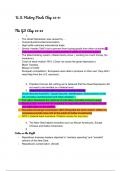
What was America like at the end of WW2? - - Largest military power - Full employment, first consumer society - Consumer credit at $45 billion, compared to $8 billion pre-war What changed in cities? - - Population growth, partly due to consumerism - More African Americans (AAs) - Federal Housing Policy introduced Positives of changes to cities - - Better living standards in suburbs (whites attracted by FHP) Negatives of changes to cities - - Racial tension more widespread - FHP didn't allow Jewish or AAs to rent / buy - City buildings were high-rise, cramped and poor quality What changed in suburban America? - - Grew as cities declined - In 1960, 3/5 owned their homes - More tourism in certain states e.g. Florida, California, Texas Positives of changes to suburbs - - People moved out at younger ages - Levittstowns were great for white people - Cheap home loans available Negatives of changes to suburbs - - Inner-cities left to AAs, leading to an increase in ghettos - Little city investment What changed regarding car ownership? - - First country where cars were the main consumer product - In 1955, production was at 8m, compared to 2m in 1946 - 1/7 worked in car-related industries - In 1960, 75% owned a car
Escuela, estudio y materia
- Institución
- CMP - Communication Management Professional
- Grado
- CMP - Communication Management Professional
Información del documento
- Subido en
- 5 de enero de 2024
- Número de páginas
- 10
- Escrito en
- 2023/2024
- Tipo
- Examen
- Contiene
- Preguntas y respuestas
Temas
-
a level history edexcel usa affluence and confo