EXCHANGE SURFACES
(a) The need for specialised exchange surfaces
● To include surface area to volume ratio (SA:V), metabolic activity, single-celled
and multicellular organisms.
All living cells need a supply of oxygen and nutrients to survive and they also need to
remove waste products so that these do not build up and become toxic, and these
may be supplied by a specialised exchange system, of the need is there.
One of the most noticeable distinguishing characteristics, determining the
form and function of specialised exchange surfaces is the size. in very small
organisms, such as single-celled organisms, all the cytoplasm is very close to the
environment in which they live. Diffusion will supply enough oxygen and nutrients to
keep the cells alive and active. However, multicellular organisms may have several
layers of cells. Here, any oxygen or nutrients diffusing in from the outside have a
longer diffusion pathway. Diffusion is too slow to enable a sufficient supply to the
innermost cells.
Another way of looking at this phenomenon is the surface area to volume ratio.
Small organisms have a small surface area, but they may also have a small volume.
Their surface area is relatively large compared with their volume and therefore a large
SA:V. Consequently, the surface area is large enough to supply all their cells with
sufficient oxygen. Larger organisms have a larger SA:V and this increases with size.
Therefore, to supply the much larger volume with a relatively small surface, a
specialised exchange surface may be needed.
The metabolic activity is also important. Some organisms are more active than
others. Metabolic activity uses energy from food and requires oxygen to release the
energy in aerobic respiration. The cells of an active organisms need good supplies of
nutrients and oxygen to supply the energy for movement. This need for energy is
increased in those animals, such as mammals, that keep themselves warm.
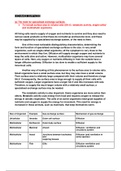
Size of Organism Example Gas exchange surface Mechanism of gas exchange
Unicellular Amoeba Outer cell surface Diffusion
Multicellular Earthworm Outer body surface Diffusion
Multicellular Mammal Alveoli Diffusion, ventilation and
circulatory system
Multicellular Insect Junctions between tracheoles Diffusion (and ventilation in
and some species)
respiring tissues
Multicellular Fish Gills Diffusion ventilation and
circulatory system
(a) The need for specialised exchange surfaces
● To include surface area to volume ratio (SA:V), metabolic activity, single-celled
and multicellular organisms.
All living cells need a supply of oxygen and nutrients to survive and they also need to
remove waste products so that these do not build up and become toxic, and these
may be supplied by a specialised exchange system, of the need is there.
One of the most noticeable distinguishing characteristics, determining the
form and function of specialised exchange surfaces is the size. in very small
organisms, such as single-celled organisms, all the cytoplasm is very close to the
environment in which they live. Diffusion will supply enough oxygen and nutrients to
keep the cells alive and active. However, multicellular organisms may have several
layers of cells. Here, any oxygen or nutrients diffusing in from the outside have a
longer diffusion pathway. Diffusion is too slow to enable a sufficient supply to the
innermost cells.
Another way of looking at this phenomenon is the surface area to volume ratio.
Small organisms have a small surface area, but they may also have a small volume.
Their surface area is relatively large compared with their volume and therefore a large
SA:V. Consequently, the surface area is large enough to supply all their cells with
sufficient oxygen. Larger organisms have a larger SA:V and this increases with size.
Therefore, to supply the much larger volume with a relatively small surface, a
specialised exchange surface may be needed.
The metabolic activity is also important. Some organisms are more active than
others. Metabolic activity uses energy from food and requires oxygen to release the
energy in aerobic respiration. The cells of an active organisms need good supplies of
nutrients and oxygen to supply the energy for movement. This need for energy is
increased in those animals, such as mammals, that keep themselves warm.
Size of Organism Example Gas exchange surface Mechanism of gas exchange
Unicellular Amoeba Outer cell surface Diffusion
Multicellular Earthworm Outer body surface Diffusion
Multicellular Mammal Alveoli Diffusion, ventilation and
circulatory system
Multicellular Insect Junctions between tracheoles Diffusion (and ventilation in
and some species)
respiring tissues
Multicellular Fish Gills Diffusion ventilation and
circulatory system