Week 1
1.) Den Hartog, D. N., & Koopman, P. L. (2001). Leadership in Organizations Leadership in Organizations. In N.
Anderson,D. S. Ones, H. K. Sinangil, & C. Viswesvaran (Eds.), Handbook of industrial, work and organizational
psychology (pp. 166-187). London: Sage.
2.) Antonakis, J., Fenley, M., & Liechti, S. (2011). Can charisma be taught? Tests of two interventions. Academy of
Management Learning & Education, 10, 374-396.
3.) Banks, G. C., Engemann, K. N., Williams, C. E., Gooty, J., McCauly, K. D., & Medaugh, M. R. (2017). A meta-analytic
review and future research agenda of charismatic leadership. Leadership Quarterly, 28, 508-529.
4.) Judge, T. A., & Piccolo, R. F. (2004). Transformational and transactional leadership: A meta-analytic test of their
validity. Journal of Applied Psychology, 89 (5), 755-768.
Week 2
5.) Ayman, R., & Korabik, K. (2010). Leadership: Why gender and culture matter. American Psychologist, 65(3), 135-
170.
6.) Eagly, A. H., & Karau, S. J. (2002). Role congruity theory of prejudice toward female leaders. Psychological Review,
117, 125-145
7.) Eagly, A. H., Johannesen-Schmidt, M. C., & van Engen, M. L. (2003). Transformational, transactional, and laissez-
faire leadership styles: A meta-analysis comparing women and men. Psychological Bulletin, 129, 569-591.
8.) Paustian-Underdahl, S. C., Slattery Walker, L., & Woehr, D. J. (2014). Gender and perceptions of leader
effectiveness: A meta-analysis of contextual moderators. Journal of Applied Psychology, 99(6), 1129-1145.
Week 3
9.) Antonakis, J., House, R. J., & Simonton, D. K. (2017). Can super smart leaders suffer from too much of a good
thing? The curvilinear effect of intelligence on perceived leadership behavior. Journal of Applied Psychology,
102(7), 1003-1021.
10.) Braun, S. (2017). Leader narcissism and outcomes in organizations: A review at multiple levels of analysis and
implications for future research. Frontiers in Psychology, 8, 773.
11.) Judge, T. A., Bono, J. E., Ilies, R. & Gerhardt, M. W. (2002). Personality and leadership: A qualitative and
quantitative review. Journal of Applied Psychology, 87 (4), 765-780.
12.) Judge, T. A., & Cable, D. M. (2004). The effect of physical height on workplace success and income: Preliminary
test of a theoretical model. Journal of Applied Psychology, 89(3), 428-441.
Week 4
13.) Den Hartog, D. N., & Dickson, M. W. (2004). Leadership and culture Download Leadership and culture. In J.
Antonakis, A. T. Cianciolo, & R. J. Sternberg (Eds.), The nature of leadership (pp. 249-278). Thousand Oaks, CA:
Sage.
14.) Den Hartog et al. (1999). Culture specific and cross-culturally generalizable implicit leadership theories: Are
attributes of charismatic/ transformational leadership universally endorsed? Leadership Quarterly, 10(2), 219-256.
15.) Dorfman, P. W., Howell, J. P., Hibino, S., Lee, J. K., Tate, U., & Bautista, A. (1997). Leadership in Western and Asian
countries: Commonalities and differences in effective leadership processes across cultures. Leadership Quarterly,
8(3), 233-274.
16.) Hofstede, G. (1993). Cultural constraints in management theories. Academy of Management Executive, 7(1), 81-
94.
Week 5
17.) Almeida, J. G., Hartog, D. N. D., De Hoogh, A. H., Franco, V. R., & Porto, J. B. (2021). Harmful Leader Behaviors:
Toward an increased understanding of how different forms of unethical leader behavior can harm
subordinates. Journal of Business Ethics, 1-30.
18.) 2) Den Hartog, D. N. (2015). Ethical leadership. Annual Review of Organizational Psychology and Organizational
Behavior, 2, 409-434.
19.) Lemoine, G. J., Hartnell, C. A., & Leroy, H. (2019). Taking stock of moral approaches to leadership: An integrative
review of ethical, authentic, and servant leadership. Academy of Management Annals, 13(1), 148-187.
Week 6
20.) Herold, D. M., Fedor, D. B., Caldwell, S., Liu, Y. (2008). The effects of transformational and change leadership on
employees' commitment to a change: A multilevel study. Journal of Applied Psychology, 93, 346-357.
21.) Kotter, J. P. (1995). Leading change: Why transformation efforts fail. Harvard Business Review, March-April, 59-67.
22.) Rafferty, A. E., Jimmieson, N. L., & Armenakis, A. A. (2013). Change readiness: A multi-level approach. Journal of
Management, 39(1), 110-135.
23.) Kim, T. G., Hornung, S., & Rousseau, D. M. (2011). Change-supportive employee behavior: Antecedents and the
moderating role of time. Journal of Management, 37(6), 1664-1693.
1
,Summary Leadership
Week 1 Lecture: Charismatic & Transformational Leadership
Theories from 1980 onwards focus on exceptional leaders who have extraordinary effects on
followers and organizations. Labels being used: Charisma(tic), Transformational or Charismatic-
transformational & Visionary leaders.
Charisma is a central concept in all. Charisma has been studied as a:
Form of influence
Set of traits
Set of tactics
Set of signals
Set of leader behaviors (leadership style)
Charisma (Weber, 1864-1920): A form of influence based on follower perceptions that the leader is
endowed with exceptional qualities. Perceived as charisma leader when (5 steps):
1. Social crisis (leader can also make their own crisis and come with solutions)
2. Exceptional leader with vision that offers solution
3. Followers who believe in vision
4. Validation by repeated successes (leader does something successful)
5. Attribution of leader as extraordinary
Huge influence on more recent theories on charisma(tic leadership).
Traits associated with charisma:
Physical characteristics: handsome appearance, piercing eyes, and distinct voice.
Psychological characteristics: high energy, self-confidence, dominance, strong need for
power and strong conviction in own beliefs and ideals.
Ability characteristics: intelligence, rhetorical and interpersonal skills.
Charismatic leader tactics:
Charismatic leaders use specific strategies in terms of what they say and how they say it: charismatic
leadership tactics (CLTs). These nonverbal and verbal influencing tactics induce perceptions of
charisma. In 8 of the 10 past ones, the candidate who used these CLTs more often won.
Verbal tactics: CRREESST M
1. Contrasts (if you are not with us, you are against us)
2. Rhetorical questions (asking a question without expecting an answer)
3. Reflect group’s sentiments
4. Express moral conviction (we want to make chance, really about values; use ethics/morals)
5. Express confidence (‘we intend to win’)
6. Stories
7. Set high goals
8. Three-part (or more) lists (saying everything in three; repetition. Veni, vidi, vici)
9. Metaphors
2
,Non verbal charismatic tactics:
10. Animated voice
Vary volume and utilize pauses to emphasize a point.
Express the corresponding emotion (sadness, happiness, excitement, surprise, etc.) along
with the message itself.
11. Facial expressions
Eye contact.
Support your communication visually. Display emotion via smiling, laughing, frowning.
12. Gestures
Signal to reinforce your message.
For example, waving a hand, pointing, or even pounding a desk can focus attention.
Charisma signaling: nowadays charisma is considered to represent a repertoire of signals.
Research has for example examined such cues as rhetoric, gestures, social gaze behavior and outfit.
Charisma has also been studied as a set of leader behaviors (leadership style).
Charismatic leader behaviors include communicating an attractive vision.
3
, Vision:
Attractive picture of the future
Communicates a change in the status quo
It challenges people
Captures values or ideas
Provides a guiding philosophy which provides meaning and purpose
Charisma has also been
studied as a set of leader behaviors (leadership style).
Charismatic leader behaviors include:
Communicating an attractive vision
Motivating subordinates to go for the greater good of the organization by:
o Demonstrating self-confidence and conviction
o Leading by example (role modeling)
o Expressing high performance expectations
Charismatic leadership is most often studied and measured as a component of
transformational leadership. Bass reworked the entire notion of charisma with a
focus on measuring and placed it under a class of leader behavior he called
transformational leadership.
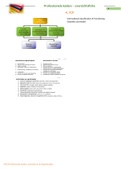
Bass Model Of Transformational Leadership (1985)
1 and 2 together form
charismatic leadership.
According to Bass,
transformational
leadership goes beyond
that and includes 3 and
4. So, charisma is a
small part of
transformational
leadership
Meta-analyses (Banks et al., 2017; Judge et al., 2004) Charismatic and transformational leadership are
both effective.
4
1.) Den Hartog, D. N., & Koopman, P. L. (2001). Leadership in Organizations Leadership in Organizations. In N.
Anderson,D. S. Ones, H. K. Sinangil, & C. Viswesvaran (Eds.), Handbook of industrial, work and organizational
psychology (pp. 166-187). London: Sage.
2.) Antonakis, J., Fenley, M., & Liechti, S. (2011). Can charisma be taught? Tests of two interventions. Academy of
Management Learning & Education, 10, 374-396.
3.) Banks, G. C., Engemann, K. N., Williams, C. E., Gooty, J., McCauly, K. D., & Medaugh, M. R. (2017). A meta-analytic
review and future research agenda of charismatic leadership. Leadership Quarterly, 28, 508-529.
4.) Judge, T. A., & Piccolo, R. F. (2004). Transformational and transactional leadership: A meta-analytic test of their
validity. Journal of Applied Psychology, 89 (5), 755-768.
Week 2
5.) Ayman, R., & Korabik, K. (2010). Leadership: Why gender and culture matter. American Psychologist, 65(3), 135-
170.
6.) Eagly, A. H., & Karau, S. J. (2002). Role congruity theory of prejudice toward female leaders. Psychological Review,
117, 125-145
7.) Eagly, A. H., Johannesen-Schmidt, M. C., & van Engen, M. L. (2003). Transformational, transactional, and laissez-
faire leadership styles: A meta-analysis comparing women and men. Psychological Bulletin, 129, 569-591.
8.) Paustian-Underdahl, S. C., Slattery Walker, L., & Woehr, D. J. (2014). Gender and perceptions of leader
effectiveness: A meta-analysis of contextual moderators. Journal of Applied Psychology, 99(6), 1129-1145.
Week 3
9.) Antonakis, J., House, R. J., & Simonton, D. K. (2017). Can super smart leaders suffer from too much of a good
thing? The curvilinear effect of intelligence on perceived leadership behavior. Journal of Applied Psychology,
102(7), 1003-1021.
10.) Braun, S. (2017). Leader narcissism and outcomes in organizations: A review at multiple levels of analysis and
implications for future research. Frontiers in Psychology, 8, 773.
11.) Judge, T. A., Bono, J. E., Ilies, R. & Gerhardt, M. W. (2002). Personality and leadership: A qualitative and
quantitative review. Journal of Applied Psychology, 87 (4), 765-780.
12.) Judge, T. A., & Cable, D. M. (2004). The effect of physical height on workplace success and income: Preliminary
test of a theoretical model. Journal of Applied Psychology, 89(3), 428-441.
Week 4
13.) Den Hartog, D. N., & Dickson, M. W. (2004). Leadership and culture Download Leadership and culture. In J.
Antonakis, A. T. Cianciolo, & R. J. Sternberg (Eds.), The nature of leadership (pp. 249-278). Thousand Oaks, CA:
Sage.
14.) Den Hartog et al. (1999). Culture specific and cross-culturally generalizable implicit leadership theories: Are
attributes of charismatic/ transformational leadership universally endorsed? Leadership Quarterly, 10(2), 219-256.
15.) Dorfman, P. W., Howell, J. P., Hibino, S., Lee, J. K., Tate, U., & Bautista, A. (1997). Leadership in Western and Asian
countries: Commonalities and differences in effective leadership processes across cultures. Leadership Quarterly,
8(3), 233-274.
16.) Hofstede, G. (1993). Cultural constraints in management theories. Academy of Management Executive, 7(1), 81-
94.
Week 5
17.) Almeida, J. G., Hartog, D. N. D., De Hoogh, A. H., Franco, V. R., & Porto, J. B. (2021). Harmful Leader Behaviors:
Toward an increased understanding of how different forms of unethical leader behavior can harm
subordinates. Journal of Business Ethics, 1-30.
18.) 2) Den Hartog, D. N. (2015). Ethical leadership. Annual Review of Organizational Psychology and Organizational
Behavior, 2, 409-434.
19.) Lemoine, G. J., Hartnell, C. A., & Leroy, H. (2019). Taking stock of moral approaches to leadership: An integrative
review of ethical, authentic, and servant leadership. Academy of Management Annals, 13(1), 148-187.
Week 6
20.) Herold, D. M., Fedor, D. B., Caldwell, S., Liu, Y. (2008). The effects of transformational and change leadership on
employees' commitment to a change: A multilevel study. Journal of Applied Psychology, 93, 346-357.
21.) Kotter, J. P. (1995). Leading change: Why transformation efforts fail. Harvard Business Review, March-April, 59-67.
22.) Rafferty, A. E., Jimmieson, N. L., & Armenakis, A. A. (2013). Change readiness: A multi-level approach. Journal of
Management, 39(1), 110-135.
23.) Kim, T. G., Hornung, S., & Rousseau, D. M. (2011). Change-supportive employee behavior: Antecedents and the
moderating role of time. Journal of Management, 37(6), 1664-1693.
1
,Summary Leadership
Week 1 Lecture: Charismatic & Transformational Leadership
Theories from 1980 onwards focus on exceptional leaders who have extraordinary effects on
followers and organizations. Labels being used: Charisma(tic), Transformational or Charismatic-
transformational & Visionary leaders.
Charisma is a central concept in all. Charisma has been studied as a:
Form of influence
Set of traits
Set of tactics
Set of signals
Set of leader behaviors (leadership style)
Charisma (Weber, 1864-1920): A form of influence based on follower perceptions that the leader is
endowed with exceptional qualities. Perceived as charisma leader when (5 steps):
1. Social crisis (leader can also make their own crisis and come with solutions)
2. Exceptional leader with vision that offers solution
3. Followers who believe in vision
4. Validation by repeated successes (leader does something successful)
5. Attribution of leader as extraordinary
Huge influence on more recent theories on charisma(tic leadership).
Traits associated with charisma:
Physical characteristics: handsome appearance, piercing eyes, and distinct voice.
Psychological characteristics: high energy, self-confidence, dominance, strong need for
power and strong conviction in own beliefs and ideals.
Ability characteristics: intelligence, rhetorical and interpersonal skills.
Charismatic leader tactics:
Charismatic leaders use specific strategies in terms of what they say and how they say it: charismatic
leadership tactics (CLTs). These nonverbal and verbal influencing tactics induce perceptions of
charisma. In 8 of the 10 past ones, the candidate who used these CLTs more often won.
Verbal tactics: CRREESST M
1. Contrasts (if you are not with us, you are against us)
2. Rhetorical questions (asking a question without expecting an answer)
3. Reflect group’s sentiments
4. Express moral conviction (we want to make chance, really about values; use ethics/morals)
5. Express confidence (‘we intend to win’)
6. Stories
7. Set high goals
8. Three-part (or more) lists (saying everything in three; repetition. Veni, vidi, vici)
9. Metaphors
2
,Non verbal charismatic tactics:
10. Animated voice
Vary volume and utilize pauses to emphasize a point.
Express the corresponding emotion (sadness, happiness, excitement, surprise, etc.) along
with the message itself.
11. Facial expressions
Eye contact.
Support your communication visually. Display emotion via smiling, laughing, frowning.
12. Gestures
Signal to reinforce your message.
For example, waving a hand, pointing, or even pounding a desk can focus attention.
Charisma signaling: nowadays charisma is considered to represent a repertoire of signals.
Research has for example examined such cues as rhetoric, gestures, social gaze behavior and outfit.
Charisma has also been studied as a set of leader behaviors (leadership style).
Charismatic leader behaviors include communicating an attractive vision.
3
, Vision:
Attractive picture of the future
Communicates a change in the status quo
It challenges people
Captures values or ideas
Provides a guiding philosophy which provides meaning and purpose
Charisma has also been
studied as a set of leader behaviors (leadership style).
Charismatic leader behaviors include:
Communicating an attractive vision
Motivating subordinates to go for the greater good of the organization by:
o Demonstrating self-confidence and conviction
o Leading by example (role modeling)
o Expressing high performance expectations
Charismatic leadership is most often studied and measured as a component of
transformational leadership. Bass reworked the entire notion of charisma with a
focus on measuring and placed it under a class of leader behavior he called
transformational leadership.
Bass Model Of Transformational Leadership (1985)
1 and 2 together form
charismatic leadership.
According to Bass,
transformational
leadership goes beyond
that and includes 3 and
4. So, charisma is a
small part of
transformational
leadership
Meta-analyses (Banks et al., 2017; Judge et al., 2004) Charismatic and transformational leadership are
both effective.
4