physiotherapeutic theory: stroke rehabilitation
INTRODUCTION
Elke 2 seconde heeft iemand een stroke
- Variabiliteit in de wereld
- Dit is niet in BE maar wereldwijd
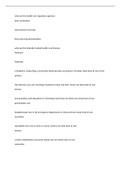
SOME QUESTIONS
Stroke patients should be mobilized=verticalized (on the edge of/out of bed)
Which of the following is the internationally agreed outcome measure for the upper limb activity domain?
- Action research arm test
Which domains are evaluated in the Barthel Index?
- dressing, walking, bladder (in)continence
Recovery after stroke is…
- Nonlinear
Research suggests that at 5 years after stroke, patients are from a motor and functional perspective…
- Back at the level they were at 2 months after stroke
PICO stands for…
- Patient, Intervention, Control, Outcome
What is the best description of a 'phase II' trial?
- A RCT which shows safety and feasibility and whick is the basis for a ‘phase III’ trial
MAGIC(app) is…
- An app that provides various clinical guidelines
(BE)FAST PRINCIPE
TIA: stroke like symptoms die in 24 h terug verdwenen zijn
Time is brain
Indien 1 vn de 3 FAS= bellen ambulance
RISK FACTORS
Controleerbare
- Roken
- Binge drinking
- Middelen misbruik
- Inactiviteit
- obesitas
Niet controleerbare
- Erdere stroke & TIA
- leeftijd
- Physial inactivity
- Heart disease and atrial fibrilation
- Binge drinking & substance misuse
- Hormonal contraception & HRT
- Family history or ethnicity
- Hoge bloeddruk (hypertensie)
- Diabetes
- Hoge cholesterol
STRESS is NOT a risk factor
Nala Melis Pagina 1
, physiotherapeutic theory: stroke rehabilitation
VERY EARLY MOBILIZATION AFTER STROKE – AVERT
P in acute fase zo snel mogelijk mobiliseren/verticalisering -> betere resultaten
A very early moblization after stroke fast-tracks return to walking: further results from phase II AVERT
randomized controlled trail (Cumming et al., 2011)
- Very early= binnen eerste 24h na cva
Verticaliseren P
- Phase 2 study
Gelimiteerd aantal P
Testen hypothese in erste study
1. AVERT
A Very Early Rehabilitation Trial (AVERT)
“Mobilisation” within the first 24h post stroke
- Bringing patients in an upright position
- voor sommige P zal dit zitten zijn voor andere staan of zelfs rond bed stappen
“Is safe and feasible” = fase 2 trial
- Is het nadelig voor de P?
Feasible: mogelijk om dit in klinische omgeving/praktijk toe te passen, haalbaar, kunnen we dit laten werken?
AVERT group achieved significantly faster “to walk again” than control group
- = intention, verdere specificatie van de hypothese
Thus, large international study warranted (>2000 patients)
Controle groep= normale behandeling
- Vaak pas kine na 3-4 dagen
Phase 3
- Effectiviteit nagaan hypothese
- Obv # P in phase 2 berekenen hoeveel P nodig voor fase 3 study = power calculatiesample size calculation
2. FASE 2 TRIAL
= gelimiteerde groep van P -> is het echt effectief? -> fase 3 trial nodig!
Op basis van fase 2 bepaal je hoeveel P je nodig hebt om een definitief antwoord te krijgen op het feit dat de
hypothese waar is.
Is de behandeling echt effectief?
Main outcome
- Met standard care behaald 40% independent walking na 20 dagen
- Met AVERT behaald 60% independent walking na 20 dagen
→ verschil na 20 dagen is relevant, er moet nog een fase 3
uitgevoerd worden maar dit verschil zegt al wel iets
→ we zien ook dat dit verschil blijft na langere tijd
- AVERT = P sneller terug zelfstandig kunnen wandelen
3. FASE 3 TRIAL
Efficacy and safety of very early mobilisation within 24h of stroke onset (AVERT): a RCT (Bernhardt et al.,2015)
- N=2104 from 56 acute stroke units!
- Vervolg vorige study (fase 2)
- Niet echt ≠te zien tussen normal care & AVERT, = resultaten fase 2 niet
bevestigd
- Geen sinificant verschil meer te zien tussen de 2 groepen
Neutraal resultaat
Geven 1sst therapy ≠verschil geen verschil VEM of usual care
- In fact…
“Fewer patients in the very early mobilisation group had a favorable
outcome than those in the usual care group (n=480 [46%] vs n=525 [50%]; adjusted odds ratio [OR] 0·73,
95% CI 0·59-0·90; p=0·004).”
Favourable outcome 3 months after stroke = modified Rankin Scale score of 0-2 (mRS)
Main outcome fase 3 study
o Negative trail experminental slechter als controle voor MAIN OUTCOME
Nala Melis Pagina 2
INTRODUCTION
Elke 2 seconde heeft iemand een stroke
- Variabiliteit in de wereld
- Dit is niet in BE maar wereldwijd
SOME QUESTIONS
Stroke patients should be mobilized=verticalized (on the edge of/out of bed)
Which of the following is the internationally agreed outcome measure for the upper limb activity domain?
- Action research arm test
Which domains are evaluated in the Barthel Index?
- dressing, walking, bladder (in)continence
Recovery after stroke is…
- Nonlinear
Research suggests that at 5 years after stroke, patients are from a motor and functional perspective…
- Back at the level they were at 2 months after stroke
PICO stands for…
- Patient, Intervention, Control, Outcome
What is the best description of a 'phase II' trial?
- A RCT which shows safety and feasibility and whick is the basis for a ‘phase III’ trial
MAGIC(app) is…
- An app that provides various clinical guidelines
(BE)FAST PRINCIPE
TIA: stroke like symptoms die in 24 h terug verdwenen zijn
Time is brain
Indien 1 vn de 3 FAS= bellen ambulance
RISK FACTORS
Controleerbare
- Roken
- Binge drinking
- Middelen misbruik
- Inactiviteit
- obesitas
Niet controleerbare
- Erdere stroke & TIA
- leeftijd
- Physial inactivity
- Heart disease and atrial fibrilation
- Binge drinking & substance misuse
- Hormonal contraception & HRT
- Family history or ethnicity
- Hoge bloeddruk (hypertensie)
- Diabetes
- Hoge cholesterol
STRESS is NOT a risk factor
Nala Melis Pagina 1
, physiotherapeutic theory: stroke rehabilitation
VERY EARLY MOBILIZATION AFTER STROKE – AVERT
P in acute fase zo snel mogelijk mobiliseren/verticalisering -> betere resultaten
A very early moblization after stroke fast-tracks return to walking: further results from phase II AVERT
randomized controlled trail (Cumming et al., 2011)
- Very early= binnen eerste 24h na cva
Verticaliseren P
- Phase 2 study
Gelimiteerd aantal P
Testen hypothese in erste study
1. AVERT
A Very Early Rehabilitation Trial (AVERT)
“Mobilisation” within the first 24h post stroke
- Bringing patients in an upright position
- voor sommige P zal dit zitten zijn voor andere staan of zelfs rond bed stappen
“Is safe and feasible” = fase 2 trial
- Is het nadelig voor de P?
Feasible: mogelijk om dit in klinische omgeving/praktijk toe te passen, haalbaar, kunnen we dit laten werken?
AVERT group achieved significantly faster “to walk again” than control group
- = intention, verdere specificatie van de hypothese
Thus, large international study warranted (>2000 patients)
Controle groep= normale behandeling
- Vaak pas kine na 3-4 dagen
Phase 3
- Effectiviteit nagaan hypothese
- Obv # P in phase 2 berekenen hoeveel P nodig voor fase 3 study = power calculatiesample size calculation
2. FASE 2 TRIAL
= gelimiteerde groep van P -> is het echt effectief? -> fase 3 trial nodig!
Op basis van fase 2 bepaal je hoeveel P je nodig hebt om een definitief antwoord te krijgen op het feit dat de
hypothese waar is.
Is de behandeling echt effectief?
Main outcome
- Met standard care behaald 40% independent walking na 20 dagen
- Met AVERT behaald 60% independent walking na 20 dagen
→ verschil na 20 dagen is relevant, er moet nog een fase 3
uitgevoerd worden maar dit verschil zegt al wel iets
→ we zien ook dat dit verschil blijft na langere tijd
- AVERT = P sneller terug zelfstandig kunnen wandelen
3. FASE 3 TRIAL
Efficacy and safety of very early mobilisation within 24h of stroke onset (AVERT): a RCT (Bernhardt et al.,2015)
- N=2104 from 56 acute stroke units!
- Vervolg vorige study (fase 2)
- Niet echt ≠te zien tussen normal care & AVERT, = resultaten fase 2 niet
bevestigd
- Geen sinificant verschil meer te zien tussen de 2 groepen
Neutraal resultaat
Geven 1sst therapy ≠verschil geen verschil VEM of usual care
- In fact…
“Fewer patients in the very early mobilisation group had a favorable
outcome than those in the usual care group (n=480 [46%] vs n=525 [50%]; adjusted odds ratio [OR] 0·73,
95% CI 0·59-0·90; p=0·004).”
Favourable outcome 3 months after stroke = modified Rankin Scale score of 0-2 (mRS)
Main outcome fase 3 study
o Negative trail experminental slechter als controle voor MAIN OUTCOME
Nala Melis Pagina 2