RNSG 1216 Exam 3Questions With Correct Answers
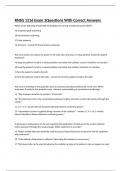
Which of the following should NOT be delegated to nursing assistive personnel (NAP)? A) Oropharyngeal suctioning. B) Nasotracheal suctioning. C) Pulse oximetry. D) Oral care. - Answer B) Nasotracheal suctioning The nurse desires to suction the patient's left main-stem bronchus. In what position should the patient be placed? A) Keep the patient's head in a neutral position and rotate the catheter counter-clockwise on insertion. B) Keep the patient's head in a neutral position and rotate the catheter clockwise on insertion. C) Turn the patient's head to the left. D) Turn the patient's head to the right. - Answer D) Turn the patient's head to the right The nurse is orienting a new graduate nurse to common procedures performed on the unit. Which statement, if made by the graduate nurse, indicates understanding of nasotracheal suctioning? A) "The maximum duration to suction is 20 seconds." B) "The bacterial count in the nasotracheal pathway is higher, therefore suction the trachea through the mouth." C) "A 1- to 2- minute interval should be allowed between suctioning passes." D) "Intermittent suction is applied during insertion of the catheter." - Answer C) "A 1- to 2- minute interval should be allowed between suctioning passes." A discussion is taking place on the unit regarding the application of lubricant to the suction catheter before passing it through the nasal passage. Which statement is accurate? A) "Water-soluble lubricant should be used because oil based lubricants increase the risk for aspiration and pneumonia." B) "If the patient's fluid status is sufficient, lubricating the catheter is unnecessary." C) "Petroleum jelly can be used to lubricate the catheter as long as the patient is not on oxygen via nasal cannula." D) "Applying water-soluble lubricant to the suction catheter ensures that it is working properly prior to oropharyngeal or nasotracheal suctioning." - Answer A) "Water-soluble lubricant should be used because oil based lubricants increase the risk for aspiration and pneumonia." The nurse performs nasotracheal suctioning. Which of the following is an incorrect sequence for this procedure? A) Apply sterile gloves, pick up the suction catheter with dominant hand, secure the catheter to the tubing, connect the tubing to the suction machine, and turn the suction on. B) Wearing sterile gloves, suction a small amount of sterile normal saline from the basin and lightly coat 6 to 8 cm of the catheter with water-soluble lubricant. C) Using dominant hand, gently but quickly insert the catheter into the patient's nares and intermittently suction and rotate the catheter while withdrawing the catheter. D) Rinse the catheter and connecting tubing with normal saline and allow the patient to rest 1 to 2 minutes between catheter passes. Encourage the patient to cough, and when suctioning is complete, appropriately discard used equipment and perform oral care. - Answer A) Apply sterile gloves, pick up the suction catheter with dominant hand, secure the catheter to the tubing, connect the tubing to the suction machine, and turn the suction on. Which of the following is a potential complication for a patient who is having nasotracheal suctioning? (Select all that apply.) A) A significant drop in oxygen concentration. B) A decrease in heart rate. C) Dysrythmias. D) Coughing during and after suctioning E) Less secretions in the airway. - Answer A) A significant drop in oxygen concentration. B) A decrease in heart rate. C) Dysrythmias. A 73-year-old patient was admitted with severe respiratory distress secondary to pneumonia. She has a long history of smoking, which she recently stopped. On arrival she was placed on continuous pulse oximetry, and an endotracheal tube was inserted for mechanical ventilation. She is heavily sedated. This patient is at risk for airway occlusion. True False - Answer True
Escuela, estudio y materia
- Institución
- RNSG 1216
- Grado
- RNSG 1216
Información del documento
- Subido en
- 11 de diciembre de 2023
- Número de páginas
- 6
- Escrito en
- 2023/2024
- Tipo
- Examen
- Contiene
- Preguntas y respuestas
Temas
-
rnsg 1216 stuvia
-
rnsg 1216 exam 3questions with correct answers
-
which of the following should not be delegated to
-
the nurse desires to suction the patients left ma

Documento también disponible en un lote