Test Bank Priorities in Critical Care Nursing 8th edition Urden Stacy Lough
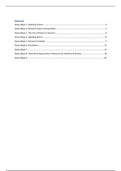
Test Bank Priorities in Critical Care Nursing 8th edition Urden Stacy LoughContents Chapter 01: Caring for the Critically Ill Patient ................................................................................................. 1 Chapter 02: Ethical and Legal Issues .................................................................................................................. 7 Chapter 03: Patient and Family Education ....................................................................................................... 12 Chapter 04: Psychosocial Alterations ................................................................................................................. 20 Chapter 05: Nutritional Alterations ................................................................................................................... 27 Chapter 06: Gerontologic Alterations ................................................................................................................. 35 Chapter 07: Pain and Pain Management ........................................................................................................... 43 Chapter 08: Sedation and Delirium Management ............................................................................................ 51 Chapter 09: End-of-Life Care ............................................................................................................................. 58 Chapter 10: Cardiovascular Clinical Assessment and Diagnostic Procedures ................................................. 64 Chapter 11: Cardiovascular Disorders ............................................................................................................... 78 Chapter 12: Cardiovascular Therapeutic Management .................................................................................... 89 Chapter 13: Pulmonary Clinical Assessment and Diagnostic Procedures ........................................................ 99 Chapter 14: Pulmonary Disorders .................................................................................................................... 107 Chapter 15: Pulmonary Therapeutic Management ......................................................................................... 117 Chapter 16: Neurologic Clinical Assessment and Diagnostic Procedures ....................................................... 126 Chapter 17: Neurologic Disorders and Therapeutic Management .................................................................. 136 Chapter 18: Kidney Clinical Assessment and Diagnostic Procedures ............................................................ 144 Chapter 19: Kidney Disorders and Therapeutic Management ........................................................................ 152 Chapter 20: Gastrointestinal Clinical Assessment and Diagnostic Procedures ............................................. 160 Chapter 21: Gastrointestinal Disorders and Therapeutic Management ......................................................... 169 Chapter 22: Endocrine Clinical Assessment and Diagnostic Procedures ........................................................ 177 Chapter 23: Endocrine Disorders and Therapeutic Management ................................................................... 185 Chapter 24: Trauma ......................................................................................................................................... 192 Chapter 25: Burns ............................................................................................................................................ 201 Chapter 26: Shock, Sepsis, and Multiple Organ Dysfunction Syndrome ........................................................ 210 Chapter 27: Hematologic Disorders and Oncologic Emergencies .................................................................... 220 Chapter 01: Caring for the Critically Ill Patient MULTIPLE CHOICE 1. What type of practitioner has a broad depth of specialty knowledge and expertise and manages complex clinical and system issues? a. Registered nurses b. Advanced practice nurses c. Clinical nurse leaders d. Intensivists ANS: B Advanced practice nurses (APNs) have a broad depth of knowledge and expertise in 1 | P a g etheir specialty area and manage complex clinical and systems issues. Intensivists are medical practitioners who manage the critical ill patient. Registered nurses (RNs) are generally direct care providers. Clinical nurse leaders (CNLs) generally do not manage system issues. PTS: 1 Remembering DIF: Cognitive Level: OBJ: Nursing Process Step: N/A TOP: Caring for the Critically Ill Patient MSC: NCLEX: Safe and Effective Care Environment: Coordinated Care 2. What type of practitioner is instrumental in ensuring care that is evidence based and that safety programs are in place? a. Clinical nurse specialist b. Advanced practice nurse c. Registered nurses d. Nurse practitioners ANS: A Clinical nurse specialists (CNSs) serve in specialty roles that use their clinical, teaching, research, leadership, and consultative abilities. They are instrumental in ensuring that care is evidence based and that safety programs are in place. Advanced practice nurses (APNs) have a broad depth of knowledge and expertise in their specialty area and manage complex clinical and systems issues. Registered nurses are generally direct care providers. Nurse practitioners (NPs) manage direct clinical care of groups of patients. PTS: 1 Remembering DIF: Cognitive Level: OBJ: Nursing Process Step: N/A TOP: Caring for the Critically Ill Patient MSC: NCLEX: Safe and Effective Care Environment: Coordinated Care 3. Which professional organization administers critical care certification exams for registered nurses? a. State Board of Registered Nurses b. National Association of Clinical Nurse Specialist c. Society of Critical Care Medicine d. American Association of Critical-Care Nurses ANS:D American Association of Critical-Care Nurses (AACN) administers certification exams for registered nurses. The State Board of Registered Nurses (SBON) does not administer certification exams. National Association of Clinical Nurse Specialists (NACNS) does not administer certification exams. Society of Critical Care Medicine (SCCM) does not administer nursing certification exams for registered nurses. PTS: 1 Remembering DIF: Cognitive Level: OBJ: Nursing Process Step: N/A TOP: Caring for the Critically Ill Patient MSC: NCLEX: Safe and Effective Care Environment: Coordinated Care 4. The American Association of Critical-Care Nurses (AACN) has developed short directives that can be used as quick references for clinical use that are known as: a. critical care protocol. b. practice policies. c. evidence-based research. d. practice alerts. 2 | P a g eANS: D The American Association of Critical-Care Nurses (AACN) has promulgated several evidence-based practice summaries in the form of “practice alerts.” Evidence-based nursing practice considers the best research evidence on the care topic along with clinical expertise of the nurse and patient preferences. Critical care protocol and practice policies are established by individual institutions. PTS: 1 DIF: Cognitive Level: Remembering OBJ: Nursing Process Step: Planning TOP: Caring for the Critically Ill Patient MSC: NCLEX: Safe and Effective Care Environment: Coordinated Care 5. What type of therapy is an option to conventional treatment? a. Alternative b. Holistic c. Complementary d. Individualized ANS: A The term alternative denotes that a specific therapy is an option or alternative to what is considered conventional treatment of a condition or state. The term complementary was proposed to describe therapies that can be used to complement or support conventional treatments. Holistic care focuses on human integrity and stresses that the body, mind, and spirit are interdependent and inseparable. Individualized care recognizes the uniqueness of each patient’s preferences, condition, and physiologic and psychosocial status. PTS: 1 DIF: Cognitive Level: Remembering OBJ: Nursing Process Step: Implementation TOP: Caring for the Critically Ill Patient MSC: NCLEX: Physiological Integrity: Basic Care and Comfort 6. Guided imagery and massage are both examples of what type of treatment? a. Alternative therapy b. Holistic care c. Complementary care d. Individualized care ANS: C The term complementary was proposed to describe therapies that can be used to complement or support conventional treatments. Guided imagery, massage, and animal- assisted therapy are all examples of complementary care. The term alternative denotes that a specific therapy is an option or alternative to what is considered conventional treatment of a condition or state. Holistic care focuses on human integrity and stresses that the body, mind, and spirit are interdependent and inseparable. Individualized care recognizes the uniqueness of each patient’s preferences, condition, and physiologic and psychosocial status. PTS: 1 DIF: Cognitive Level: Understanding OBJ: Nursing Process Step: Implementation TOP: Caring for the Critically Ill Patient MSC: NCLEX: Physiological Integrity: Basic Care and Comfort 7. A patient was admitted to a rural critical care unit in Montana. Critical care 3 | P a g enurses are assisting with monitoring and care of the patient from the closest major city. What is this type of practice termed? a. Tele-nursing b. Tele-ICU c. Tele-informatics d. Tele-hospital ANS: B Tele-ICU is a form of telemedicine. Telemedicine was initially used in outpatient areas, remote rural geographic locations, and areas where there was a dearth of medical providers. Currently, there are tele-ICUs in areas where there are limited resources on- site. However, experts (critical care nurses, intensivists) are located in a central distant site. PTS: 1 DIF: Cognitive Level: Understanding OBJ: Nursing Process Step: Evaluation TOP: Caring for the Critically Ill Patient MSC: NCLEX: Physiological Integrity: Reduction of Risk Potential 8. Which core competency for interprofessional practice can be described as working with individuals of other professions to maintain a climate of mutual respect and shared values? a. Interprofessional teamwork and team-based care b. Values and ethics for interprofessional practice c. Interprofessional communication d. Roles and responsibilities for collaborative practice ANS: B Values and ethics for interprofessional practice mean working with individuals of other professions to maintain a climate of mutual respect and shared values. Roles and responsibilities for collaborative practice include using knowledge of one’s own role and the roles of other professions to appropriately assess and address the health care needs of the patients and populations served. Interprofessional communication includes communicating with patients, families, communities, and other health professionals in a responsive and responsible manner that supports a team approach to maintaining health and treatment of disease. Interprofessional teamwork and team-based care means applying relationship-building values and principles of team dynamics to perform effectively in different team roles to plan and deliver patient population-centered care that is safe, timely, efficient, effective, and equitable. PTS: 1 Remembering DIF: Cognitive Level: OBJ: Nursing Process Step: N/A TOP: Caring for the Critically Ill Patient MSC: NCLEX: Safe and Effective Care Environment: Coordinated Care 9. Which nursing intervention continues to be one of the most error-prone for critical care nurses? a. Inappropriate care b. Intimidating and disruptive clinician behavior c. Injury to patients by falls d. Medication administration 4 | P a g eANS: D Medication administration continues to be one of the most error-prone nursing interventions for critical care nurses. Intimidating and disruptive clinician behaviors can lead to errors and preventable adverse patient outcomes. Patient safety has been described as an ethical imperative and one that is inherent in health care professionals’ actions and interpersonal processes; examples include inappropriate care and injury to patients by falls. PTS: 1 DIF: Cognitive Level: Understanding OBJ: Nursing Process Step: Implementation TOP: Caring for the Critically Ill Patient MSC: NCLEX: Safe and Effective Care Environment: Safety and Infection Control 10. A practitioner and nurse are performing a dressing change on an unresponsive patient in room 14. The practitioner asks the nurse for an update on the patient in room 13. Which action should the nurse take next? a. Give the update to the practitioner. b. Refuse to give the update because of Health Insurance Portability and Accountability Act (HIPAA) requirements. c. Give the update because the patient is unconscious. d. Refuse to give the update because of Occupational Safety and Health Administration (OSHA) requirements. ANS: B Most specific to critical care clinicians is the privacy and confidentiality related to protection of health care data. This has implications when interacting with family members and others and the often very close work environments, tight working spaces, and emergency situations. A patient’s unconscious state is not a reason for another patient’s care to be discussed in his or her presence. Research shows hearing is the last sense to deteriorate. Occupational Safety and Health Administration (OSHA) has to do with safety in the workplace, not privacy and confidentiality. PTS: 1 DIF: Cognitive Level: Applying OBJ: Nursing Process Step: Implementation TOP: Caring for the Critically Ill Patient MSC: NCLEX: Safe and Effective Care Environment: Coordinated Care 11. Which units can provide high-quality and cost-effective care for patients who are less complex, more stable, and have a decreased need for physiologic monitoring? a. Intensive care units b. Triage units c. Progressive care units d. Medical surgical units ANS: C A growing trend in acute care settings is the designation of progressive care units, considered to be part of the continuum of critical care. These units can serve as a bridge between intensive care units and medical-surgical units, while providing high-quality and cost- effective care at the same time. Patients who are ideal candidates for progressive care are less complex, more stable, have a decreased need for physiologic monitoring, and more self-care capabilities. PTS: 1 5 | P a g e DIF: Cognitive Level:Understanding OBJ: Nursing Process Step: N/A TOP: Caring for the Critically Ill Patient MSC: NCLEX: Safe and Effective Care Environment: Coordinated Care MULTIPLE RESPONSE 1. What considerations are taken into account in evidence-based nursing practice? (Select all that apply.) a. Clinical expertise of the nurse b. Availability of staff and facility equipment c. Research evidence on the topic d. Patient knowledge of the disease e. Patient preference regarding care ANS: A, C, E Evidence-based nursing practice considers the best research evidence on the care topic along with clinical expertise of the nurse and patient preferences. For instance, when determining the frequency of vital sign measurement, the nurse would use available research and nursing judgment (stability, complexity, predictability, vulnerability, and resilience of the patient). Availability of staff and facility equipment and the patient’s knowledge of the disease do not factor into evidence-based nursing practices. PTS: 1 DIF: Cognitive Level: Remembering OBJ: Nursing Process Step: Planning TOP: Caring for the Critically Ill Patient MSC: NCLEX: Safe and Effective Care Environment: Coordinated Care 2. The concept of diversity encompasses what thoughts and actions? (Select all that apply.) a. Sensitivity to ethnic differences b. Openness to different lifestyles c. Openness to different values d. Reticence to different beliefs e. Lack of concern regarding different opinions ANS: A, B, C Diversity includes not only ethnic sensitivity but also sensitivity to openness to difference lifestyles, opinions, values, and beliefs. Reticence and lack of concern are not part of the concept of diversity. PTS: 1 DIF: Cognitive Level: Evaluating OBJ: Nursing Process Step: N/A TOP: Caring for the Critically Ill Patient MSC: NCLEX: Safe and Effective Care Environment: Coordinated Care 3. According to Kupperschmidt, what factors are needed to become a skilled communicator? (Select all that apply.) a. Becoming candid b. Becoming reflective c. Setting goals d. Surveying the team e. Becoming aware of self-deception ANS: A, B, E Kupperschmidt and colleagues posed a five-factor model for becoming a skilled communicator: becoming aware of self-deception, becoming authentic, becoming candid, 6 | P a g ebecoming mindful, and becoming reflective, all of which lead to being a skilled communicator. PTS: 1 DIF: Cognitive Level: Evaluating OBJ: Nursing Process Step: N/A TOP: Caring for the Critically Ill Patient MSC: NCLEX: Safe and Effective Care Environment: Coordinated Care Chapter 02: Ethical and Legal Issues MULTIPLE CHOICE 1. What is the difference between ethics and morals? a. Ethics is more concerned with the “why” of behavior. b. Ethics provides a framework for evaluation of the behavior. c. Ethics is broader in scope than morals. d. Ethics focuses on the right or wrong behavior based on values. ANS: A Ethics are concerned with the basis of the action rather than whether the action is right or wrong, good or bad. PTS: 1 DIF: Cognitive Level: Understanding OBJ: Nursing Process Step: N/A TOP: Ethical and Legal Issues MSC: NCLEX: Safe and Effective Care Environment: Coordinated Care 2. A patient’s wife has been informed by the practitioner that her spouse has permanent quadriplegia. The wife states that she does not want anyone to tell the patient about his injury. The patient asks the nurse about what has happened. The nurse has conflicting emotions about how to handle the situation. What is the nurse experiencing? a. Autonomy b. Moral distress c. Moral doubt d. Moral courage ANS: B The nurse has been placed in a situation initially causing moral distress and is struggling with determining the ethically appropriate action to take. Moral courage is the freedom to advocate for oneself, patients, and peers. Autonomy is an ethical principle. Moral doubt is not part of the American Association of Critical-Care Nurses (AACN) framework The 4A’s to Rise Above Moral Distress. PTS: 1 DIF: Cognitive Level: Understanding OBJ: Nursing Process Step: N/A TOP: Ethical and Legal Issues MSC: NCLEX: Safe and Effective Care Environment: Coordinated Care 3. Critical care nurses can best enhance the principle of autonomy by performing which action? a. Presenting only the information to prevent relapse in a patient b. Assisting with only tasks that cannot be done by the patient c. Providing the patient with all of the information and facts d. Guiding the patient toward the best choices for care ANS: C Patients and families must have all the information about a certain situation to make 7 | P a g ean autonomous decision that is best for them. PTS: 1 DIF: Cognitive Level: Applying OBJ: Nursing Process Step: Implementation TOP: Ethical and Legal Issues MSC: NCLEX: Safe and Effective Care Environment: Coordinated Care 4. The principle of respect for persons incorporates which additional concepts? a. Confidentiality and privacy b. Truth and reflection c. Autonomy and justice d. Beneficence and nonmaleficence ANS:A Confidentiality of patient information and privacy in patient interactions must be protected and honored by health care providers out of respect for persons. Confidentiality is a right involving the sharing of patient information with only those involved in the patient’s care. Privacy includes confidentiality but goes further to include the right to privacy of person and personal space, such as ensuring that a patient is adequately covered during a procedure. PTS: 1 DIF: Cognitive Level: Understanding OBJ: Nursing Process Step: N/A TOP: Ethical and Legal Issues MSC: NCLEX: Safe and Effective Care Environment: Coordinated Care 5. Which statement regarding the Code of Ethics for Nursing is accurate? a. The Code of Ethics for Nurses is usurped by state or federal laws. b. It allows the nurse to focus on the good of society rather than the uniqueness of the patient. c. The Code of Ethics for Nurses was recently adopted by the American Nurses Association. d. It provides society with a set of expectations of the nursing profession. ANS:D The Code of Ethics for Nursing provides a framework for the nurse to follow in ethical decision making and provides society with a set of expectations of the nursing profession. PTS: 1 DIF: Cognitive Level: Understanding OBJ: Nursing Process Step: N/A TOP: Ethical and Legal Issues MSC: NCLEX: Safe and Effective Care Environment: Coordinated Care 6. Ethical decisions are best made by performing which action? a. Following the guidelines of a framework or model b. Having the patient discuss alternatives with the physician or nurse 8 | P a g ec. Prioritizing the greatest good for the greatest number of persons d. Careful consideration by the Ethics Committee after all diagnostic data are reviewed ANS: A To facilitate the ethical decision-making process, a model or framework must be used so that all involved will consistently and clearly examine the multiple ethical issues that arise in critical care. PTS: 1 DIF: Cognitive Level: Analyzing OBJ: Nursing Process Step: N/A TOP: Ethical and Legal Issues MSC: NCLEX: Safe and Effective Care Environment: Coordinated Care 7. What is the first step of the ethical decision-making process? a. Consulting with an authority b. Identifying the health problem c. Delineating the ethical problem from other types of problems d. Identifying the patient as the primary decision maker ANS: B Step one involves identifying the major aspects of the patient’s medical and health problems. Consulting an authority is not always necessary in the process. Delineating the ethical problem from other types of problems may not be necessary. Identification of the patient as primary decision maker is not part of the process. PTS: 1 Remembering DIF: Cognitive Level: OBJ: Nursing Process Step: N/A TOP: Ethical and Legal Issues MSC: NCLEX: Safe and Effective Care Environment: Coordinated Care 8. What is the legal standard of care for a nurse’s actions? a. Minimal competency under the state Nurse Practice Act b. The ability to distinguish what is right or wrong for the patient c. The demonstration of satisfactory knowledge of policies and procedures d. The care that an ordinary prudent nurse would perform under the same circumstances ANS: D The legal standard of care for nurses is established by expert testimony and is generally “the care that an ordinarily prudent nurse would perform under the same circumstances.” PTS: 1 DIF: Cognitive Level: Understanding OBJ: Nursing Process Step: N/A TOP: Ethical and Legal Issues MSC: NCLEX: Safe and Effective Care Environment: Coordinated Care 9. A patient is admitted with chest pain with evidence of elevated ST segments. The nurse bases the plan of care on the diagnosis of pneumonia. What type of negligence may be present? a. Assessment failure b. Planning failure c. Implementation failure d. Evaluation failure ANS: B 9 | P a g eBasing nursing care on an erroneous diagnosis is a failure in planning. Standards of care include assessment, the collection of relevant data pertinent to the patient’s health or situation; diagnosis, analysis of the assessment data in determining diagnosis and care issues; implementation, coordinating care delivery and plan and using strategies to promote health and a safe environment; and evaluation, evaluation of the progress of the patient toward attaining outcomes. PTS: 1 DIF: Cognitive Level: Analyzing OBJ: Nursing Process Step: Planning TOP: Ethical and Legal Issues MSC: NCLEX: Safe and Effective Care Environment: Coordinated Care 10. What is an injury resulting from the failure to meet an ordinary duty called? a. Negligence b. Malpractice c. Assault d. Battery ANS: A Injury resulting from the failure to meet an ordinary duty or standard of care is negligence. Malpractice is a specialized form of negligence. Assault and battery are examples of intentional acts. PTS: 1 DIF: Cognitive Level: Understanding OBJ: Nursing Process Step: N/A TOP: Ethical and Legal Issues MSC: NCLEX: Safe and Effective Care Environment: Coordinated Care 11. A night nurse is notified by the laboratory that the patient has a critical magnesium level of 1.1 mEq/L. The patient has a do-not-resuscitate order. The nurse does not notify the practitioner because of the patient’s code status. In doing so, the nurse is negligent for what? a. Failure to analyze the level of care needed by the patient b. Failure to respect the patient’s wishes c. Wrongful death d. Failure to take appropriate action ANS: D Nurses caring for acutely and critically ill patients must appropriately notify physicians of situations warranting treatment actions. Furthermore, the full no-code, do-not-resuscitate order does not exclude this patient from receiving treatment to correct the critical laboratory value. Failure to take appropriate action in cases involving acutely and critically ill patients has included not only physician-notification issues but also failure to follow physician orders, failure to properly treat, and failure to appropriately administer medication. PTS: 1 DIF: Cognitive Level: Applying OBJ: Nursing Process Step: Implementation TOP: Ethical and Legal Issues MSC: NCLEX: Safe and Effective Care Environment: Coordinated Care 12. Two nurses are talking about a patient’s condition in the cafeteria. In doing so, these nurses could be accused of what? a. Failure to take appropriate action b. Failure to timely communicate patient findings c. Failure to preserve patient privacy 10 | P a g ed. Failure to document patient information ANS: C Nurses have a duty to preserve patient privacy, and failure to do so is a breach of patient confidentiality and failure to preserve patient privacy. Nurses should also refrain from having discussions about specific patients with anyone except other health care professionals involved in the care of the patient. When discussing specific patients with other health care professionals, it is imperative that patient-specific discussions occur in nonpublic settings. Discussions about specific patients are never appropriate in public areas such as elevators, cafeterias, gift shops, and parking lots. PTS: 1 DIF: Cognitive Level: Applying OBJ: Nursing Process Step: Assessment Safe and Effective Care Environment: Coordinated Care 13. A nurse fails to recognize an intubated patient’s need for suctioning. The endotracheal tube becomes clogged, and the patient has a respiratory arrest. What type of negligence may be present? a. Assessment failure b. Planning failure c. Implementation failure d. Evaluation failure ANS: A Nurses have a duty to assess and analyze the care required by each patient they care for. Failure to do so puts the nurse at risk for negligence related to failure to assess the patient’s needs. PTS: 1 DIF: Cognitive Level: Analyzing OBJ: Nursing Process Step: Assessment TOP: Ethical and Legal Issues MSC: NCLEX: Safe and Effective Care Environment: Coordinated Care 14. On the way to surgery, a patient expresses doubt about proceeding with the planned procedure. The patient states that the doctor did not explain it very well and she would like to talk to her again before starting the procedure. The nurse knows the surgery schedule is very tight, reassures the patient that everything will be all right, and administers the preoperative sedation. This scenario describes what possible type of negligence? a. Assessment failure b. Planning failure c. Implementation failure d. Evaluation failure ANS: D The nurse has a duty to act as a patient advocate, in this case by holding the preoperative sedation until the doctor and the patient can speak and the patient is satisfied that she has the necessary information to make this decision. PTS: 1 DIF: Cognitive Level: Analyzing N/A TOP: Ethical and Legal Issues 11 | P a g e OBJ: Nursing Process Step: TOP: Ethical and Legal Issues MSC: NCLEX:MSC: NCLEX: Safe and Effective Care Environment: Coordinated Care MULTIPLE RESPONSE 1. Which of the following is/are criteria for defining an ethical dilemma? (Select all that apply.) a. An awareness of different options b. An issue in which only one viable option exists c. The choice of one option compromises the option not chosen d. An issue that has different options ANS: A, C, D The criteria for identifying an ethical dilemma are threefold: (1) an awareness of the different options, (2) an issue that has different options, and (3) the choice of one option over another compromises the option not chosen. PTS: 1 Remembering DIF: Cognitive Level: OBJ: Nursing Process Step: N/A TOP: Ethical and Legal Issues MSC: NCLEX: Safe and Effective Care Environment: Coordinated Care 2. What elements or criteria must be present for negligence cases to go forward? (Select all that apply.) a. Duty to another person b. Acknowledgement of wrong doing c. Harm that would not have occurred in the absence of the breach d. Breach of duty e. Damages that have a monetary value ANS: A, C, D, E There are four criteria or elements for all negligence cases: (1) duty to another person; (2) breach of that duty; (3) harm that would not have occurred in the absence of the breach (causation); and (4) damages that have a monetary value. All four elements must be satisfied for a case to go forward. Acknowledgement of wrong doing is not required. PTS: 1 Remembering DIF: Cognitive Level: OBJ: Nursing Process Step: N/A TOP: Ethical and Legal Issues MSC: NCLEX: Safe and Effective Care Environment: Coordinated Care Chapter 03: Patient and Family Education MULTIPLE CHOICE 1. A patient is scheduled for a cardiac catheterization this afternoon. The nurse wants to provide her with some basic information before going in the room to talk about her specific procedure. Which teaching strategy is most appropriate for this situation? a. Discussion b. Demonstration and practice c. Audiovisual media d. Written materials ANS: C Media are used to educate patients on a variety of educational needs, such as medications, disease processes, procedures, symptom management, weight monitoring, laboratory tests, diet, surgery, and health maintenance issues. Patient education videos 12 | P a g erequire the patient’s attention for only a few minutes and supply the learner with “niceto-know” and “need-to- know” information. Demonstration and practice is not appropriate for this procedure because the patient is not performing the cardiac catheterization. Discussion and written material will help enhance the learning with the audiovisual media; however, this is not an interactive media. PTS: 1 DIF: Cognitive Level: Applying OBJ: Nursing Process Step: Intervention Health Promotion
Escuela, estudio y materia
- Institución
- Chamberlian School Of Nursing
- Grado
- Desconocido
Información del documento
- Subido en
- 2 de diciembre de 2023
- Número de páginas
- 227
- Escrito en
- 2023/2024
- Tipo
- Examen
- Contiene
- Desconocido
Temas
-
test bank