UNIT 1
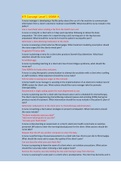
Present simple
Form
1. Positive statements
a. I/we/you/they live in London
b. He /she/ it lives in London
2. Negative statement
a. I/we/you/they don’t live in London
b. He /she/ it doesn’t live in London
3. Question
a. Do I/we/you/they live in London?
b. Does he/she/it live in London?
4. Short answer
a. Yes, I do / does
b. No , I don’t /doesn’t
Uses
1. Routine or regular repeated actions and events. (Always, often, sometimes, never…)
I take the bus to work every day.
She usually plays golf at weekends.
2. When we are talking about general facts.
I come to Edinburg.
Does he live in a flat or a house?
3. State verbs. Know, understand, like, want, believe, belong, hate, mean, love.
Present continuous
Form
1. Present of BE + -ing form of the verb.
a. I’m, you’re, s/he’s, it’s, we’re, they’re, + ing form.
Uses
1. Actions happening now, at the time of speaking.
Sorry, she’s not here. She’s working.
Are you cooking lunch? I’m hungry!
It’s snowing at the moment.
2. Temporary situations,things happening around now.
I’m learning new skills on my …
He’s having a holiday this month.
They are trying to learn Russian.
, Countable or uncountable
Countable nouns
1. Singular or plural verb
There is a cooker in the kitchen.
There are two sofas in the living room.
2. A/an for singular sentences
There is a desk and an armchair in her bedroom.
3. Some for plural positive sentences
There are some books in the bookcase.
4. Any for plural negative sentences and questions.
There aren’t any pictures on the wall.
Uncountable nouns
1. Always take singular verb
Accomodation is very expensive in London
2. Never use a/an
I want to buy furniture for my flat
3. Can be followed by some in positive sentence.
She needs some information about buying a house.
4. Can be followed by any in negative sentences and questions.
There isn’t any electricity in the kitchen.
Common uncountable nouns: accomodation, furniture, luggage, traffic, electricity, crockery…
UNIT 2
Quantifiers
1. Some: plural countable and uncountable nouns in positive statements.
a. There are some bags. There is some luggage.
2. Any: plural countable nouns and uncountable nouns in negative statement and
questions.
a. There aren’t any apples. There isn't any bread.
b. Are there any apples? Is there any bread?
3. A little and much: uncountable nouns. A little: positive statements, much: negative
statements.
a. There’s a little milk in the fridge.
b. There isn’t much food left.
4. A few and many: countable nouns. A few: positive statements, many: negative
statements and questions.
a. There are a few biscuits in the tin.
b. There aren’t many biscuits.
c. How many biscuits are there in the tin?
Present simple
Form
1. Positive statements
a. I/we/you/they live in London
b. He /she/ it lives in London
2. Negative statement
a. I/we/you/they don’t live in London
b. He /she/ it doesn’t live in London
3. Question
a. Do I/we/you/they live in London?
b. Does he/she/it live in London?
4. Short answer
a. Yes, I do / does
b. No , I don’t /doesn’t
Uses
1. Routine or regular repeated actions and events. (Always, often, sometimes, never…)
I take the bus to work every day.
She usually plays golf at weekends.
2. When we are talking about general facts.
I come to Edinburg.
Does he live in a flat or a house?
3. State verbs. Know, understand, like, want, believe, belong, hate, mean, love.
Present continuous
Form
1. Present of BE + -ing form of the verb.
a. I’m, you’re, s/he’s, it’s, we’re, they’re, + ing form.
Uses
1. Actions happening now, at the time of speaking.
Sorry, she’s not here. She’s working.
Are you cooking lunch? I’m hungry!
It’s snowing at the moment.
2. Temporary situations,things happening around now.
I’m learning new skills on my …
He’s having a holiday this month.
They are trying to learn Russian.
, Countable or uncountable
Countable nouns
1. Singular or plural verb
There is a cooker in the kitchen.
There are two sofas in the living room.
2. A/an for singular sentences
There is a desk and an armchair in her bedroom.
3. Some for plural positive sentences
There are some books in the bookcase.
4. Any for plural negative sentences and questions.
There aren’t any pictures on the wall.
Uncountable nouns
1. Always take singular verb
Accomodation is very expensive in London
2. Never use a/an
I want to buy furniture for my flat
3. Can be followed by some in positive sentence.
She needs some information about buying a house.
4. Can be followed by any in negative sentences and questions.
There isn’t any electricity in the kitchen.
Common uncountable nouns: accomodation, furniture, luggage, traffic, electricity, crockery…
UNIT 2
Quantifiers
1. Some: plural countable and uncountable nouns in positive statements.
a. There are some bags. There is some luggage.
2. Any: plural countable nouns and uncountable nouns in negative statement and
questions.
a. There aren’t any apples. There isn't any bread.
b. Are there any apples? Is there any bread?
3. A little and much: uncountable nouns. A little: positive statements, much: negative
statements.
a. There’s a little milk in the fridge.
b. There isn’t much food left.
4. A few and many: countable nouns. A few: positive statements, many: negative
statements and questions.
a. There are a few biscuits in the tin.
b. There aren’t many biscuits.
c. How many biscuits are there in the tin?